
The Mothman of Point Pleasant: What Actually Happened in 1966 and Why Sightings Keep Coming Back
The Night Everything Started
On the night of November 15, 1966, two young couples from Point Pleasant, West Virginia drove to an abandoned World War II munitions storage area outside of town known locally as the TNT Area. It was about midnight. The site was a network of concrete domes and overgrown roads, mostly used by teenagers looking for somewhere quiet to drink and talk.
What the four of them reported afterward became the foundation of one of the most extensively documented cryptid encounters in American history. They described a humanoid figure roughly seven feet tall, gray, with no visible head, and two large round eyes that glowed bright red and reflected their headlights. The creature had wings that folded behind its back. When their car accelerated to escape, the figure rose into the air and followed them, keeping pace with the vehicle at speeds reaching 100 miles per hour.
They drove straight to the Mason County sheriff's office. Deputy Millard Halstead took their report seriously enough to drive back to the TNT Area with them. He saw nothing. But the report was filed, and within 48 hours, similar accounts started arriving from other residents.
The local newspaper, the Point Pleasant Register, ran the headline "Couples See Man-Sized Bird ... Creature ... Something" on November 16. A wire service picked it up. The figure described in those reports was given a name within a week: Mothman.
The Pattern of the Wave
What happened next is what makes the Point Pleasant case unique among American cryptid encounters. The sightings did not stop after the initial four-person report. They continued, intensifying through the winter of 1966-67 and persisting into 1967, eventually producing more than 100 documented witness accounts.
Author John Keel, a journalist who arrived in Point Pleasant in early 1967, compiled what remains the most detailed account of the wave in his 1975 book *The Mothman Prophecies*. Keel's reporting drew on direct interviews, sheriff's reports, and contemporary newspaper coverage. The patterns he identified:
- Geographic concentration. The vast majority of sightings clustered around the TNT Area and surrounding rural Mason County, with a smaller number of reports from neighboring Ohio counties across the river.
- Time of day. Most sightings occurred at night, often near 9-11 PM, with a smaller cluster of dawn or dusk reports.
- Witness consistency. Independent witnesses, often unaware of each other's accounts, described the same physical attributes: large humanoid form, wings, glowing red eyes, gray-brown coloration.
- Reaction patterns. Witnesses frequently reported intense fear or dread, sometimes preceding visual contact. Vehicles or animals nearby would sometimes behave erratically.
- Power outages. Several sightings coincided with reported electrical disturbances - failing car headlights, dimming streetlights, radio interference.
The Silver Bridge Collapse
On December 15, 1967, the Silver Bridge connecting Point Pleasant to Gallipolis, Ohio collapsed during evening rush hour. The bridge, which carried U.S. Route 35 across the Ohio River, fell into the freezing water with 37 vehicles on it. Forty-six people died.
The Mothman sightings essentially stopped after the bridge collapse.
This chronological coincidence transformed Mothman from a local cryptid story into something stranger and more enduring. In Keel's telling, the entire 13-month wave had been a series of warnings or omens preceding the disaster. The book, and the 2002 film adaptation starring Richard Gere, cemented this interpretation in popular culture.
The forensic engineering investigation found a different cause. The bridge collapse was traced to a single failure in an eyebar suspension link, a corroded structural component that had developed a small crack over years of use. The bridge's 1928 design relied on the eyebar links carrying the entire weight of the deck. When one link failed, the rest cascaded in seconds. The investigation concluded that the bridge had been operating at near-failure condition for some time, and that the disaster was the predictable result of inadequate inspection procedures of the era.
The coincidence between the sightings and the collapse is real. The causal connection has never been demonstrated.
What Could Actually Explain the 1966-67 Wave
The scientific community has proposed several explanations for the Mothman wave, none of which fully account for every reported encounter but which collectively cover most of the reports.
### The Sandhill Crane Hypothesis
Dr. Robert Smith, a zoology professor at West Virginia University, proposed in 1968 that the Mothman sightings were misidentifications of sandhill cranes. Sandhill cranes stand 4-5 feet tall, have wingspans of 6-7 feet, and have a bare red patch around the eyes that can appear to glow when illuminated. The cranes are not native to West Virginia but occasionally pass through during migration.
The hypothesis explains some elements of the descriptions: the size, the wings, the apparent eye glow. It does not explain the consistent reports of the figure standing upright (cranes do not stand humanoid-style), the reported speed during pursuit (sandhill cranes top out around 25-30 mph in level flight), or the multiple sightings that included details inconsistent with any known bird.
### Barn Owl Misidentification
Large barn owls have wingspans up to 4 feet, can produce eye-shine that appears red in headlights, and inhabit abandoned structures like the TNT Area. A barn owl seen at close range, in fragmentary glimpses, by frightened observers could account for some of the encounters.
This explanation works better for some sightings than others. The sightings that involved the figure pursuing a vehicle at high speed are not consistent with owl behavior or capability.
### Mass Sociogenic Illness and Folkloric Spread
A more sociological explanation: the initial November 15 report, amplified by newspaper coverage, primed subsequent witnesses to interpret ambiguous nighttime stimuli (a large bird, a swaying tree, an unusual reflection) through the lens of a now-named local creature. Once "Mothman" existed as a cultural concept, sightings followed the concept.
This hypothesis has explanatory power for the geographic clustering and the rapid intensification. It does not account for the multiple independent witnesses who reported essentially identical physical descriptions before they had heard of any prior sightings.
### Industrial and Environmental Factors
The TNT Area was the West Virginia Ordnance Works during World War II, a manufacturing site that produced TNT for the war effort. The site was decommissioned after the war but the surrounding area was contaminated with TNT, DNT, and other industrial chemicals. The area was eventually declared a Superfund site by the EPA in the 1980s.
A few researchers have suggested that environmental factors at the TNT Area (chemical exposure, infrasound from nearby industrial operations, even the unusual electrical environment of the abandoned munitions infrastructure) could have contributed to perception anomalies in witnesses. This remains speculative.
Why the Sightings Keep Coming Back
The most striking thing about Mothman is not the 1966-67 wave. It is that reports have continued, in lower volume but with consistent geographic clustering, for almost six decades.
Reported sightings since 1968 include: - The 1986 Chernobyl disaster wave (Russian and Ukrainian witnesses reported similar figures preceding the disaster). - The 2001 World Trade Center sightings (multiple witnesses reported a winged humanoid in the days before September 11). - Multiple Chicago-area sightings 2017-2020 documented as the Mothman of Chicago flap. - Continued small clusters of reports from rural West Virginia, particularly around the anniversary of the original encounters.
The pattern of "Mothman as harbinger" has become as much a part of the cultural framing as the creature itself. Whether this represents a real phenomenon or a self-reinforcing cultural pattern is the central question.
Point Pleasant in 2026
The town of Point Pleasant has fully embraced its association with Mothman. A 12-foot stainless steel statue of the creature, erected in 2003, stands in the center of town. The Mothman Museum, located on Main Street, displays original news clippings, witness statements, and props from the 2002 film. The annual Mothman Festival in mid-September draws 10,000-15,000 visitors each year, generating significant revenue for the town.
For visitors planning a 2026 trip, summer through early fall is the peak season. The TNT Area is now part of the McClintic Wildlife Management Area and is open to the public. The original concrete munitions domes still stand. Whether you go as a believer, a skeptic, or simply someone interested in American folklore, Point Pleasant is one of the most visitable cryptid sites in the country.
What the Evidence Actually Shows
Reasonable conclusions from 60 years of accumulated evidence:
1. The 1966-67 wave was real as a series of human reports. Hundreds of people reported sightings. The reports were not coordinated, did not financially benefit most witnesses, and persisted across diverse demographic groups in the area. 2. The physical descriptions were consistent enough to require an explanation. The convergence on a humanoid form with wings and red eyes across independent witnesses is striking, even if the cause was misidentification of natural phenomena. 3. The Silver Bridge connection is coincidental, not causal. The forensic engineering record is unambiguous about the cause of the collapse. The cultural framing of Mothman as omen is a folkloric layer added retrospectively. 4. The continuing low-volume sightings are best explained as a combination of cultural priming, occasional misidentifications, and possibly some genuinely unidentified phenomena. The honest scientific answer is that some encounters have plausible mundane explanations and some do not.
Why Mothman Endures
More than any other American cryptid, Mothman exists at the intersection of three things that produce durable folklore: a specific time and place, a structured event sequence that included a real disaster, and a cultural amplifier (Keel's book, the 2002 film) that crystallized the narrative for new audiences.
For the Cryptid Vault field guide, Mothman is the case study that demonstrates how a cryptid sighting wave actually functions in time, place, and witness behavior. The 1966-67 record is unusually well-documented compared to most cryptid encounters. The witnesses are largely identifiable, the geography is precise, and the contemporary newspaper coverage is extensive.
Whether you believe Mothman is a flesh-and-blood unidentified species, a category of misperception with a name, or something else entirely, the case rewards close attention. It is the rare cryptid story where the evidence is good enough to argue about seriously.
---
Related: - Mothman creature profile - Mothman of Chicago: 2017-2020 sightings - Why Mothman Took Over TikTok - Cryptids by State: West Virginia - Winged Cryptids: A Field Guide - The Most Credible Cryptid Sightings in History
Get the Field Notes.
Field notes from the Vault, when there is something worth sending. No spam.
No spam. Unsubscribe anytime.
Creatures mentioned in this post
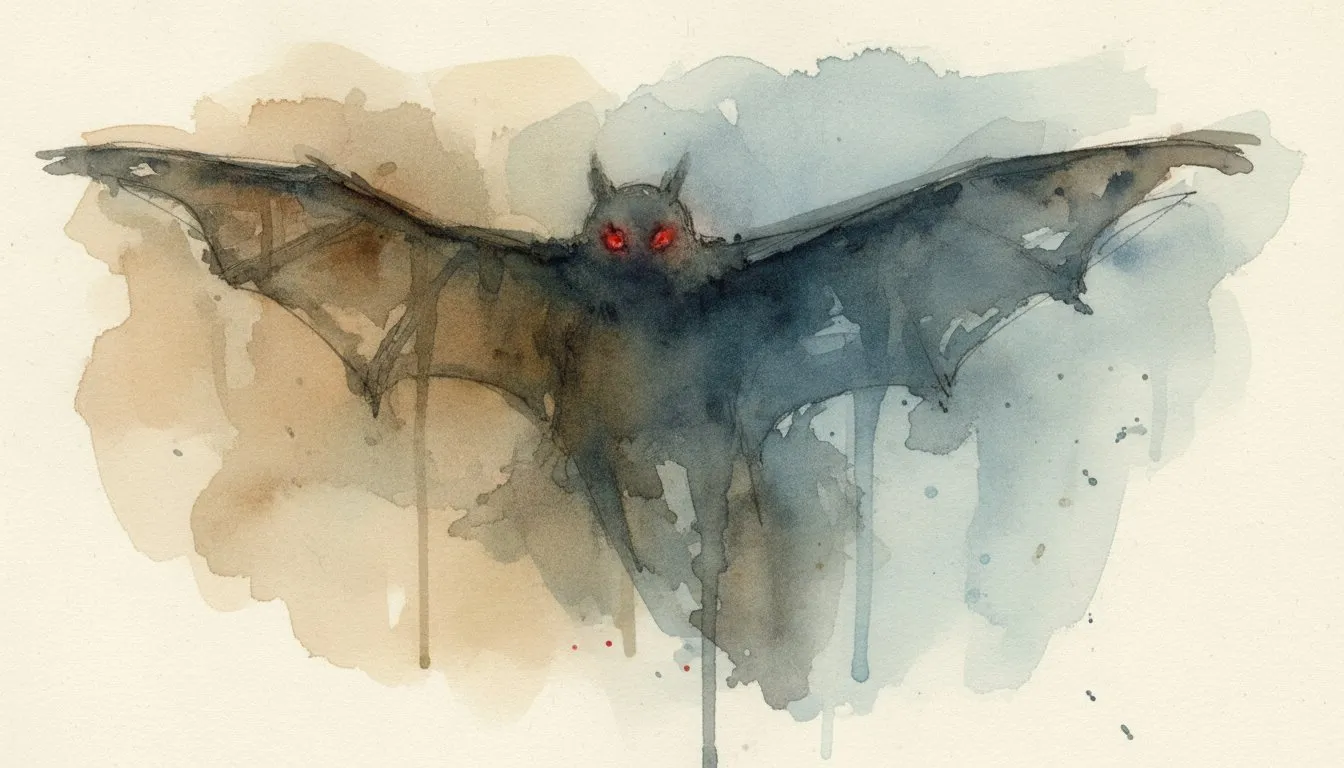
Mothman
A winged humanoid with blazing red eyes, haunting Point Pleasant before disaster struck.
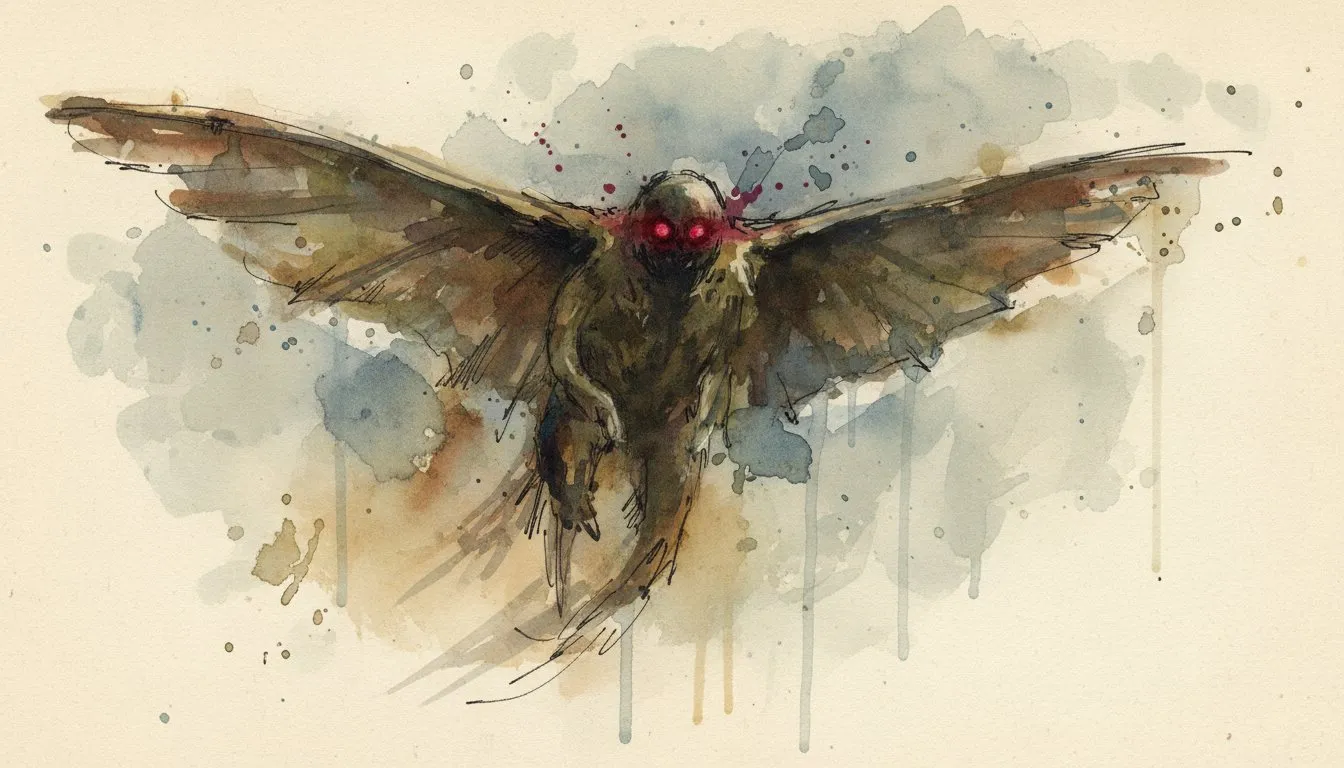
Mothman of Chicago
A red-eyed winged humanoid haunting the skies above Chicago since 2011.
Owlman
A towering owl-humanoid haunting the woods around a Cornish church.
Thunderbird
A colossal bird from indigenous legend with a wingspan that blots out the sun.