
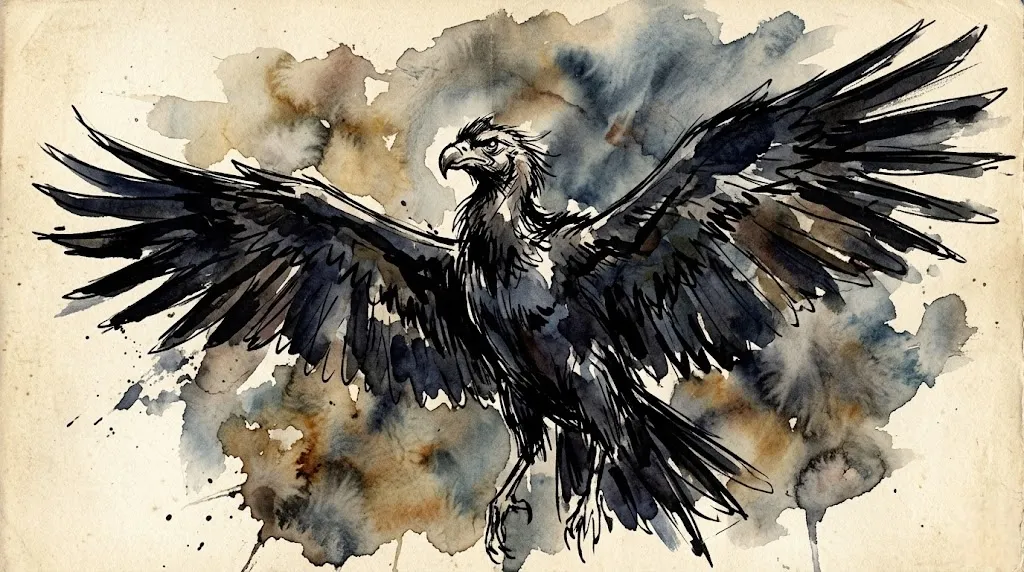
Thunderbird
Also known as: Piasa Bird, Wakinyan
A colossal bird from indigenous legend with a wingspan that blots out the sun.
Pre-colonial (pan-tribal tradition)
Throughout North America
15-20+ ft wingspan
Powerful, territorial
Rare modern sightings
The Lore
Thunderbird legends span nearly every indigenous culture in North America. Described as an enormous raptor with wingspans of 20+ feet, it was said to create thunder with its wingbeats. Modern sightings in Pennsylvania, Illinois, and Alaska describe massive dark birds unlike any known species.
The Thunderbird is one of the oldest and most widespread cryptids in North American tradition. Long before European contact, Indigenous peoples across the continent told stories of enormous birds capable of creating thunder with the beating of their wings and lightning from their eyes. The Thunderbird was not just an animal. It was a spiritual being of immense power, often associated with storms, warfare, and the protection of humans from underwater spirits.
For the Ojibwe, the Thunderbird (Animikii) was a supernatural creature that lived in the clouds. The Lakota knew it as Wakinyan. The Kwakwaka'wakw of the Pacific Northwest carved Thunderbird images on totem poles, depicting a bird large enough to carry a whale in its talons. These traditions span thousands of years and cover nearly every Indigenous nation on the continent.
Modern Thunderbird sightings describe an enormous bird with a wingspan of 15 to 30 feet, dark plumage, and a body reminiscent of a condor or prehistoric pterosaur. One of the most dramatic reported encounters occurred on July 25, 1977, in Lawndale, Illinois. Ten-year-old Marlon Lowe was reportedly grabbed by a large bird and carried approximately 40 feet before being dropped. His mother, Ruth Lowe, and two other witnesses identified the birds as having wingspans of at least 10 feet. The incident drew national attention and was investigated by researchers who noted that no known North American bird could lift a 65-pound child.
A persistent piece of Thunderbird lore involves a photograph allegedly published in a late 19th-century newspaper showing a group of men standing beside an enormous dead bird, its wings pinned to a barn wall. Many people claim to have seen this photograph, but no original has ever been located despite extensive searches. This "missing Thunderbird photo" has become a mystery in its own right.
Skeptics propose that large bird sightings can be explained by turkey vultures, California condors (which have wingspans up to 9.5 feet), or wandering Andean condors. Perspective errors at a distance can make birds appear much larger than they are. Some researchers have suggested that Thunderbird sightings might represent encounters with a surviving population of Argentavis magnificens, a prehistoric bird with a 23-foot wingspan that went extinct roughly 6 million years ago, though this is considered extremely unlikely.
The Thunderbird endures as one of the most culturally significant cryptids, bridging ancient spiritual traditions and modern eyewitness accounts.
Notable Witnesses
- Ruth Lowe (Lawndale, Illinois, 1977, witnessed son grabbed by large bird)
- Marlon Lowe (Lawndale, Illinois, reportedly carried by bird)
- John Huffer (filmed large birds in Pennsylvania, 2001, disputed)
Media Appearances
- The Thunderbird Photograph (legendary missing photo)
- Thunderbirds: America's Living Legends of Giant Birds by Mark Hall (book, 2004)
- MonsterQuest (TV, Season 1, Birdzilla episode)
- Cryptid: The Swamp Beast (TV)
- Various totem pole carvings and Indigenous art spanning millennia
Further Reading
Written about Thunderbird directly, drawn from the record on this page.
- Thunderbirds: America's Living Legends of Giant Birds by Mark Hall (2004)
Named in the record for Thunderbird.
- Cryptozoology A to Z by Loren Coleman and Jerome Clark (1999)
The standard one-volume encyclopedia, roughly two hundred entries covering creatures, investigators, and hoaxes.
- Mysterious Creatures: A Guide to Cryptozoology by George M. Eberhart (2002)
The larger reference guide, stronger on sourcing and on creatures that never reached the popular books.
Search Amazon for Thunderbird books
As an Amazon Associate, Cryptid Vault earns from qualifying purchases. Links open Amazon in a new tab.
Get the Field Notes.
Field notes from the Vault, when there is something worth sending. No spam.
No spam. Unsubscribe anytime.
You might also like
Mothman
A winged humanoid with blazing red eyes, haunting Point Pleasant before disaster struck.
Ahool
A giant bat with a 10-foot wingspan, screaming through the jungles of Java.
Jersey Devil
A bat-winged, hoofed terror born from a colonial curse in the Pine Barrens.
Batsquatch
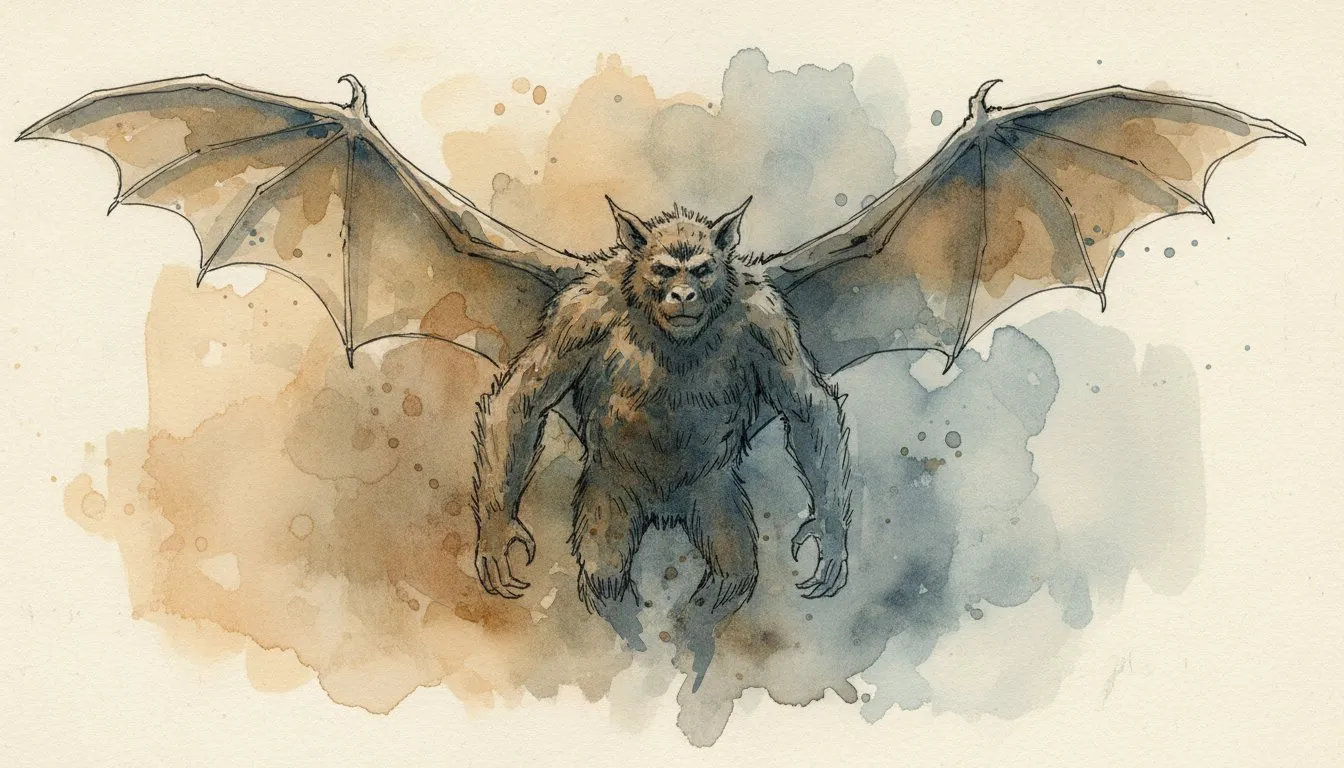
A purple-skinned, bat-winged ape seen near Mount St. Helens after the eruption.
Mothman of Chicago
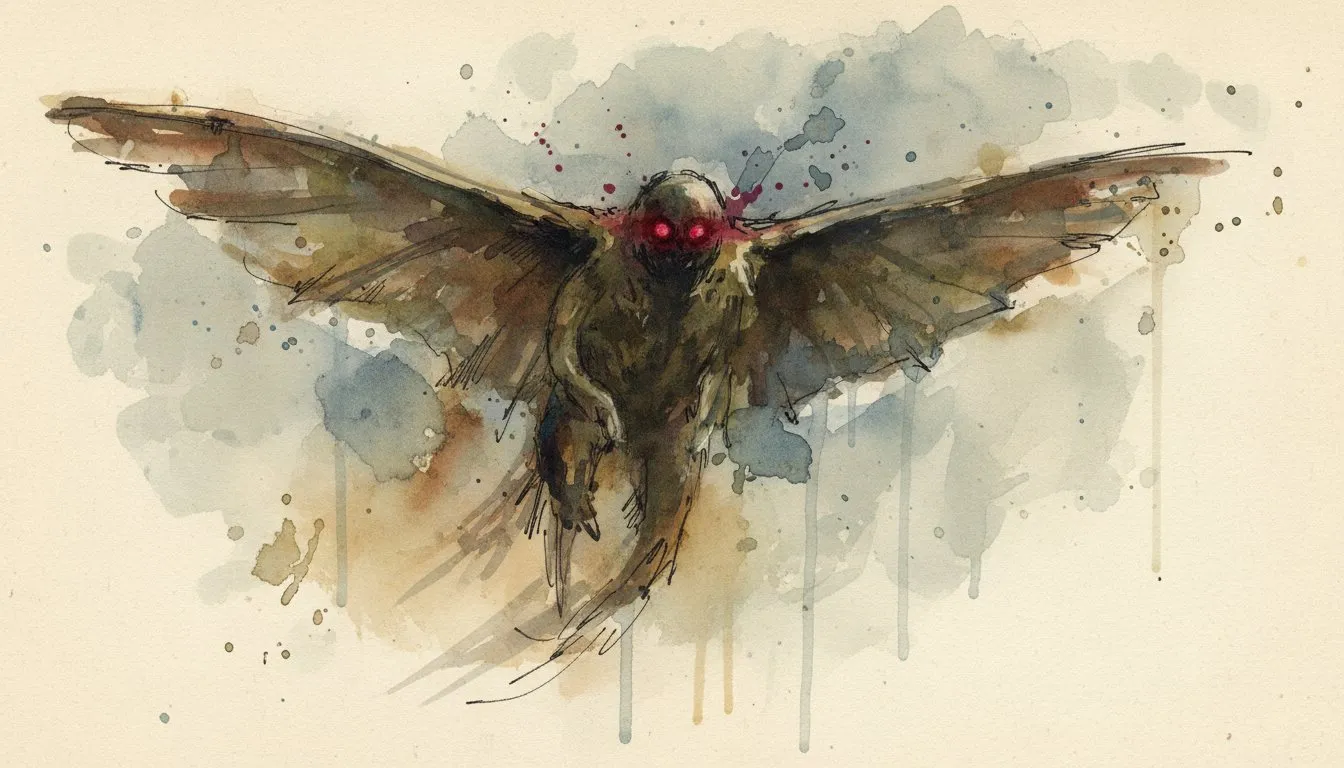
A red-eyed winged humanoid haunting the skies above Chicago since 2011.
Piasa Bird
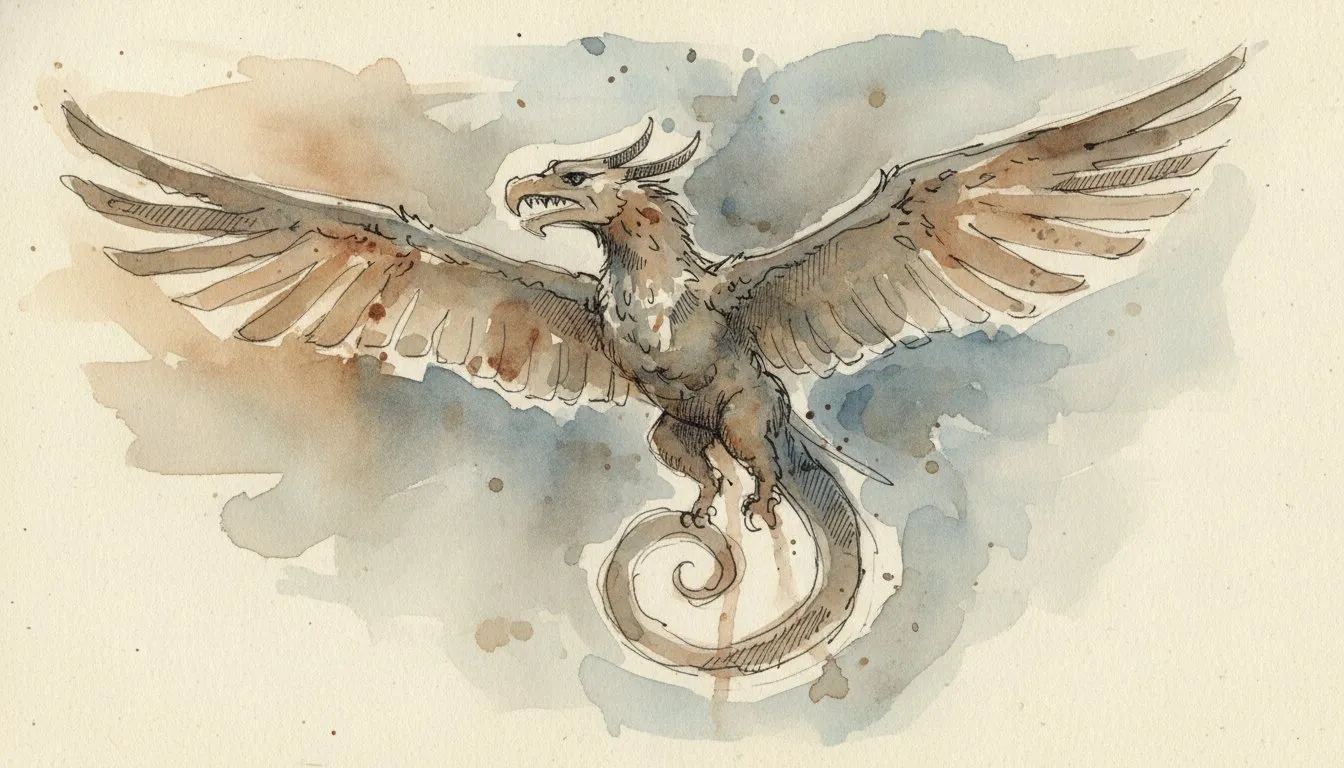
A dragon-bird painted on Mississippi River bluffs by the Illini, feared as a man-eater.
Van Meter Visitor
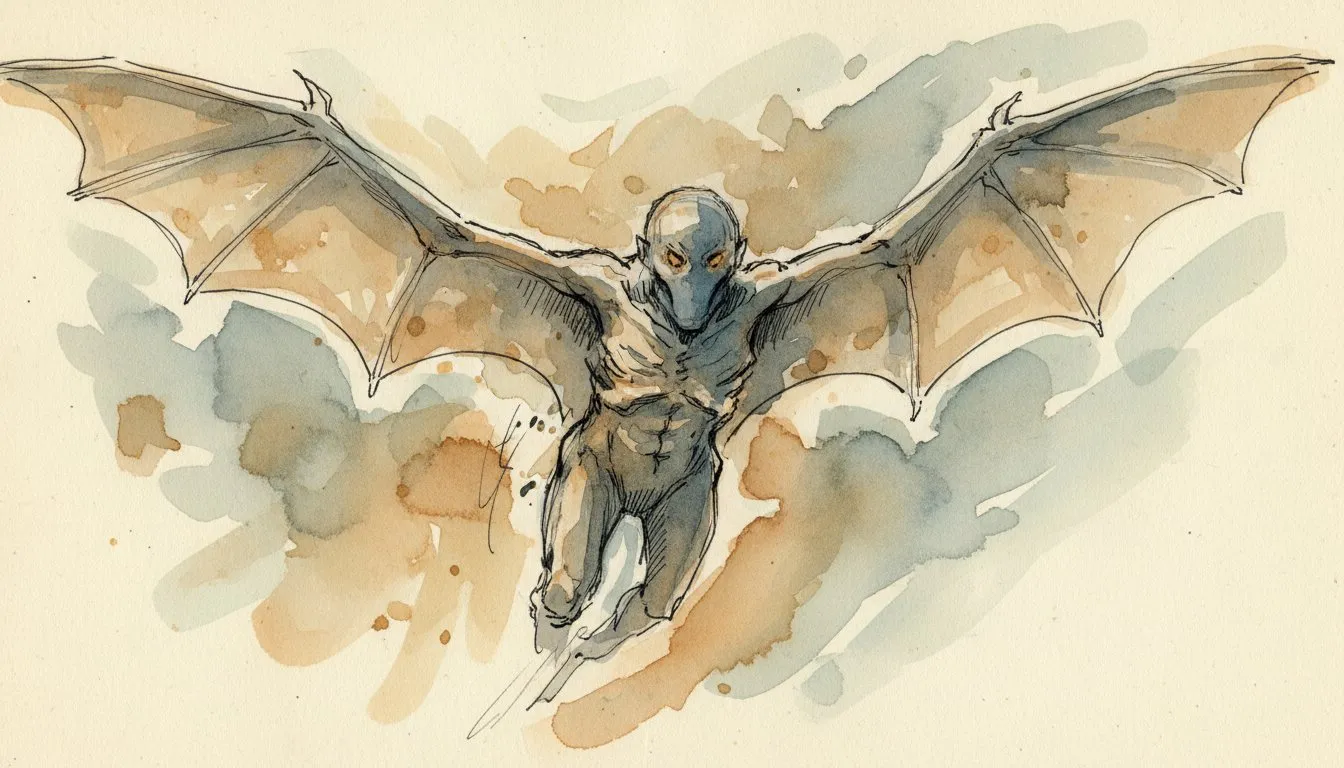
A winged, light-emitting creature that besieged a small Iowa town for three nights in 1903.
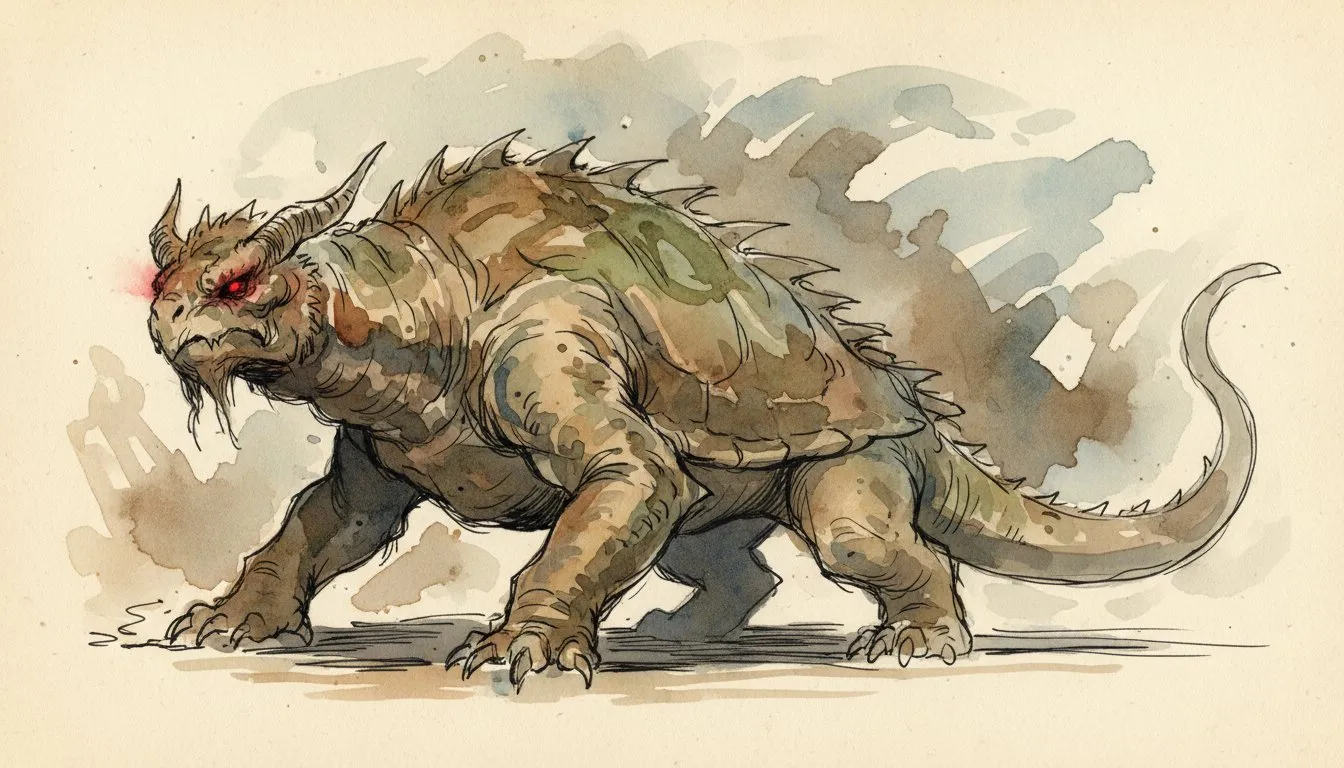
Beast of Busco
A giant snapping turtle the size of a dining table, spotted in an Indiana farm pond.