
Beast of Busco
Also known as: Oscar the Turtle, Churubusco Turtle
A giant snapping turtle the size of a dining table, spotted in an Indiana farm pond.
1949
Churubusco, Indiana, USA
5 ft long, 4 ft wide (est.)
Elusive
Unconfirmed
The Lore
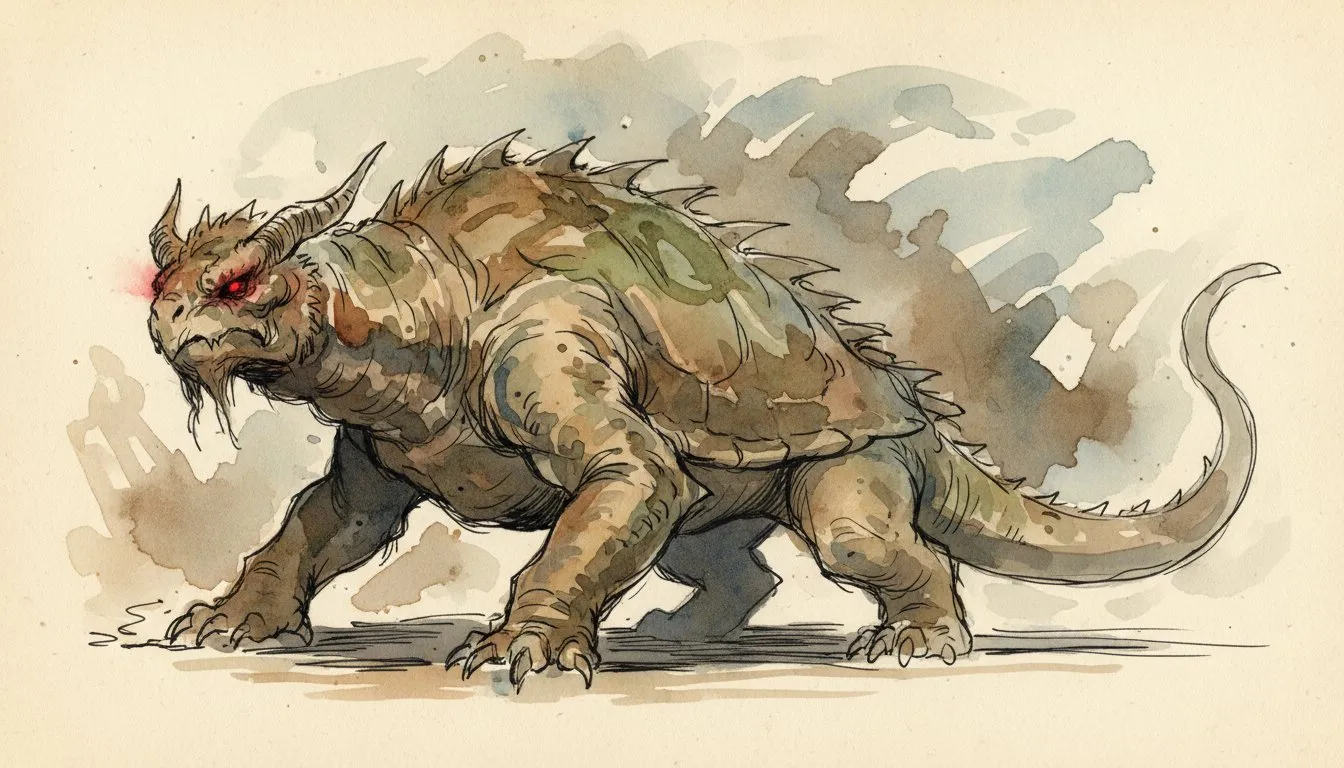
The Beast of Busco is an enormous snapping turtle reportedly seen in a farm pond near Churubusco, Indiana in 1949. Farmer Gale Harris claimed the turtle was roughly 5 feet long and 4 feet wide, with a head the size of a softball. Efforts to capture it drew national media and crowds of spectators. The pond was partially drained but the turtle was never found. Churubusco now celebrates Turtle Days every June in its honor.
In the spring of 1948, a farmhand named Ora Blue made an unusual discovery in a pond on the property of Gale Harris near Churubusco, Indiana. Blue reported seeing an enormous snapping turtle surfacing in the pond, and Harris himself confirmed subsequent sightings of the creature, estimating it weighed well over two hundred pounds and measured at least six feet across its shell. Word spread quickly through the small farming community, and before long the story had attracted newspaper coverage from outlets across the Midwest. The turtle acquired a name - Oscar - and what began as an unusual rural curiosity became one of the strangest media spectacles in Indiana history.
Harris committed fully to the pursuit of Oscar. He hired divers, constructed nets and traps, attempted to pump out the pond, and invited spectators to his property as effort after effort failed. Estimates suggest thousands of people visited the Harris farm in 1948 alone, turning a rural pond into a makeshift tourist attraction. The town of Churubusco leaned into the legend enthusiastically, and the economic ripple effects of the attention were unmistakable. Newspapers across the country ran regular updates. Oscar became the Beast of Busco - a nickname derived from the historic name for the region, Lake Tippecanoe, which local settlers had once called Busco Lake.
The snapping turtle (Chelydra serpentina and the related alligator snapping turtle, Macrochelys temminckii) is a genuine North American animal fully capable of growing to impressive sizes. Alligator snappers, native to the southeastern United States and occasionally found as far north as Indiana, are the largest freshwater turtles on the continent, with recorded weights exceeding two hundred pounds. The largest verified specimens have shells measuring around thirty inches, well short of the six-foot estimate attributed to Oscar but large enough to seem monstrous when glimpsed briefly underwater.
Harris never produced the turtle, and skeptics suggested the whole affair was a combination of an ordinary large turtle, enthusiastic rural storytelling, and shrewd opportunism. Churubusco, however, embraced its identity wholeheartedly. The town hosts an annual Turtle Days festival each June that draws visitors from across the region, and a mural of Oscar greets visitors on the town water tower. The Beast of Busco endures as a testament to how a single fleeting glimpse can transform a quiet farming community into something much larger than itself.
Notable Witnesses
- Gale Harris
- Ora Harris
Further Reading
No book is devoted to this creature. These are the general references that cover the field, plus a direct search if you want to dig further.
- Cryptozoology A to Z by Loren Coleman and Jerome Clark (1999)
The standard one-volume encyclopedia, roughly two hundred entries covering creatures, investigators, and hoaxes.
- Mysterious Creatures: A Guide to Cryptozoology by George M. Eberhart (2002)
The larger reference guide, stronger on sourcing and on creatures that never reached the popular books.
Search Amazon for Beast of Busco books
As an Amazon Associate, Cryptid Vault earns from qualifying purchases. Links open Amazon in a new tab.
Get the Field Notes.
Field notes from the Vault, when there is something worth sending. No spam.
No spam. Unsubscribe anytime.
You might also like
Loch Ness Monster
The legendary lake serpent of Scotland, photographed, sonar-scanned, and never found.

Champ
America's own lake monster, surfacing in the waters between Vermont and New York.
Lake Worth Monster
A scaly, goat-like creature that charged a crowd of onlookers at a Texas lake in 1969.
Snallygaster
A half-bird, half-reptile terror from Maryland with a taste for livestock and legend.
Bear Lake Monster
A serpentine terror of Bear Lake, first reported by Mormon settlers and Shoshone alike.
Hodag
A spiny, fire-born beast from the Wisconsin woods with a taste for white bulldogs.
Iliamna Lake Monster
Something massive moves beneath Alaska's largest lake, and the locals know to stay clear.
Piasa Bird
A dragon-bird painted on Mississippi River bluffs by the Illini, feared as a man-eater.