
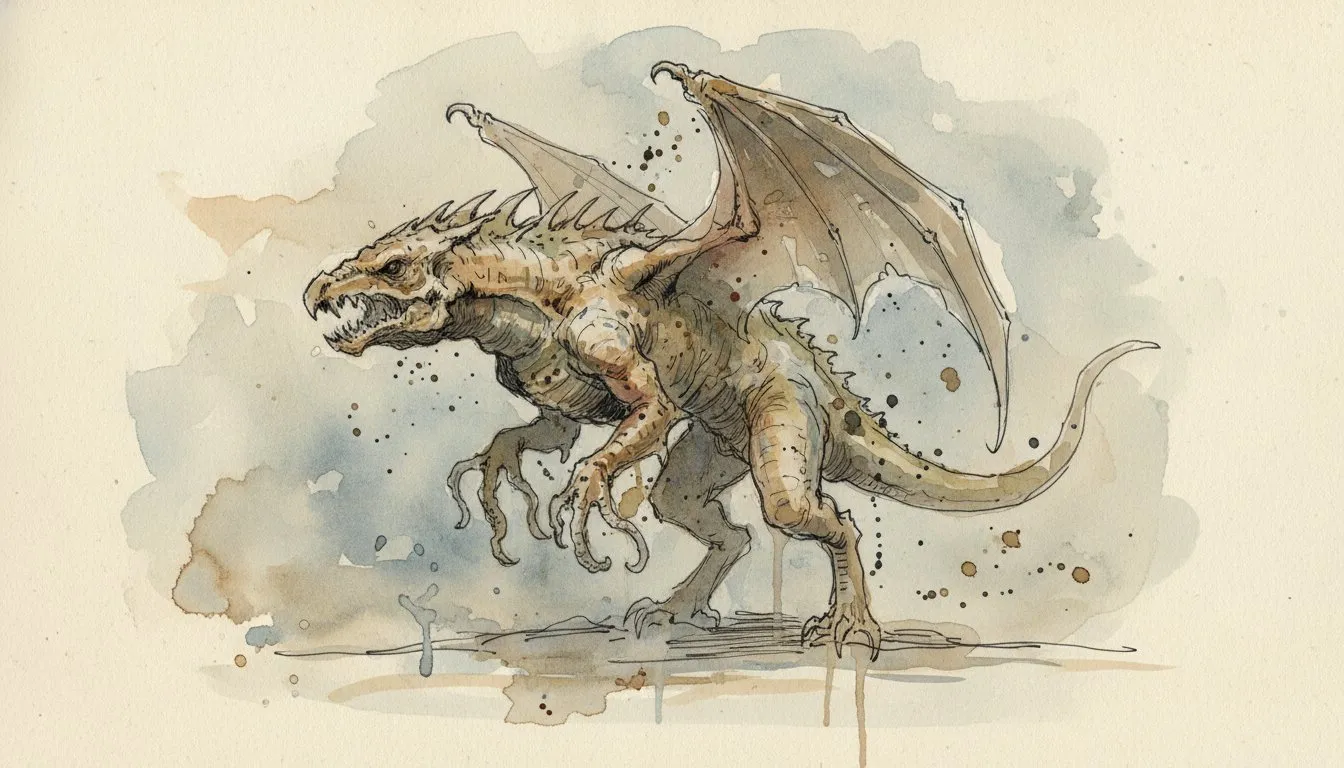
Snallygaster
Also known as: Schneller Geist, Snarly Yow
A half-bird, half-reptile terror from Maryland with a taste for livestock and legend.
Early 1700s (German settlers)
Frederick County, Maryland, USA
20-30 ft wingspan (est.)
Aggressive, predatory
Unconfirmed
The Lore
The Snallygaster is a dragon-like beast from central Maryland folklore, first described by German immigrants in the early 1700s. Its name derives from 'Schneller Geist,' meaning 'quick ghost.' In 1909, newspapers ran sensational accounts of a winged creature with a metallic beak, tentacles, and a single eye terrorizing Frederick County. Reports claimed even President Theodore Roosevelt considered canceling a safari to hunt it.
The Snallygaster prowls the wooded ridges of Maryland's South Mountain and the Middletown Valley, a creature stitched together from German immigrant nightmares and small-town newspaper showmanship. Its name descends from Schneller Geist, meaning quick spirit or quick ghost in the Pennsylvania Dutch of settlers who carried their old country hexerei across the Atlantic in the eighteenth century. In those early accounts it was essentially a demonic bird, invoked to frighten children away from woodlots and orchards after dark.
The modern Snallygaster, however, is a product of the printing press. In February 1909 the Middletown Valley Register began running increasingly elaborate dispatches about a half-reptile, half-bird monster with a single cyclopean eye, a serrated metal beak, tentacles trailing from its body, and a shriek like a steam whistle. Stories spread to Valley papers and eventually the national wires, describing the creature snatching livestock, draining victims of blood, and outrunning horses along the ridgelines. The Smithsonian Institution was said to have offered a handsome reward for a specimen, and Theodore Roosevelt reportedly considered canceling an African safari to hunt it personally, details that were probably invented but refused to die.
The panic burned hot for months and then flared again in 1932, when the papers announced the Snallygaster had drowned in a vat of moonshine mash in Frog Hollow, perhaps the most Appalachian death ever written. Later research suggested the whole affair had been cooked up by newspapermen George C. Rhoderick and Ralph S. Wolfe to boost circulation during a slow season, a deliberate hoax that escaped its cage and became genuine regional folklore.
What makes the Snallygaster distinctive is how cleanly it illustrates the birth of a modern cryptid. It carries authentic immigrant folkloric DNA in its name and early form, but its iconic imagery, the metal beak, the tentacles, the single eye, came from deadline writers chasing headlines. Today the creature is celebrated in craft beer labels, an annual Frederick festival, and enduring hill-country ghost stories, a reminder that folklore does not always rise from some pristine past but often from the ink and appetite of a country newspaper.
Media Appearances
- Fantastic Beasts (Wizarding World reference)
Further Reading
No book is devoted to this creature. These are the general references that cover the field, plus a direct search if you want to dig further.
- Cryptozoology A to Z by Loren Coleman and Jerome Clark (1999)
The standard one-volume encyclopedia, roughly two hundred entries covering creatures, investigators, and hoaxes.
- Mysterious Creatures: A Guide to Cryptozoology by George M. Eberhart (2002)
The larger reference guide, stronger on sourcing and on creatures that never reached the popular books.
Search Amazon for Snallygaster books
As an Amazon Associate, Cryptid Vault earns from qualifying purchases. Links open Amazon in a new tab.
Get the Field Notes.
Field notes from the Vault, when there is something worth sending. No spam.
No spam. Unsubscribe anytime.
You might also like
Thunderbird
A colossal bird from indigenous legend with a wingspan that blots out the sun.
Jersey Devil
A bat-winged, hoofed terror born from a colonial curse in the Pine Barrens.
Piasa Bird
A dragon-bird painted on Mississippi River bluffs by the Illini, feared as a man-eater.
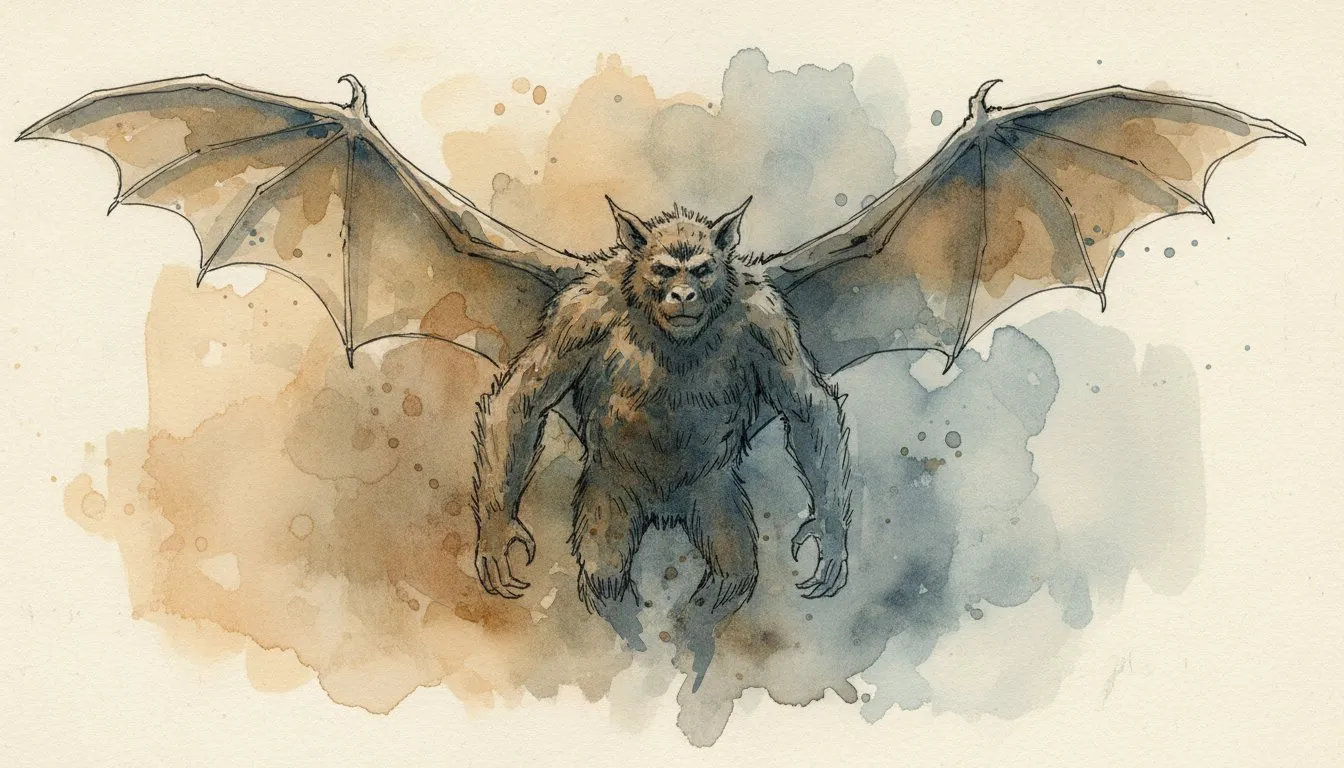
Batsquatch
A purple-skinned, bat-winged ape seen near Mount St. Helens after the eruption.
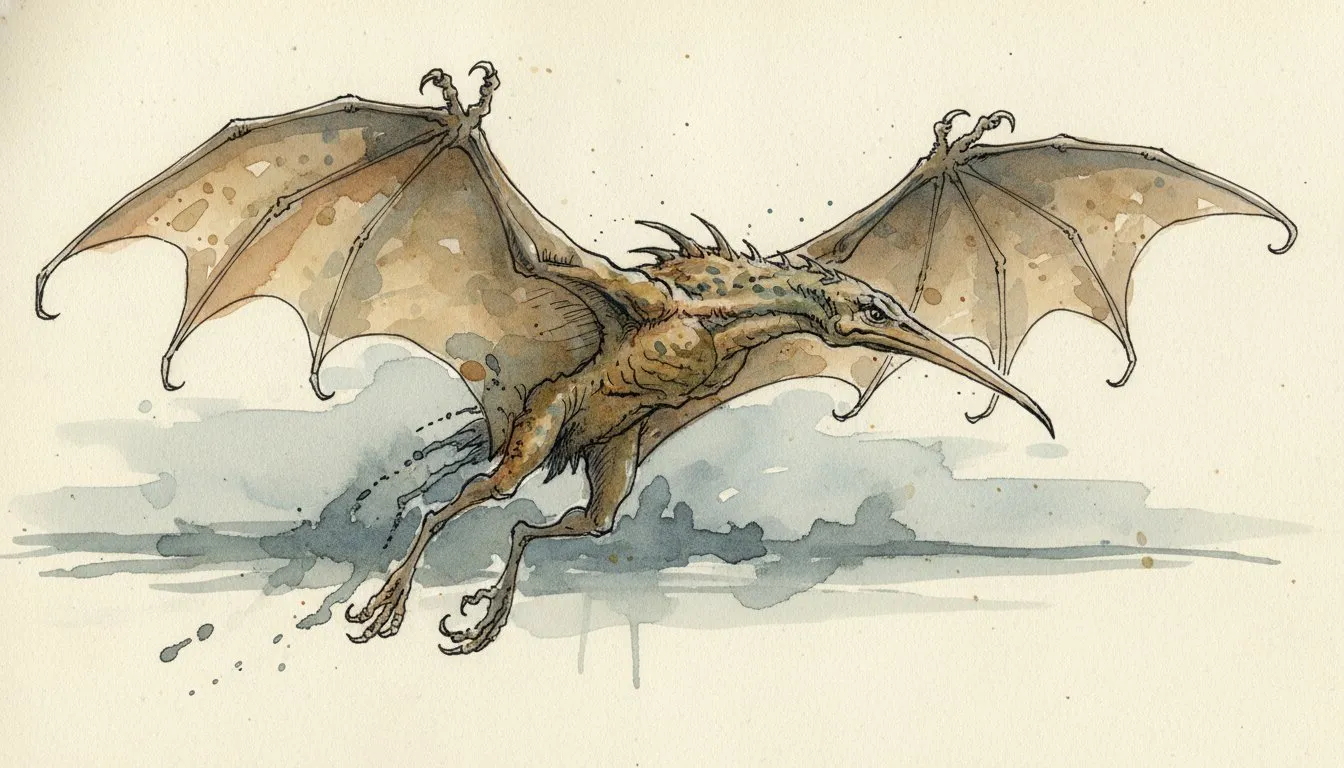
Kongamato
Zambian fishermen describe a flying reptile with leathery wings and teeth that capsizes their boats.
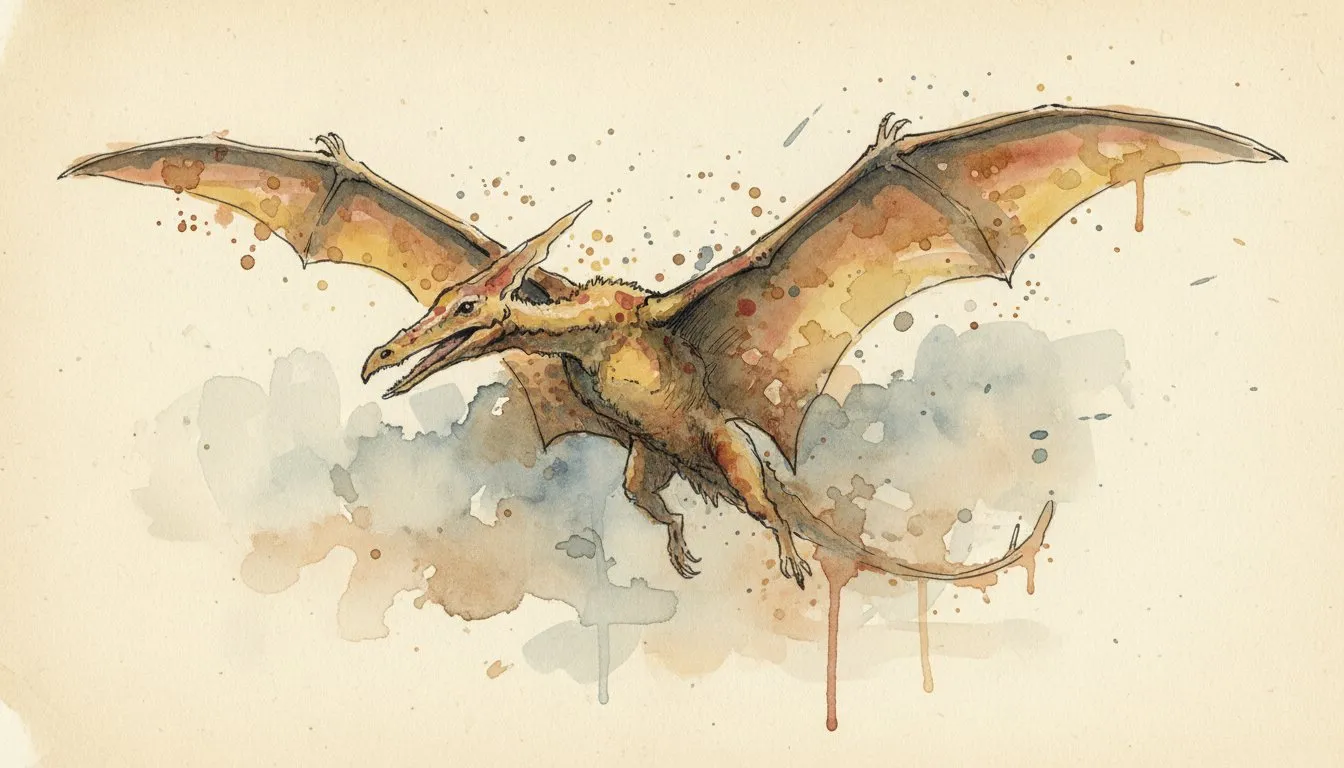
Ropen
Islanders in Papua New Guinea describe a glowing, long-tailed flying creature that matches no known bird or bat.
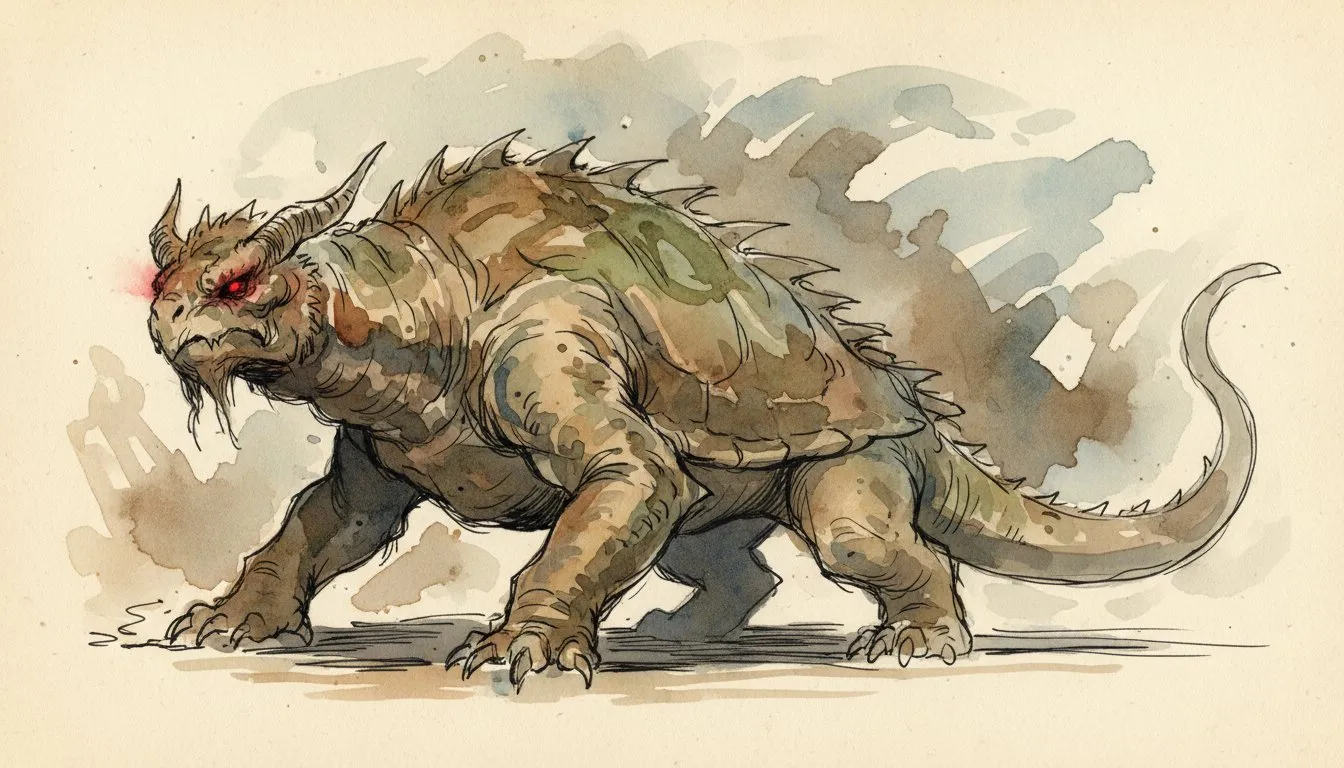
Beast of Busco
A giant snapping turtle the size of a dining table, spotted in an Indiana farm pond.
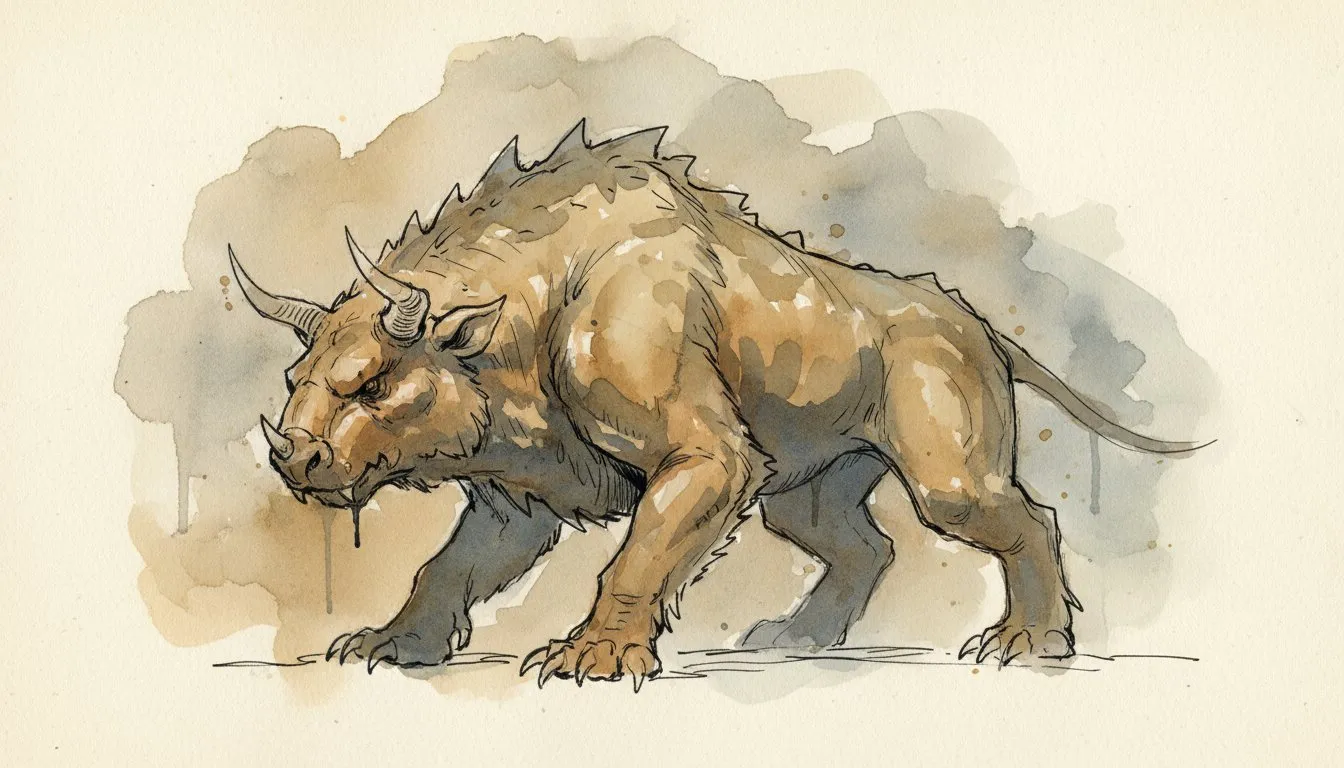
Hodag
A spiny, fire-born beast from the Wisconsin woods with a taste for white bulldogs.