
Mamlambo
Also known as: Brain Sucker, The Goddess of Rivers
Nine bodies pulled from a South African river in 1997 were all missing their faces and brains.
Ancient Xhosa tradition, 1997 incidents
Mzintlava River, Eastern Cape, South Africa
Up to 60 feet long
Predatory and deadly
Unverified
The Lore
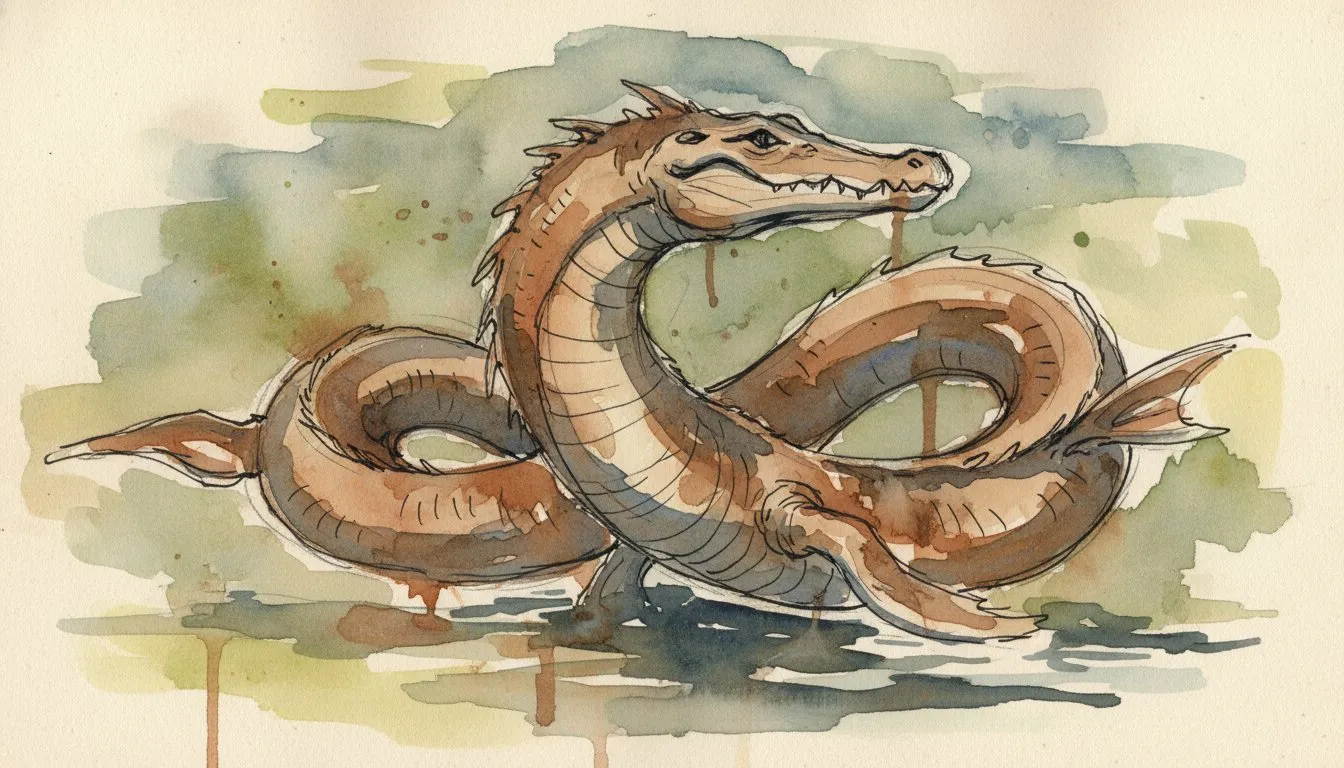
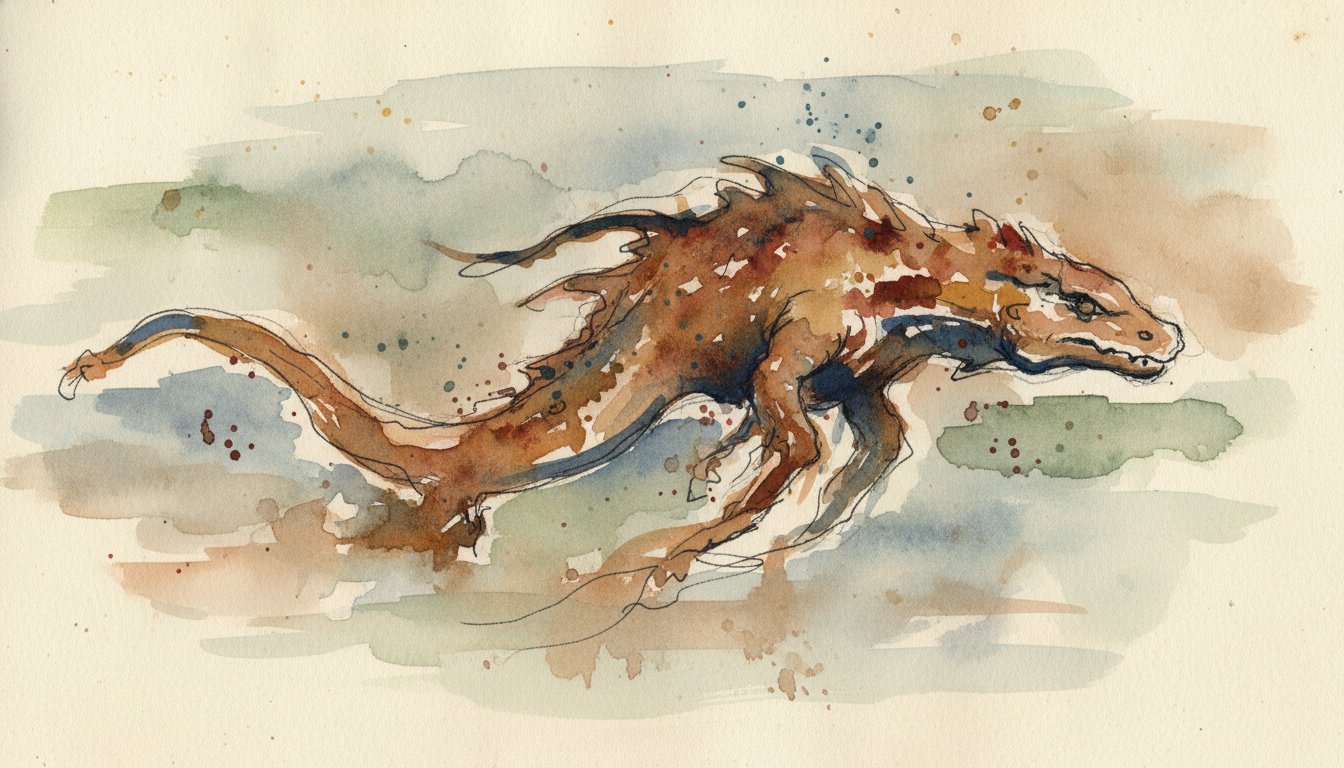
The Mamlambo is a terrifying aquatic creature from Xhosa mythology, reported most recently in the Mzintlava River in South Africa's Eastern Cape. In 1997, nine drowning victims were recovered with their faces and brains reportedly removed, which locals attributed to the Mamlambo. Described as 60 feet long with the body of a fish, legs of a horse, and the head of a snake, it is said to glow with bioluminescent light at night.
In the rivers of KwaZulu-Natal and the Eastern Cape provinces of South Africa, the Mamlambo holds a place in Zulu and Xhosa tradition as one of the most feared supernatural beings associated with water. Its name is sometimes translated as "brain sucker" or "goddess of rivers," reflecting the dual nature of an entity that is simultaneously a source of potential wealth and a cause of violent death. The Mamlambo is described as a massive, luminescent creature - part fish, part snake, part horse - that dwells in rivers and deep pools, particularly in the areas around the Mzintlava and Umzimvubu rivers.
Traditional descriptions depict the Mamlambo as between 20 and 67 feet long, with the body of a large snake or fish, short legs reminiscent of a crocodile, and a horse-like head with glowing green eyes. Its body is said to emit a faint, eerie light visible at night. The creature is associated with both death and prosperity in Zulu spiritual tradition: those who encounter it risk being drowned, or having their brain and blood drained from them, but those who successfully form a relationship with a Mamlambo are said to receive wealth and good fortune. Owning a Mamlambo - keeping one in a hidden location and feeding it - was a method supposedly used by unscrupulous traders to accumulate wealth supernaturally.
The Mamlambo entered international news coverage in 1997, when a series of deaths near the Mzintlava River in the Eastern Cape was attributed by community members to the creature. Nine people died in a period of weeks, all found near or in the river with wounds to the neck and face. Local residents refused to approach the river and attributed the deaths to the Mamlambo. South African authorities attributed the deaths to a combination of drowning, crocodile attack, and unrelated violence - explanations that community members did not universally accept.
The deeper cultural context of the Mamlambo involves beliefs about wealth accumulation that sit at the boundary between spiritual orthodoxy and transgression in Zulu and Xhosa communities. Accusations of Mamlambo ownership have historically functioned as a form of social leveling, attributing suspicious prosperity to supernatural crime. For many KwaZulu-Natal communities, the Mamlambo is not a cryptid in the Western sense - a creature whose existence is uncertain and debated - but an acknowledged feature of the spiritual and physical landscape whose power over human fortunes extends far beyond the riverbank and into the most intimate workings of community life.
Further Reading
No book is devoted to this creature. These are the general references that cover the field, plus a direct search if you want to dig further.
- Cryptozoology A to Z by Loren Coleman and Jerome Clark (1999)
The standard one-volume encyclopedia, roughly two hundred entries covering creatures, investigators, and hoaxes.
- Mysterious Creatures: A Guide to Cryptozoology by George M. Eberhart (2002)
The larger reference guide, stronger on sourcing and on creatures that never reached the popular books.
Search Amazon for Mamlambo books
As an Amazon Associate, Cryptid Vault earns from qualifying purchases. Links open Amazon in a new tab.
Get the Field Notes.
Field notes from the Vault, when there is something worth sending. No spam.
No spam. Unsubscribe anytime.
You might also like
Inkanyamba
When devastating storms hit KwaZulu-Natal, the Zulu say a giant winged serpent is rising from the falls.
Grootslang
South African legend says the gods made a creature so powerful they had to split it into elephants and snakes.
Tokoloshe
Millions of South Africans still raise their beds on bricks to stay out of reach of this invisible dwarf.
Yacumama
Deep in the Amazon, locals say a snake longer than a river is wide guards the waterways.
Altamaha-ha
Georgia's river serpent, a long-necked mystery lurking in the murky Altamaha.
Dingonek
A saber-toothed, armored aquatic predator was reported in a Kenyan river by a big-game hunter in 1907.
Ninki Nanka
West African elders say that anyone who sees this swamp dragon dies shortly after.
Alkali Lake Monster
A 40-foot beast in a shallow Nebraska lake, where something that size should have nowhere to hide.