
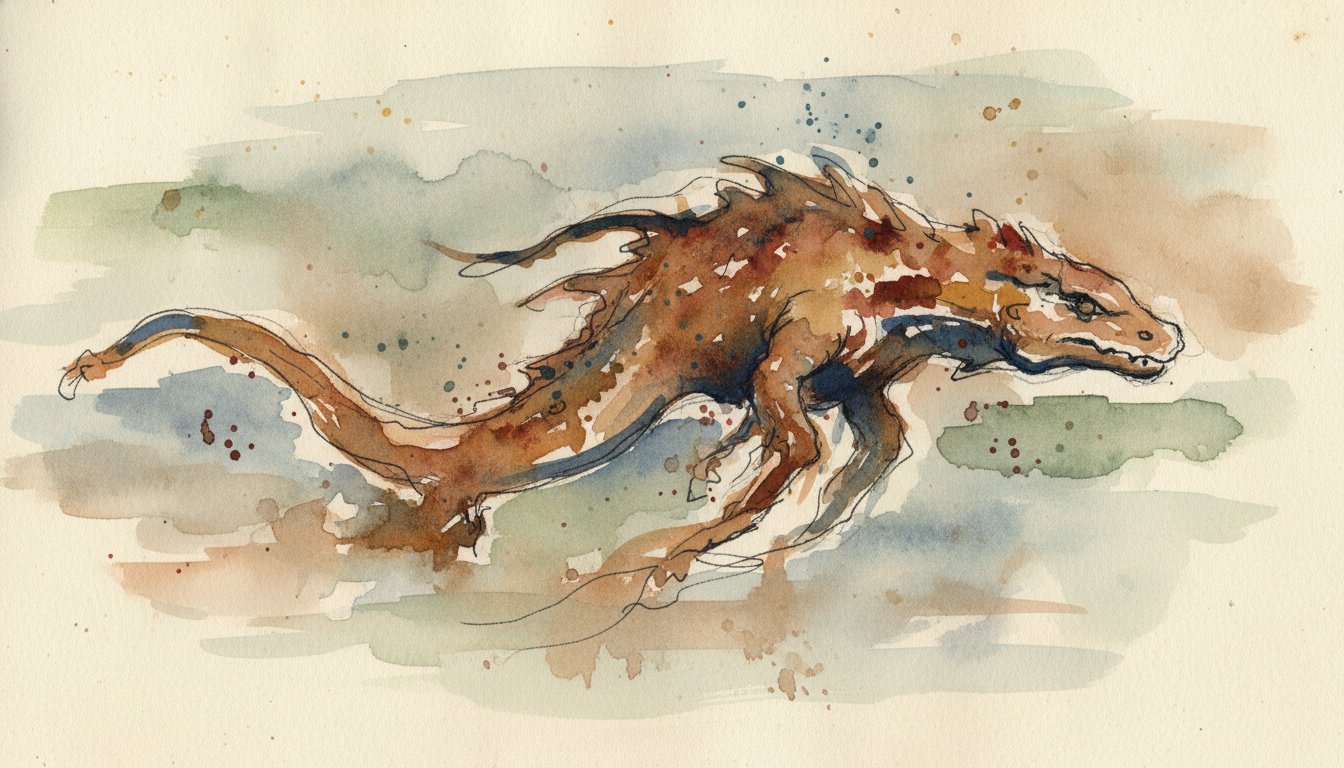
Alkali Lake Monster
Also known as: Walgren Lake Monster, Giganticus Brutervious
A 40-foot beast in a shallow Nebraska lake, where something that size should have nowhere to hide.
1921
Walgren Lake, Hay Springs, Nebraska
~40 ft long
Unknown
Unconfirmed
The Lore
The Alkali Lake Monster has been reported in Walgren Lake (formerly Alkali Lake) near Hay Springs, Nebraska since the 1920s. The creature is described as 40 feet long, gray-brown, with a horn or bony protrusion on its head, spotted surfacing in a lake that is only 8 feet deep at its maximum. That paradox has never been explained. Witnesses include ranchers, fishermen, and a local newspaper editor who published accounts in the Hay Springs Herald. The Nebraska legislature considered making it a protected species, and a historical marker at the lake references the creature. In a state known for flat, open landscapes with no place for a large animal to hide, the sightings persist.
In the alkaline lake country of Nebraska, particularly around Alkali Lake in the western part of the state, a regional monster legend took root in the late 19th century and produced one of the more colorful episodes in American cryptid history. The creature, described as a serpentine lake monster of considerable length, was reportedly seen by numerous witnesses in the 1880s and 1890s, during a period of active settlement in the Nebraska Panhandle when the region's unusual geology, its white alkaline lake beds, dry canyons, and badland formations, created an atmosphere of genuine strangeness for newcomers from wetter, more familiar terrain.
The legend gained its most elaborate treatment in a widely reprinted newspaper account from 1890, describing a creature called the Alkali Lake Monster or Giganticus Brutus. The account, published in the Hay Springs News and subsequently picked up by papers across the country, described a group of cowboys who had lassoed the creature after it surfaced near the shore, only to be pulled into the water before cutting their ropes. The story included dimensions suggesting a serpent of 40 to 100 feet in length, with scales, a broad flat head, and glowing eyes. The account was almost certainly fabricated, a common feature of frontier journalism that blended observation, exaggeration, and deliberate hoaxing, but it generated enough interest to establish the lake monster as a fixture of Nebraska Panhandle folklore.
The alkaline lakes of western Nebraska are genuine geological features, the remnants of ancient playas and the product of the region's high mineral content. These lakes support unusual biological communities adapted to high pH and salinity, and their white, reflecting surfaces can produce striking optical effects, including mirages and distortion of distant objects, particularly in the heat of summer. These natural phenomena may have contributed to accounts of unusual sightings, providing a physical basis for stories that grew considerably in the retelling.
The Alkali Lake Monster occupies an interesting position in the taxonomy of American water cryptids as a creature whose legend is more clearly traceable to a specific cultural moment, the era of frontier tall tales and boosterish journalism in the late 19th century West, than most. Unlike lake monsters with deep Indigenous roots or sustained modern sighting records, the Nebraska creature's tradition is largely literary, a product of the print culture of settlement-era journalism. Nevertheless, the tradition has persisted in regional folklore and the creature has become a minor point of local pride, representing the imaginative exuberance of a period when the American West was still being defined.
Notable Witnesses
- J.A. Johnson (Hay Springs Herald editor, 1920s)
- Multiple local ranchers
Further Reading
No book is devoted to this creature. These are the general references that cover the field, plus a direct search if you want to dig further.
- Cryptozoology A to Z by Loren Coleman and Jerome Clark (1999)
The standard one-volume encyclopedia, roughly two hundred entries covering creatures, investigators, and hoaxes.
- Mysterious Creatures: A Guide to Cryptozoology by George M. Eberhart (2002)
The larger reference guide, stronger on sourcing and on creatures that never reached the popular books.
Search Amazon for Alkali Lake Monster books
As an Amazon Associate, Cryptid Vault earns from qualifying purchases. Links open Amazon in a new tab.
Get the Field Notes.
Field notes from the Vault, when there is something worth sending. No spam.
No spam. Unsubscribe anytime.
You might also like

Champ
America's own lake monster, surfacing in the waters between Vermont and New York.
Ogopogo
Canada's answer to Nessie, coiling through the depths of Okanagan Lake.
Bear Lake Monster
A serpentine terror of Bear Lake, first reported by Mormon settlers and Shoshone alike.
Tahoe Tessie
A serpentine lake dweller hiding in the frigid depths of Lake Tahoe since Washoe legend.
Iliamna Lake Monster
Something massive moves beneath Alaska's largest lake, and the locals know to stay clear.
Issie
Japan's answer to Nessie lives in a volcanic crater lake on the southern tip of Kyushu.
Loch Ness Monster
The legendary lake serpent of Scotland, photographed, sonar-scanned, and never found.
Pressie
The largest Great Lake may harbor the largest Great Lake monster, a creature linked to Ojibwe legends of the underwater panther.