
Ogopogo
Also known as: Naitaka, N'ha-a-itk
Canada's answer to Nessie, coiling through the depths of Okanagan Lake.
Pre-colonial (Syilx tradition)
Okanagan Lake, British Columbia
15-50 ft long
Shy, surfacing briefly
Active sightings continue
The Lore
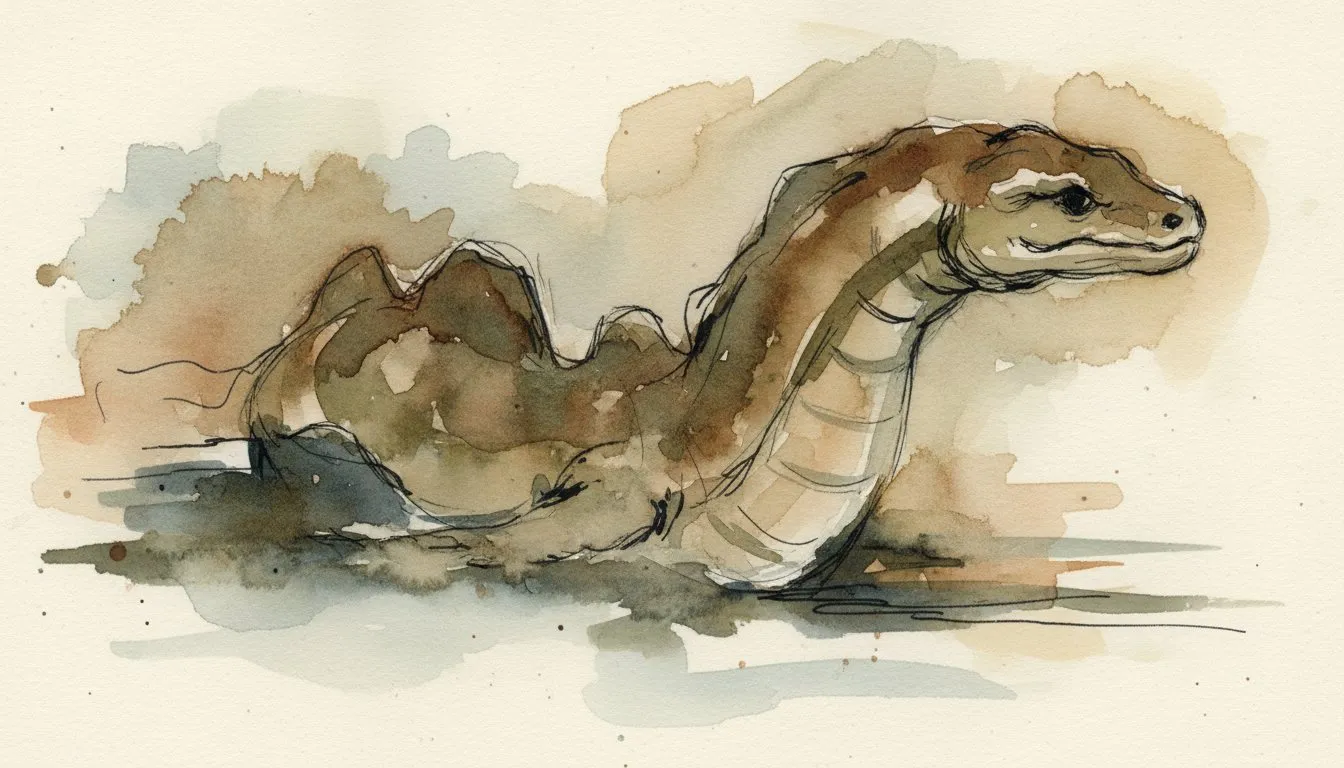
Ogopogo has been reported in British Columbia's Okanagan Lake for over a century. The Syilx people knew it as N'ha-a-itk, a dangerous lake spirit. Modern witnesses describe a serpentine creature 15-50 feet long with dark green skin and multiple humps. It remains one of the most actively sighted lake cryptids in the world.
Ogopogo is the informal modern name for a creature the Syilx Okanagan people knew as N'ha-a-itk, the sacred spirit of the lake, long before European settlement. In Syilx tradition, N'ha-a-itk lived in a cave beneath Rattlesnake Island near the city of Kelowna, and travelers crossing the lake traditionally brought a small animal to sacrifice, dropping it overboard as an offering to ensure safe passage. The creature was not a benign figure. It was understood as genuinely dangerous, capable of creating sudden storms and pulling canoes under, and the sacrificial practice was maintained consistently enough that European settlers noted it in 19th century records.
Settler sightings began accumulating in the mid-1800s, with early reports describing a long serpentine creature with multiple humps breaking the surface of the 84-mile-long Okanagan Lake. In 1926, Kelowna businessman R.H. Parkinson and a large group of picnickers at Okanagan Mission reported watching the creature for several minutes, and the sighting received wide newspaper coverage. The name Ogopogo, borrowed from a 1924 British music hall song about a fictional banjo-playing creature, stuck despite having no connection to Syilx tradition. By the 1950s, the creature was appearing in tourism brochures, and the province of British Columbia had placed it under unofficial protection.
The modern visual evidence is among the more substantial in lake cryptid literature. In 1968, Art Folden filmed roughly a minute of footage showing a large wake and a dark object moving through calm water off Peachland, footage that has been analyzed by multiple researchers and never conclusively explained. In 1989, businessman Ken Chaplin filmed a 20-foot dark object swimming near Rattlesnake Island. In 2011, an iPhone video taken by two witnesses captured two long dark shapes moving in parallel beneath the surface. None of this footage constitutes proof, but cumulatively it places Okanagan Lake among the most photographed cryptid habitats outside Loch Ness.
The lake itself is roughly 750 feet deep at its maximum, glacially carved, and connected to a chain of other long narrow lakes that were once part of a larger Pleistocene system. Biologists have noted that the lake could theoretically support a population of large fish such as sturgeon, which can exceed 15 feet and live for a century, and some Ogopogo sightings may represent misidentified white sturgeon. Others may be otter trains, wind-driven wakes, or floating logs. But for the Syilx, for generations of Okanagan residents, and for the tourists who still scan the water from the beaches of Kelowna and Vernon, something in the lake has consistently refused to fully explain itself.
Further Reading
No book is devoted to this creature. These are the general references that cover the field, plus a direct search if you want to dig further.
- Cryptozoology A to Z by Loren Coleman and Jerome Clark (1999)
The standard one-volume encyclopedia, roughly two hundred entries covering creatures, investigators, and hoaxes.
- Mysterious Creatures: A Guide to Cryptozoology by George M. Eberhart (2002)
The larger reference guide, stronger on sourcing and on creatures that never reached the popular books.
Search Amazon for Ogopogo books
As an Amazon Associate, Cryptid Vault earns from qualifying purchases. Links open Amazon in a new tab.
Get the Field Notes.
Field notes from the Vault, when there is something worth sending. No spam.
No spam. Unsubscribe anytime.
You might also like
Loch Ness Monster
The legendary lake serpent of Scotland, photographed, sonar-scanned, and never found.

Champ
America's own lake monster, surfacing in the waters between Vermont and New York.
Cadborosaurus
A horse-headed sea serpent weaving through the waters of the Pacific Northwest.
Chessie
A serpentine creature reported in the Chesapeake Bay for half a century, caught on video in 1982.
Tahoe Tessie
A serpentine lake dweller hiding in the frigid depths of Lake Tahoe since Washoe legend.
Memphre
A lake monster lurks in the cross-border waters of Lake Memphremagog, spotted from both the Quebec and Vermont shores.
Alkali Lake Monster
A 40-foot beast in a shallow Nebraska lake, where something that size should have nowhere to hide.
Bear Lake Monster
A serpentine terror of Bear Lake, first reported by Mormon settlers and Shoshone alike.