
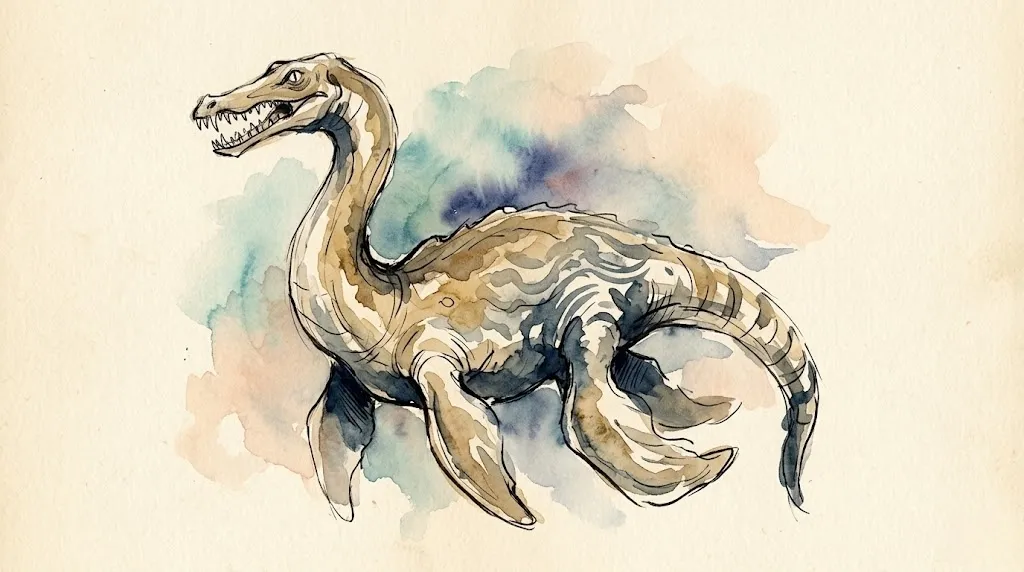
Issie
Also known as: Isshi, Lake Ikeda Monster
Japan's answer to Nessie lives in a volcanic crater lake on the southern tip of Kyushu.
1961, major wave in 1978
Lake Ikeda, Kagoshima, Japan
Estimated 5-20 meters
Passive, avoidant
Occasional sightings continue
The Lore
Issie is a lake monster reported in Lake Ikeda, a volcanic crater lake in Kagoshima Prefecture, Japan. Sightings describe a large, dark creature with humps breaking the surface, similar in profile to other lake monsters worldwide. A wave of reports in 1978 brought national attention, and the nearby town of Ibusuki erected a statue in its honor. The lake is deep, reaching 233 meters, and is home to unusually large eels, which skeptics suggest may explain the sightings.
Lake Ikeda in Kagoshima Prefecture at the southern tip of Kyushu, Japan, is a volcanic caldera lake of considerable depth and unusual thermal properties. It is also the home of a lake monster tradition that emerged in the late 20th century and became, briefly, one of Japan's most discussed cryptid cases. The creature is known as Issie, a name that blends the lake's name with the international suffix for lake monsters following the global fame of Loch Ness.
The legend's modern origin is traced to September 1978, when more than 20 people reportedly observed a large, dark creature surface near the lake's edge. Witnesses described an animal over 30 feet in length with multiple humps visible above the waterline, moving at speed before submerging. The collective nature of the sighting - multiple independent witnesses seeing the same thing simultaneously - lent it unusual credibility. It was reported widely in the Japanese press and attracted television coverage.
A follow-up sighting of note came in December 1978, when a local resident named Yutaka Kawaji captured photographs of what he described as two large humps moving through the water. The photographs show dark shapes at the surface consistent with a large animal but without identifiable anatomical features. They remain the primary photographic evidence associated with Issie. Additional sightings followed through the 1980s, enough that Lake Ikeda erected a statue of the creature on its shoreline and established an Issie exhibit at the local visitor center.
Lake Ikeda is home to large populations of Japanese eels (Anguilla japonica), which can reach lengths of four feet, and is particularly noted for its giant specimens. Very large eels moving in groups at the surface could account for the multiple-hump sightings. The lake's volcanic character means it is also subject to occasional gas releases that could disturb the surface in unusual ways, and its depth of over 230 meters means comprehensive surveying has never been completed. The Kagoshima government and local businesses have been supportive of the Issie tradition, recognizing its tourism value. Local fishermen's cooperatives have participated in organized sonar searches without conclusive results. Issie has become an important part of local identity in Kagoshima Prefecture, her image appearing on sweets, pottery, and festival materials throughout the region. The Japanese tradition of creating regional cryptid mascots has given Issie a cultural longevity that transcends the biological question entirely: even if the lake were definitively shown to contain nothing unusual, the creature's place in Kagoshima's public identity would be unlikely to diminish, as lake monster legends in Japan have proved remarkably resilient to skeptical investigation.
Further Reading
No book is devoted to this creature. These are the general references that cover the field, plus a direct search if you want to dig further.
- Cryptozoology A to Z by Loren Coleman and Jerome Clark (1999)
The standard one-volume encyclopedia, roughly two hundred entries covering creatures, investigators, and hoaxes.
- Mysterious Creatures: A Guide to Cryptozoology by George M. Eberhart (2002)
The larger reference guide, stronger on sourcing and on creatures that never reached the popular books.
As an Amazon Associate, Cryptid Vault earns from qualifying purchases. Links open Amazon in a new tab.
Get the Field Notes.
Field notes from the Vault, when there is something worth sending. No spam.
No spam. Unsubscribe anytime.
You might also like
Tsuchinoko
A fat, stumpy snake that supposedly jumps, speaks, and has a taste for alcohol.
Akkorokamui
A colossal red octopus lurking in Funka Bay, revered by the Ainu as both healer and destroyer.
Taniwha
Sacred water guardians of Maori tradition that shape rivers, protect tribes, and sometimes drag the unwary to their doom.
Alkali Lake Monster
A 40-foot beast in a shallow Nebraska lake, where something that size should have nowhere to hide.
Bear Lake Monster
A serpentine terror of Bear Lake, first reported by Mormon settlers and Shoshone alike.
Tahoe Tessie
A serpentine lake dweller hiding in the frigid depths of Lake Tahoe since Washoe legend.

Champ
America's own lake monster, surfacing in the waters between Vermont and New York.
Loch Ness Monster
The legendary lake serpent of Scotland, photographed, sonar-scanned, and never found.