
Tsuchinoko
Also known as: Bachi Hebi, Beer Bottle Snake, Nozuchi
A fat, stumpy snake that supposedly jumps, speaks, and has a taste for alcohol.
712 CE (Kojiki)
Rural Japan, widespread
30-80 cm long
Shy, elusive
Active bounties in some municipalities
The Lore
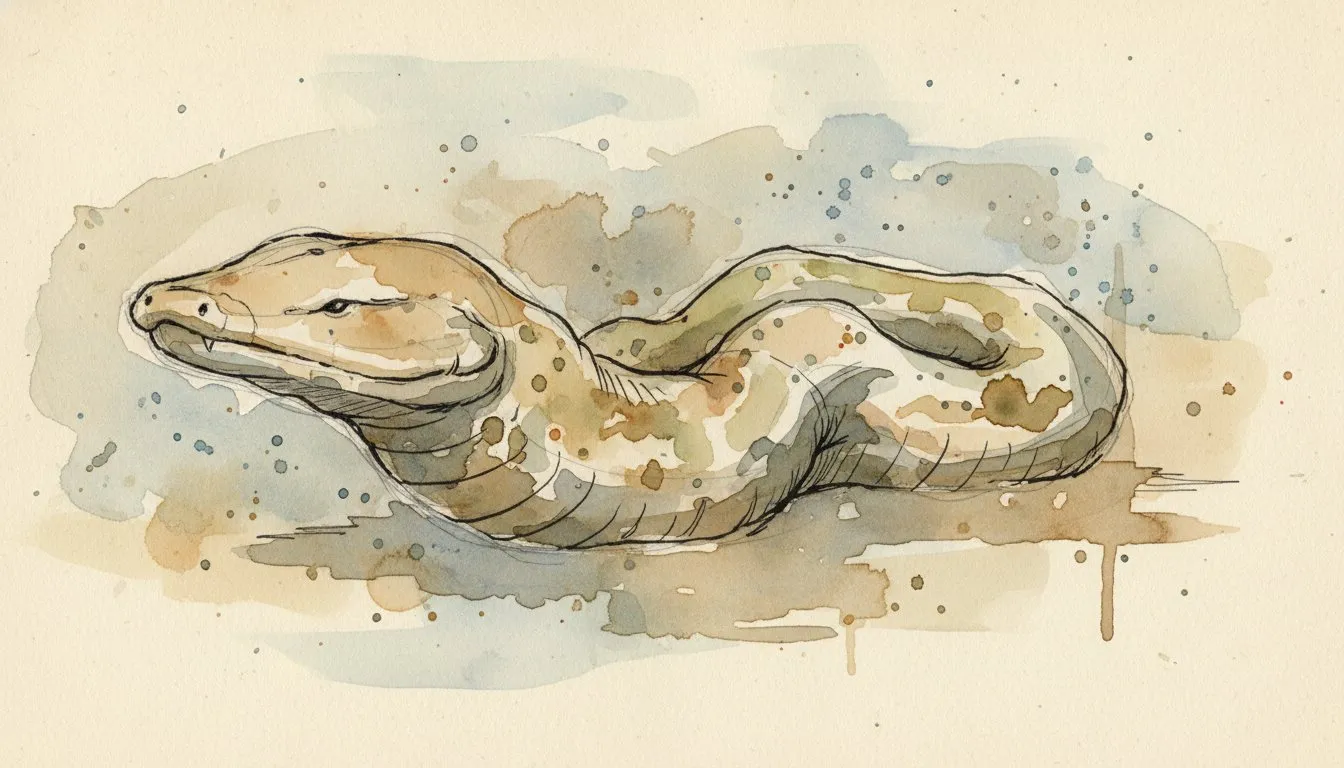
The tsuchinoko is a legendary snake-like cryptid reported across Japan for centuries. Unlike any known serpent, it has a thick, bulging midsection and a thin tail, resembling a beer bottle. Witnesses claim it can jump up to a meter in the air and sometimes rolls downhill like a wheel. Several Japanese municipalities have offered bounties for its capture, with rewards reaching millions of yen.
The tsuchinoko is one of Japan's most specifically described cryptids, and also one of its most biologically improbable. Witnesses consistently report a snake-like creature between 30 and 80 centimeters long with a body that bulges dramatically in the middle before tapering to a thin tail, giving it the rough silhouette of a beer bottle or a small baseball bat. The name means hammer's child, referring to the shape of its thickened midsection. Reports describe it as capable of leaping a full meter into the air from a standing start, occasionally curling into a loop and rolling downhill like a wheel, and in some regional variants possessing the ability to speak, lie, and develop a taste for sake.
References to the creature appear in the Kojiki, Japan's oldest surviving chronicle, compiled in 712 CE, where a similar snake deity is mentioned. The Wakan Sansai Zue, an 18th century illustrated encyclopedia, includes the tsuchinoko among its catalog of creatures. Modern sightings spiked dramatically in the 1970s when Japanese manga artist Kazuo Yagi popularized the creature in his work, triggering a wave of reports across rural Honshu and Shikoku. Witnesses have included hikers, farmers, and at least one construction crew who claimed to have seen one slither across a highway near Mikata, Fukui Prefecture.
The phenomenon has taken on a peculiarly economic dimension. Several Japanese municipalities have offered substantial bounties for the capture of a live or intact dead specimen. The town of Yoshii in Okayama Prefecture has posted a reward of 20 million yen. Itoigawa in Niigata has offered 100 million yen, roughly equivalent to $700,000 US, for indisputable physical evidence. No one has collected. The bounties are partly publicity stunts for rural tourism, but they have generated genuine search expeditions and attracted amateur cryptozoologists from across the country.
Skeptics have proposed several mundane explanations. A swollen pit viper after a large meal can take on a stumpy, thick-bodied appearance. The introduced blue-tongued skink from Australia, occasionally sold in the Japanese pet trade and sometimes released, has the right general shape. Misidentified moles or hognose snakes might also account for some sightings. But the tsuchinoko's reported ability to jump, a behavior no known Japanese snake exhibits, keeps the legend stubbornly outside the catalog of known animals, and every few years a new blurry photo emerges from a mountain village to reset the search.
Media Appearances
- Metal Gear Solid 3: Snake Eater (2004)
- Yokai Watch (anime/game series)
Further Reading
No book is devoted to this creature. These are the general references that cover the field, plus a direct search if you want to dig further.
- Cryptozoology A to Z by Loren Coleman and Jerome Clark (1999)
The standard one-volume encyclopedia, roughly two hundred entries covering creatures, investigators, and hoaxes.
- Mysterious Creatures: A Guide to Cryptozoology by George M. Eberhart (2002)
The larger reference guide, stronger on sourcing and on creatures that never reached the popular books.
Search Amazon for Tsuchinoko books
As an Amazon Associate, Cryptid Vault earns from qualifying purchases. Links open Amazon in a new tab.
Get the Field Notes.
Field notes from the Vault, when there is something worth sending. No spam.
No spam. Unsubscribe anytime.
You might also like
Issie
Japan's answer to Nessie lives in a volcanic crater lake on the southern tip of Kyushu.
Hibagon
A foul-smelling ape-man stalking the misty slopes of Mount Hiba in rural Japan.
Con Rit
A segmented, armored sea creature with dozens of lateral fins, washed ashore in Vietnam in 1883.
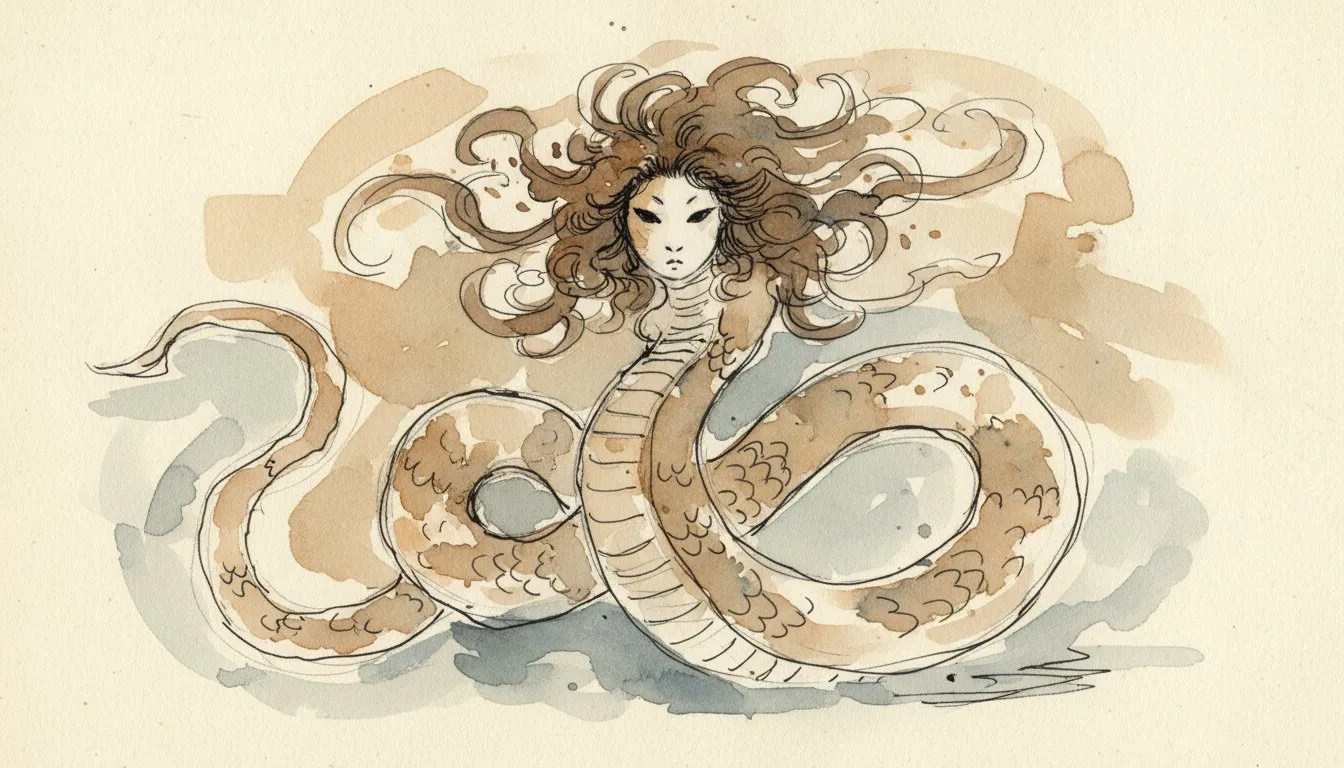
Nure-Onna
A serpent with a woman's head that haunts riverbanks, cradling a phantom baby to paralyze its prey.
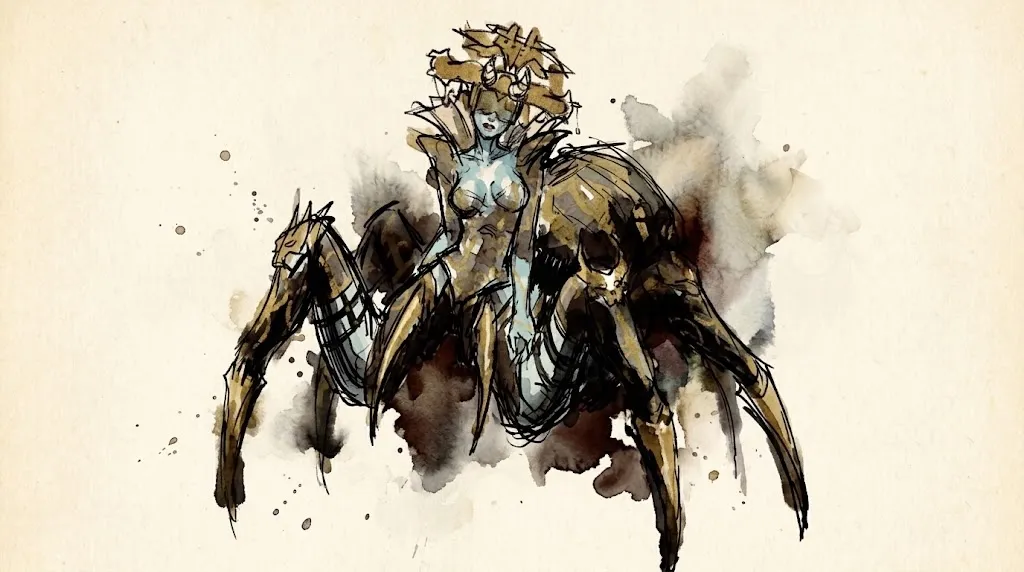
Jorogumo
A 400-year-old spider that takes the form of a beautiful woman to lure men to their death.

Gashadokuro
A towering skeleton formed from the bones of the unburied dead, rattling through the night to bite off heads.
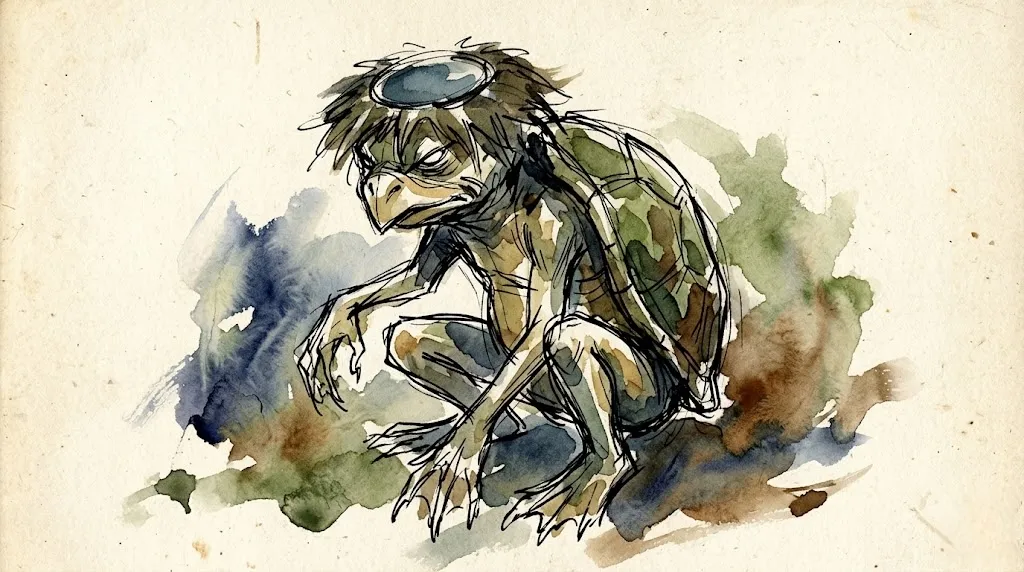
Kappa
Japan's mischievous water imp with a bowl of power on its head.
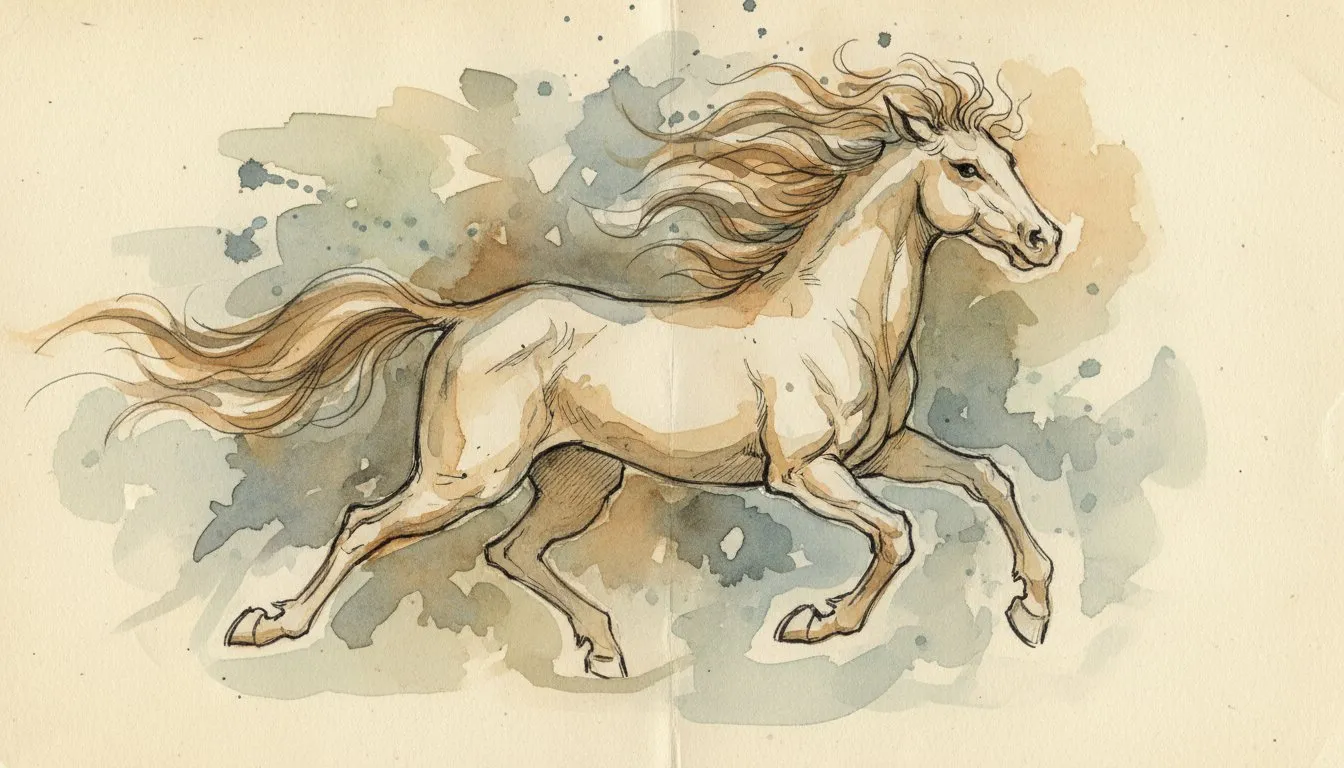
Kirin
A divine chimera of dragon and deer that only appears to herald greatness or disaster.