
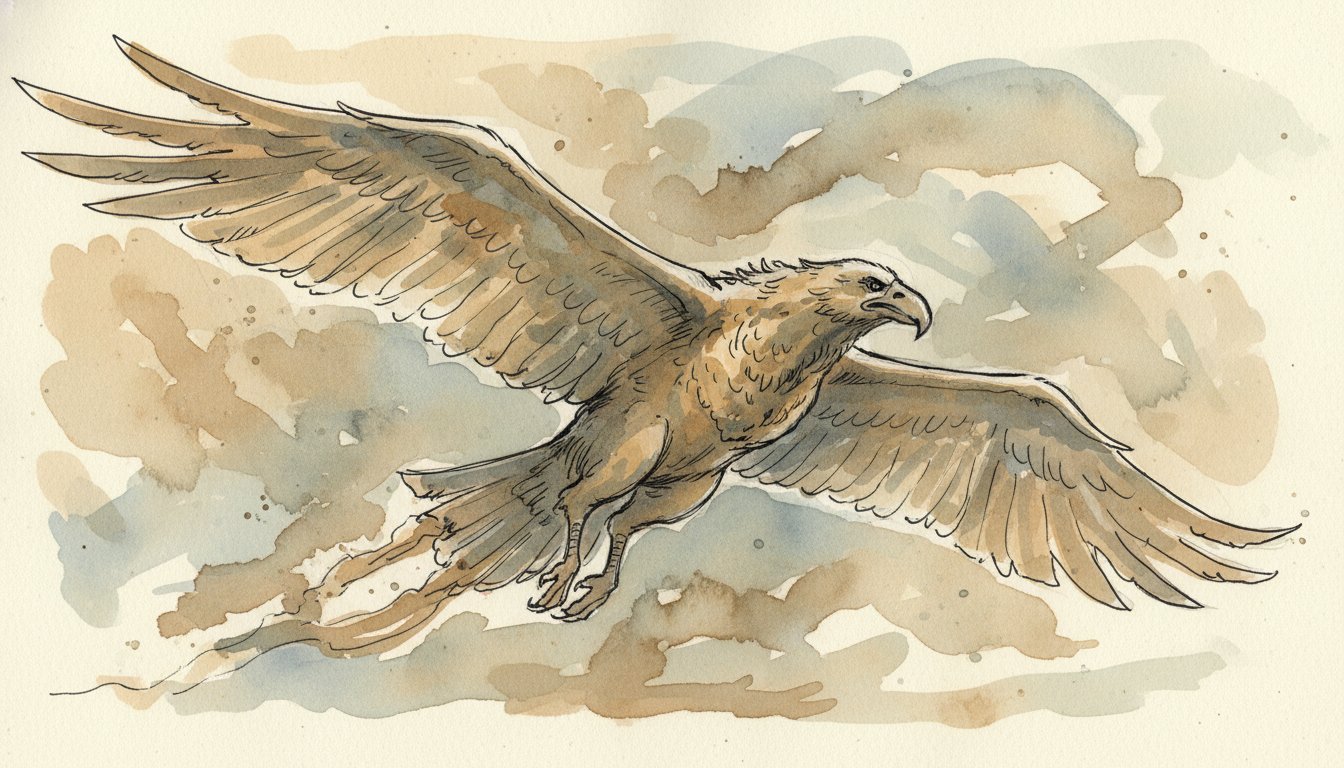
Roc
Also known as: Rukhkh, Rukh, Al-Rukhkh, Ruk
An eagle the size of a cargo plane, strong enough to carry elephants, described by sailors who crossed the Indian Ocean.
9th century (One Thousand and One Nights)
Arabian Peninsula / Indian Ocean
Wingspan reportedly 40-50+ feet
Territorial, predatory
Mythological
The Lore
The Roc is a colossal raptor from Persian and Arabian mythology, made famous by Sinbad the Sailor and Marco Polo's travel accounts. Described as large enough to blot out the sun, it reportedly carried elephants in its talons and dropped them to feed. Sightings cluster around Madagascar, the Indian Ocean islands, and the Arabian Peninsula. Some researchers connect it to the real Aepyornis, the now-extinct elephant bird of Madagascar, whose 3-foot eggs survived into the modern era.
The Roc stands as one of the most geographically widespread and culturally persistent of all mythological giant birds, appearing in the folklore and literary traditions of Arabia, Persia, East Africa, and as far east as China and the islands of the Indian Ocean. The creature entered European awareness primarily through the tales of Sinbad the Sailor in the Arabian Nights, where it is described as a bird of such extraordinary size that it carries off elephants as prey, its wingspan darkening the sky when it passes overhead. Marco Polo, returning from his travels to the court of Kublai Khan in the 13th century, reported that the Great Khan had received a feather of the Roc from Madagascar, allegedly measuring 90 palm-lengths.
The geographic concentration of Roc legends around the western Indian Ocean, particularly Madagascar and the East African coast, is significant. Madagascar was home to the elephant bird (Aepyornis maximus), a real animal that stood over 10 feet tall and weighed up to 1,600 pounds, making it the largest bird ever to have lived. Aepyornis eggs, which could hold nearly 2 gallons of liquid, have been recovered along Madagascar's coasts for centuries and were traded as curiosities throughout the Arab world. Arab traders and sailors who visited the island and encountered these enormous eggs, or saw the flightless birds themselves, may have combined real observations with exaggeration to produce the Roc legend.
The Roc also has structural parallels with the Thunderbird of North American Indigenous traditions and the Garuda of Hindu and Buddhist mythology, suggesting that the archetype of a sky-dominating giant bird of prey appears independently across many cultures. Whether these parallel traditions reflect universal symbolic needs, shared archaic mythology, or scattered encounters with real large birds is a matter of ongoing scholarly debate.
From a cryptozoological standpoint, the Roc is occasionally linked to speculation about surviving giant teratorn species. Argentavis magnificens, a prehistoric South American bird with a wingspan estimated at 23 feet, represents the largest flying bird in the fossil record. Some researchers have proposed that giant teratorns may have survived longer than the fossil record indicates, potentially into historical times in isolated regions. No fossil evidence supports survival into the medieval period, but the vastness of the oceans and the limits of the fossil record leave room for speculation that has never entirely been resolved.
Notable Witnesses
- Marco Polo (claimed secondhand account)
- Ibn Battuta (referenced in travels)
Media Appearances
- One Thousand and One Nights
- The 7th Voyage of Sinbad (1958)
- Dungeons & Dragons
Further Reading
No book is devoted to this creature. These are the general references that cover the field, plus a direct search if you want to dig further.
- Cryptozoology A to Z by Loren Coleman and Jerome Clark (1999)
The standard one-volume encyclopedia, roughly two hundred entries covering creatures, investigators, and hoaxes.
- Mysterious Creatures: A Guide to Cryptozoology by George M. Eberhart (2002)
The larger reference guide, stronger on sourcing and on creatures that never reached the popular books.
As an Amazon Associate, Cryptid Vault earns from qualifying purchases. Links open Amazon in a new tab.
Get the Field Notes.
Field notes from the Vault, when there is something worth sending. No spam.
No spam. Unsubscribe anytime.
You might also like
Thunderbird
A colossal bird from indigenous legend with a wingspan that blots out the sun.
Kongamato
Zambian fishermen describe a flying reptile with leathery wings and teeth that capsizes their boats.
Piasa Bird
A dragon-bird painted on Mississippi River bluffs by the Illini, feared as a man-eater.
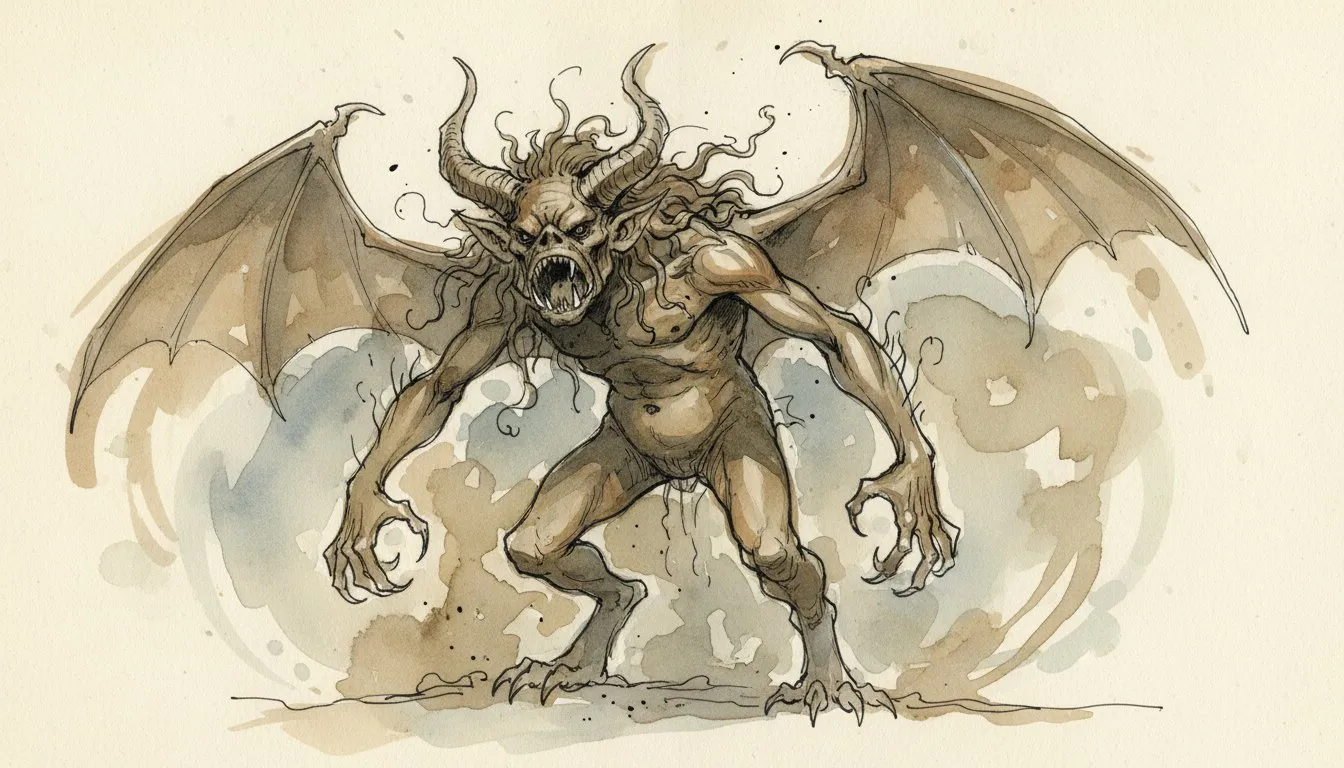
Sasabonsam
In the forests of Ghana, something with iron teeth and bat wings sits in the treetops, legs dangling like bait.
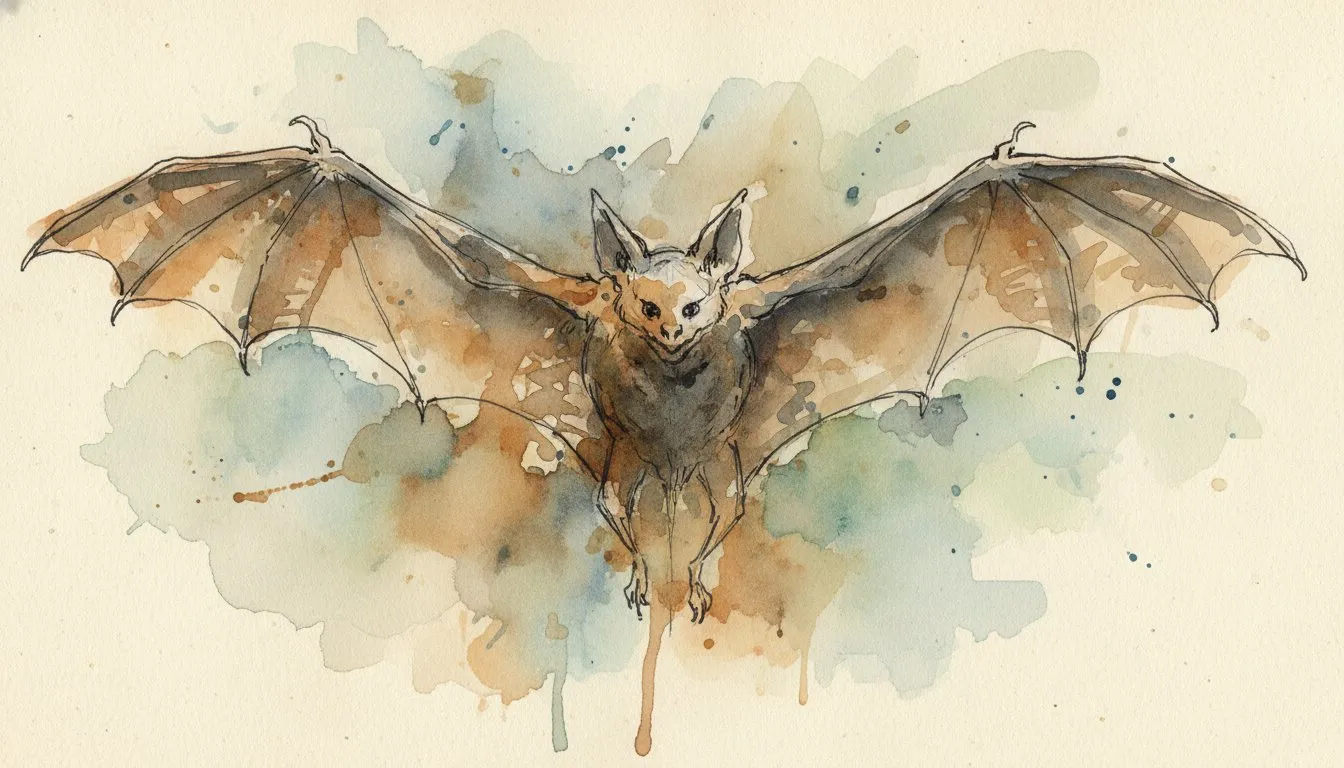
Ahool
A giant bat with a 10-foot wingspan, screaming through the jungles of Java.

Almas
Nomadic herders across Mongolia and Central Asia have described encounters with a stocky, hairy humanoid that walks upright and avoids civilization.
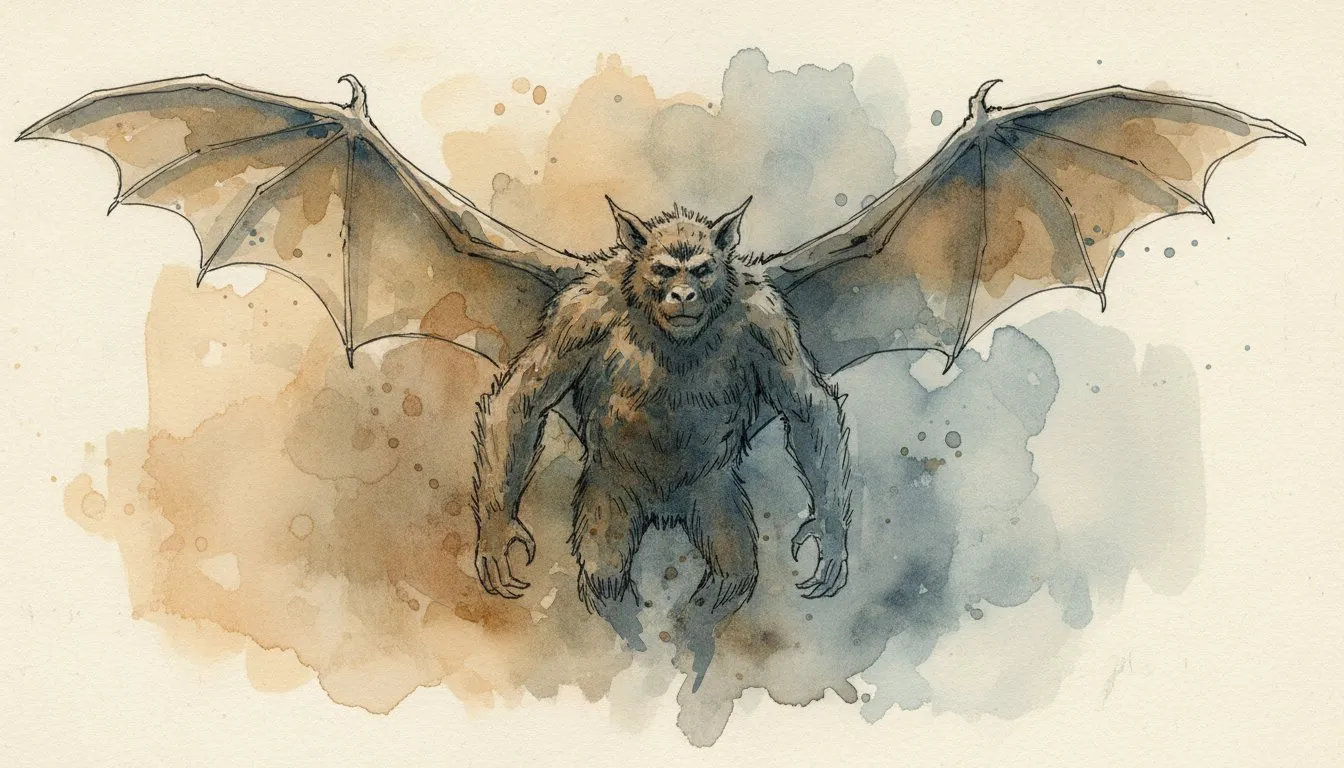
Batsquatch
A purple-skinned, bat-winged ape seen near Mount St. Helens after the eruption.

Globster
Massive, fleshy, unidentifiable masses that wash ashore worldwide, defying easy explanation until the lab results come in.