
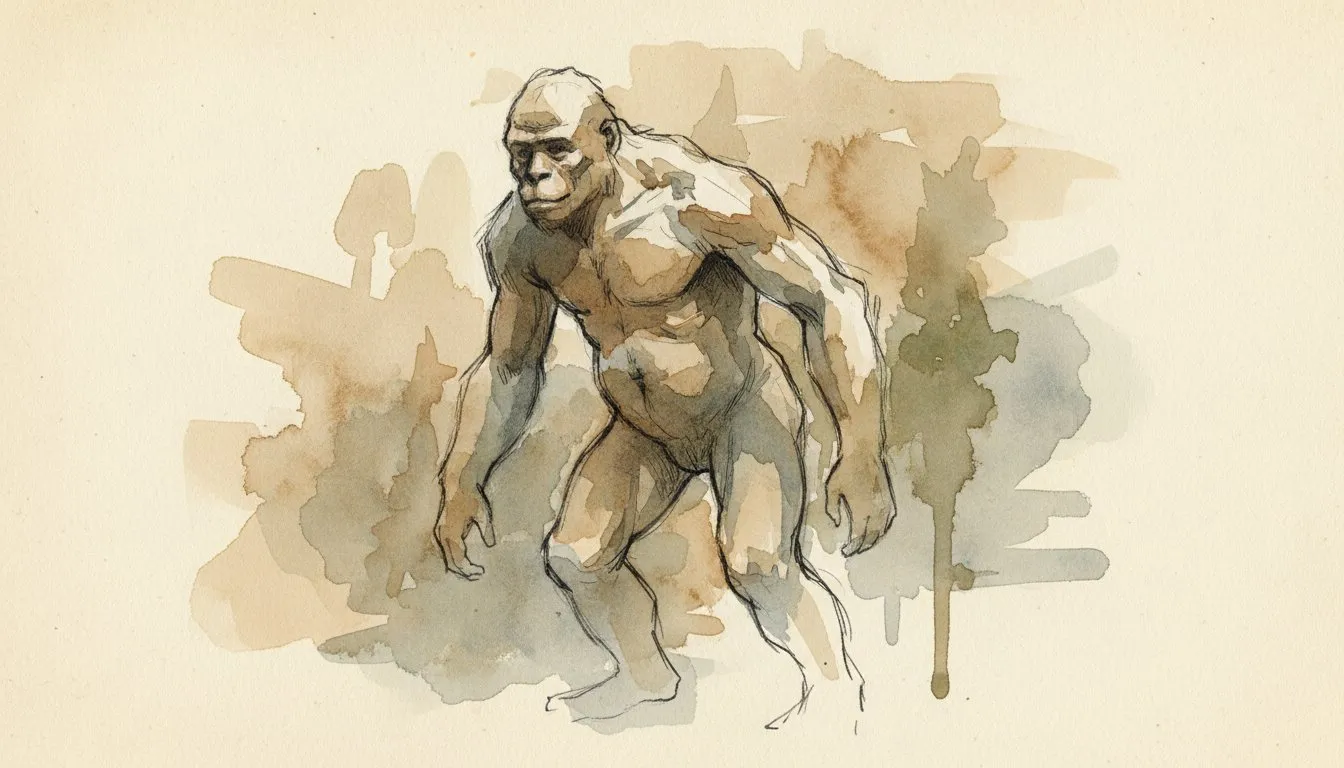
Agogwe
Also known as: Kakundakari, Sehite
Across East Africa, multiple credible witnesses have reported small, rust-colored ape-men walking upright.
1900
Tanzania and Mozambique forests
4-5 feet tall
Shy, avoids humans
Unverified
The Lore
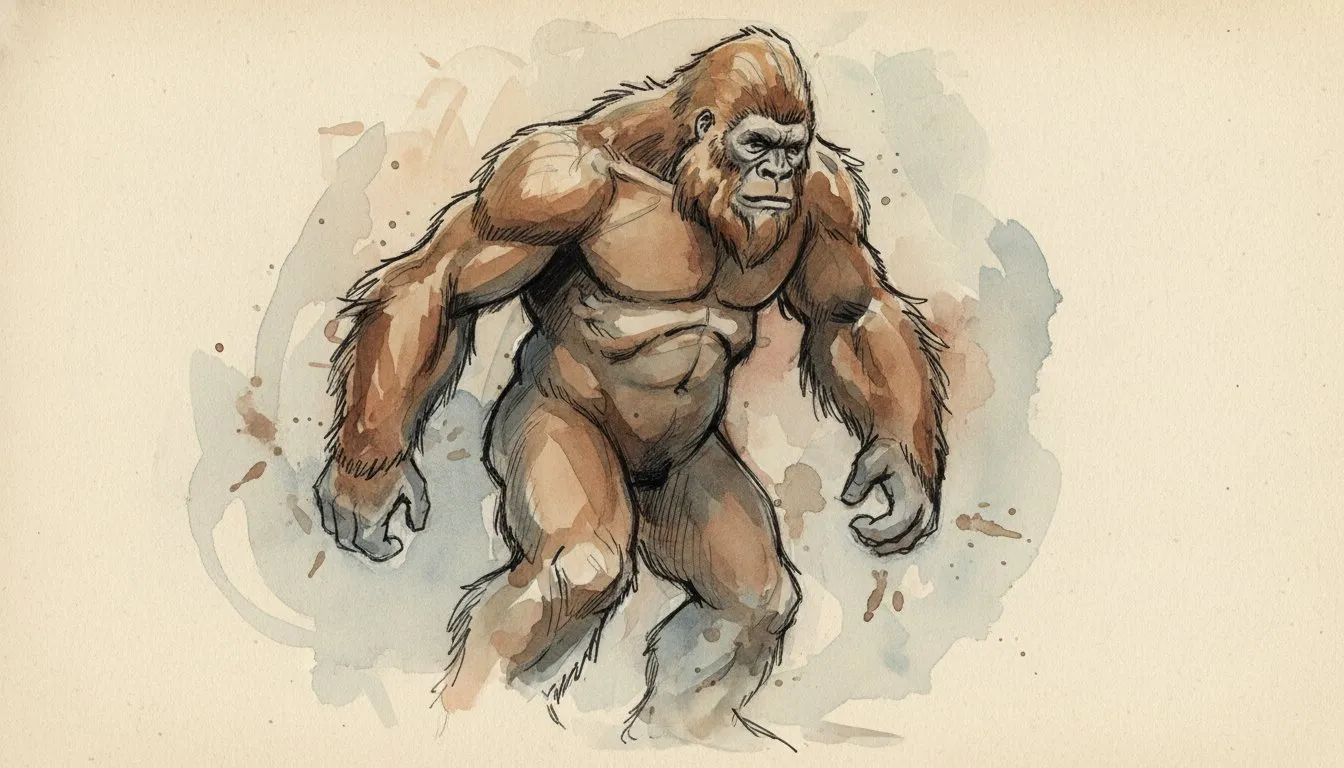
The Agogwe is a small bipedal primate reported across East Africa, particularly in Tanzania and Mozambique. Standing only 4 to 5 feet tall with russet-colored fur and a rounded forehead, it walks upright like a human. British officer Captain William Hichens reported seeing two Agogwe in 1900 while lion hunting. Some cryptozoologists suggest it could be a surviving population of Australopithecus or an unknown species of great ape.
Among the forests and mountains of eastern Africa, from Tanzania and Mozambique north into Kenya, a persistent strand of indigenous oral tradition describes a small, upright, bipedal creature covered in long reddish or rust-colored hair. The Agogwe - known by related names including Kakundakari in the Congo basin and Sehite in Ethiopia - is consistently described as diminutive, standing between three and five feet tall, with a distinctly human-like manner of walking, large eyes, and a face that observers describe as more hominid than simian. Unlike the great apes of the region - chimpanzees, gorillas - the Agogwe is said to walk fully upright rather than knuckle-walking, and its hair color is described as reddish rather than the black common to known African apes.
The most frequently cited Western account comes from Captain William Hichens, a British colonial officer who published a description in the journal Discovery in 1937. Hichens reported that he had personally observed two small, reddish, bipedal creatures in the forest near Wembere, in what is now Tanzania, during a lion hunt in the 1900s. The creatures stood watching him from a clearing before retreating into the bush. Hichens described them as clearly not chimpanzees, noting their upright posture and coloration. A second account published in the same period came from Cuthbert Burgoyne, who described seeing a family of Agogwe near the Mozambique coast in 1927, the adults accompanied by a juvenile.
The discovery of Homo floresiensis in 2004 - a small, bipedal hominin species that survived on the Indonesian island of Flores into the relatively recent past - reinvigorated cryptozoological interest in African small hominid reports. If an archaic hominin could survive undetected in Southeast Asia into the modern era, the argument runs, a similar survival in the biologically rich but relatively under-surveyed forests of eastern Africa cannot be dismissed purely on theoretical grounds. Researchers have also proposed that the Agogwe might represent a small, unknown chimpanzee population whose distinctive reddish coat and more habitually bipedal locomotion have not been formally described.
No specimen of the Agogwe has ever been collected or photographed, and the forests of eastern Africa have been subject to increasing human pressure in recent decades. The tradition's biological credibility rests on the consistency of independent accounts and the genuine possibility of unknown hominids in a region whose paleontological record is the richest in the world for early human evolution.
Notable Witnesses
- Captain William Hichens
- Cuthbert Burgoyne
Further Reading
No book is devoted to this creature. These are the general references that cover the field, plus a direct search if you want to dig further.
- Cryptozoology A to Z by Loren Coleman and Jerome Clark (1999)
The standard one-volume encyclopedia, roughly two hundred entries covering creatures, investigators, and hoaxes.
- Mysterious Creatures: A Guide to Cryptozoology by George M. Eberhart (2002)
The larger reference guide, stronger on sourcing and on creatures that never reached the popular books.
Search Amazon for Agogwe books
As an Amazon Associate, Cryptid Vault earns from qualifying purchases. Links open Amazon in a new tab.
Get the Field Notes.
Field notes from the Vault, when there is something worth sending. No spam.
No spam. Unsubscribe anytime.
You might also like
El Sisimite
In the forests of Honduras, a backward-footed ape-man kidnaps anyone who makes eye contact.
Nandi Bear
Kenyan tribes fear a nocturnal beast that kills for one thing only: the brain.
Mngwa
A gray, brindled cat the size of a donkey has been mauling people in Tanzania since the 1900s.
Orang Pendek
A short, bipedal ape covered in golden-brown fur walks the jungles of Sumatra, and credible scientists have spent decades trying to prove it exists.
Yeren
China's Bigfoot roams the thick forests of Hubei Province, backed by thousands of reported sightings.
Yowie
Australia's own Bigfoot has been reported for centuries, from Aboriginal Dreamtime stories to modern highway encounters.
Batutut
A bipedal ape spotted by both Vietnamese villagers and American soldiers during the war.
Bigfoot
The towering ape-man of the Pacific Northwest, glimpsed in fog and legend for centuries.