
Orang Pendek
Also known as: Short Person, Sedapa
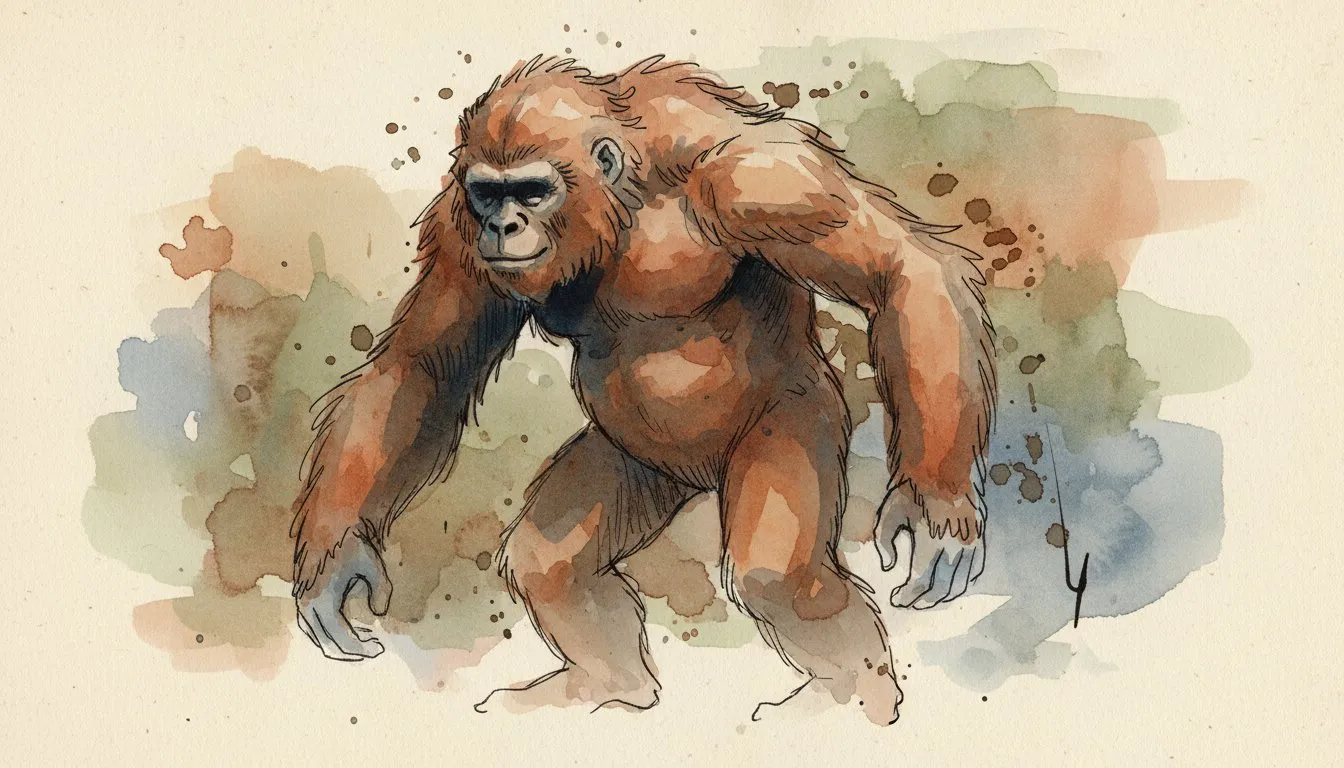
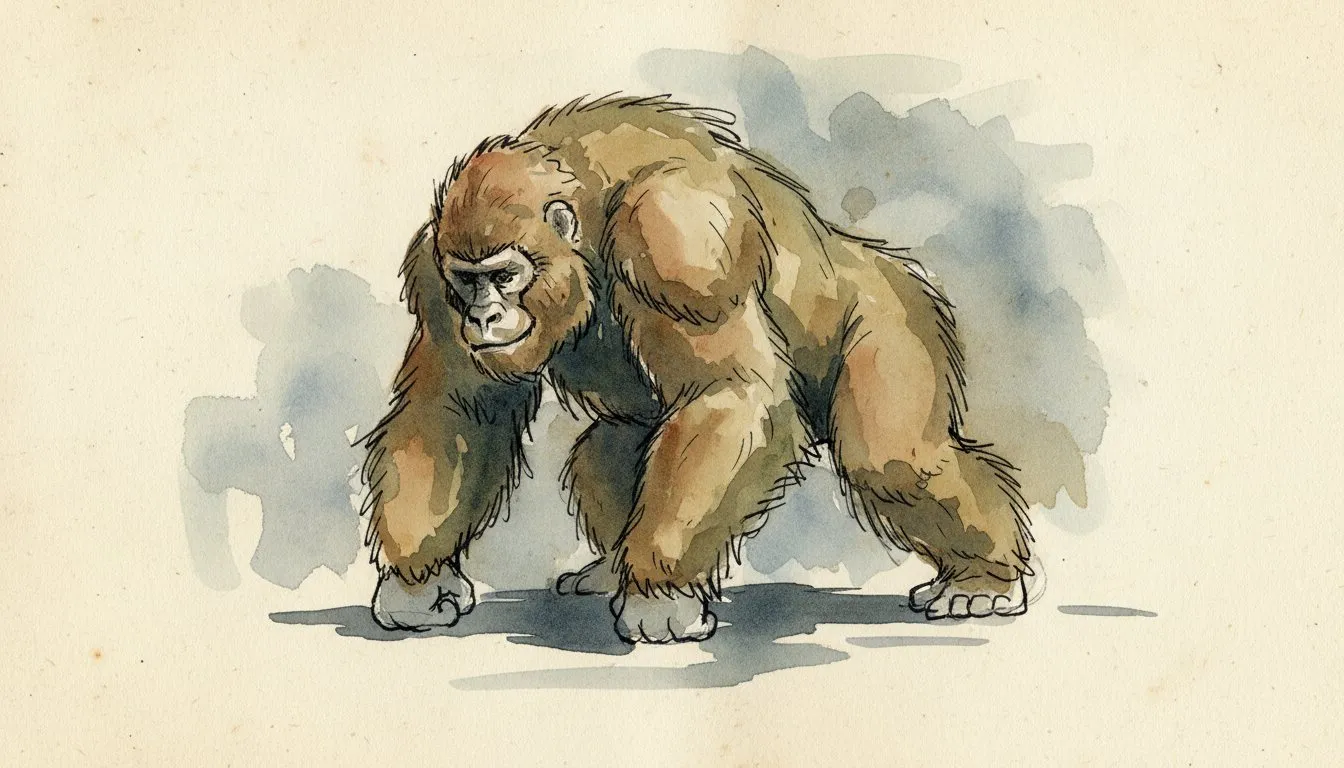
A short, bipedal ape covered in golden-brown fur walks the jungles of Sumatra, and credible scientists have spent decades trying to prove it exists.
Dutch colonial accounts, early 1900s
Kerinci Seblat National Park, Sumatra, Indonesia
2.5-5 feet tall
Shy, flees from humans
Active research area, hair and footprint samples collected
The Lore
The Orang Pendek is an alleged small ape-man inhabiting the forests of Sumatra, particularly around Kerinci Seblat National Park. Witnesses describe a creature 2.5-5 feet tall, walking upright with broad shoulders and short yellowish-brown fur. Unlike many cryptids, the Orang Pendek has been investigated by credentialed scientists. British researcher Debbie Martyr spent 15 years in the area and reported her own sighting. Hair samples have been collected but results remain inconclusive. The discovery of Homo floresiensis on nearby Flores Island gave the Orang Pendek theory new scientific relevance.
The Orang Pendek, whose name means short person in Indonesian, occupies unusual territory in cryptozoology. Unlike most hairy hominid reports, which tend to come from enthusiastic amateurs or one-off witnesses, the Orang Pendek has a roster of professional zoologists, conservation biologists, and park rangers among its claimed observers. The creature is described as two and a half to five feet tall, bipedal, powerfully built through the shoulders and chest, with short yellowish-brown or reddish fur and a face more human than ape-like. Witnesses consistently distinguish it from the Sumatran orangutan, which shares its habitat but is arboreal and quadrupedal on the ground.
Dutch colonial records mention the creature as early as the 1820s, when settlers in Sumatra's interior reported encounters with small upright apes. Indigenous Kubu and Kerinci peoples have far older traditions of the sedapa, the short man of the forest, treating it as a real animal rather than a spirit. In the 1920s, Dutch colonial administrator L.C. Westenenk described a sighting by an estate manager named van Heerwaarden, who claimed to have come within a few meters of the creature in the forest near Pulau Rimau and described its face and movement in detail. The reports formed a consistent picture decades before modern cryptozoology existed.
The most sustained modern investigation began in 1989, when British journalist Debbie Martyr traveled to Kerinci Seblat National Park intending to spend a few weeks researching the legend. She ended up staying fifteen years. Martyr reported her own sighting in 1994 and became the coordinator of the Fauna and Flora International tiger conservation program in the park, using the infrastructure of tiger monitoring to also gather Orang Pendek evidence. Wildlife photographer Jeremy Holden worked alongside her and reported a sighting in 2001. Over the years, hair samples, footprint casts, and fecal material were collected and analyzed at institutions including the University of Cambridge. Most results came back as closest to orangutan or inconclusive, but none conclusively identified the source as a known species.
The 2003 discovery of Homo floresiensis on the island of Flores, roughly 1,500 miles southeast of Sumatra, gave the Orang Pendek theory unexpected scientific weight. A small-statured hominid species had survived in Indonesia until perhaps 50,000 years ago, demonstrating that the region's biogeography could sustain exactly the kind of creature witnesses had been describing. Whether an isolated population could have persisted into the present on Sumatra remains speculative, but for the first time in cryptozoology, the hypothesis stopped being absurd on its face.
Notable Witnesses
- Debbie Martyr
- Jeremy Holden
- Dutch colonists
Media Appearances
- MonsterQuest (TV investigation)
- Expedition Unknown
Further Reading
No book is devoted to this creature. These are the general references that cover the field, plus a direct search if you want to dig further.
- Cryptozoology A to Z by Loren Coleman and Jerome Clark (1999)
The standard one-volume encyclopedia, roughly two hundred entries covering creatures, investigators, and hoaxes.
- Mysterious Creatures: A Guide to Cryptozoology by George M. Eberhart (2002)
The larger reference guide, stronger on sourcing and on creatures that never reached the popular books.
Search Amazon for Orang Pendek books
As an Amazon Associate, Cryptid Vault earns from qualifying purchases. Links open Amazon in a new tab.
Get the Field Notes.
Field notes from the Vault, when there is something worth sending. No spam.
No spam. Unsubscribe anytime.
You might also like
Ebu Gogo
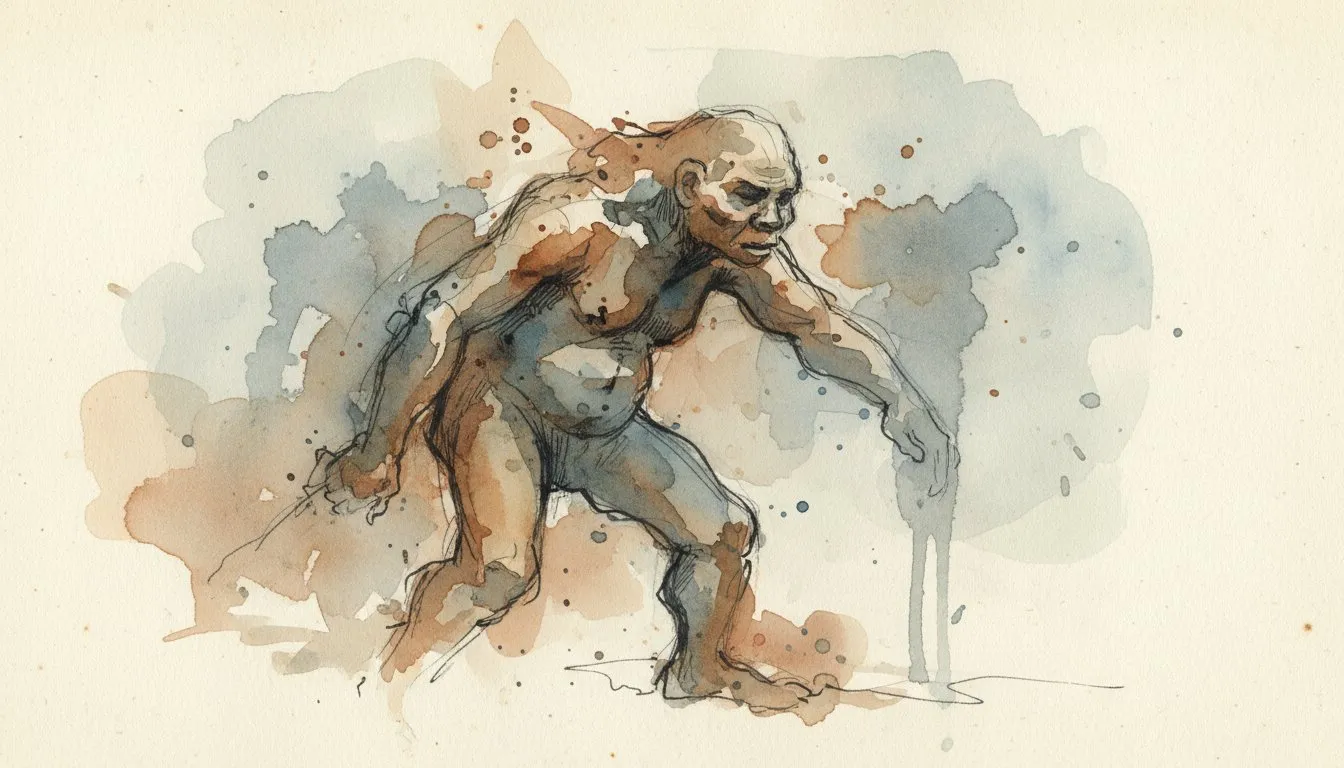
The people of Flores Island describe small, hairy cave-dwellers who stole food and children, and the story gained credibility when Homo floresiensis fossils were found.
Almas
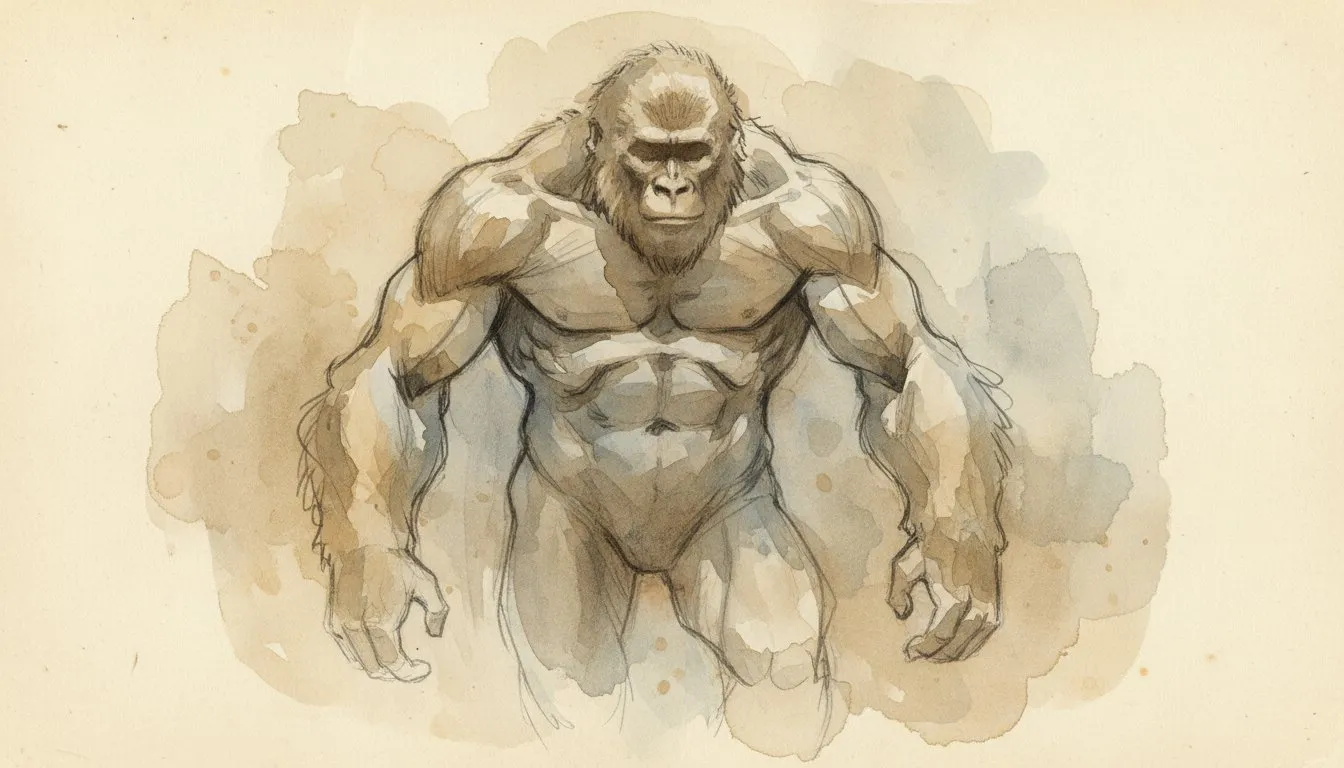
Nomadic herders across Mongolia and Central Asia have described encounters with a stocky, hairy humanoid that walks upright and avoids civilization.
Barmanou
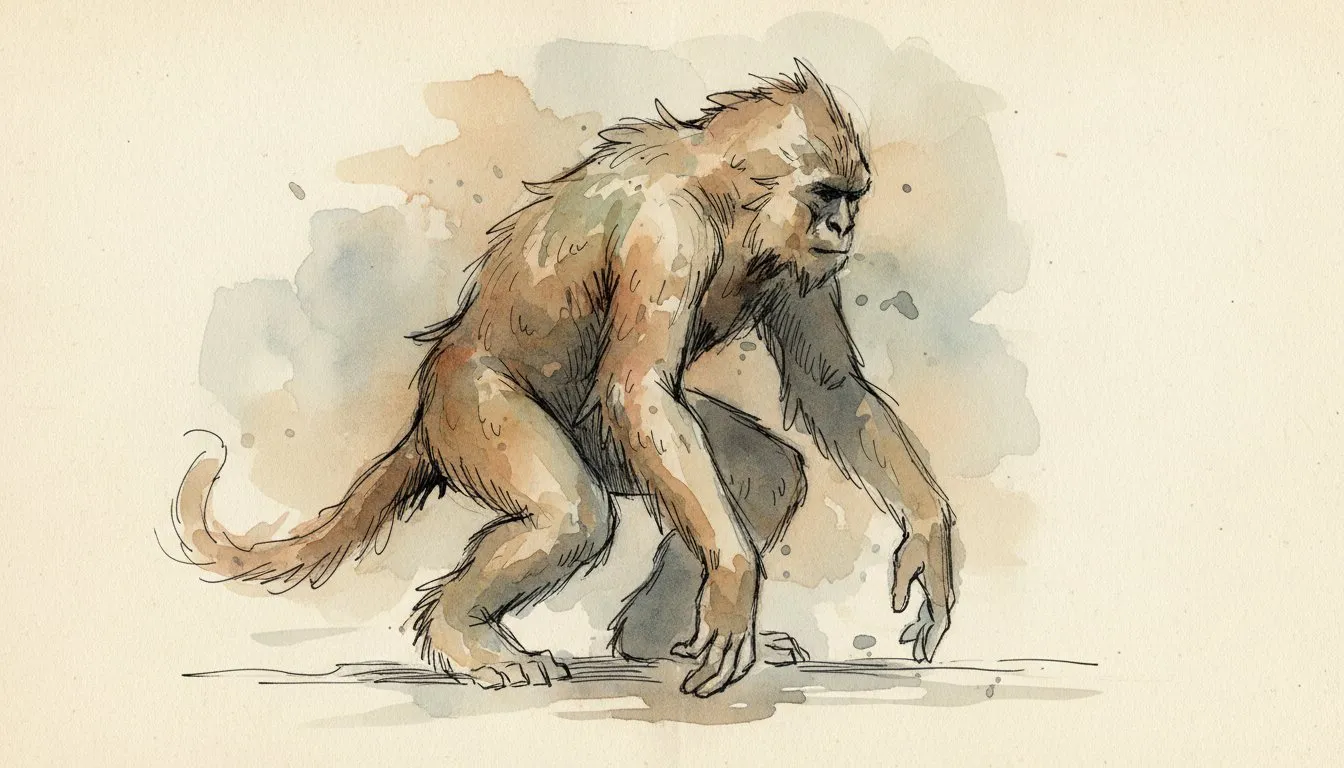
A foul-smelling ape-man reportedly abducts women and kills livestock in the remote mountain passes of northern Pakistan.
Batutut
A bipedal ape spotted by both Vietnamese villagers and American soldiers during the war.
Nguoi Rung
Deep in Vietnam's jungles, soldiers and scientists have reported a powerfully built ape that walks like a man.
Agogwe
Across East Africa, multiple credible witnesses have reported small, rust-colored ape-men walking upright.
Ahool
A giant bat with a 10-foot wingspan, screaming through the jungles of Java.
Hibagon
A foul-smelling ape-man stalking the misty slopes of Mount Hiba in rural Japan.