
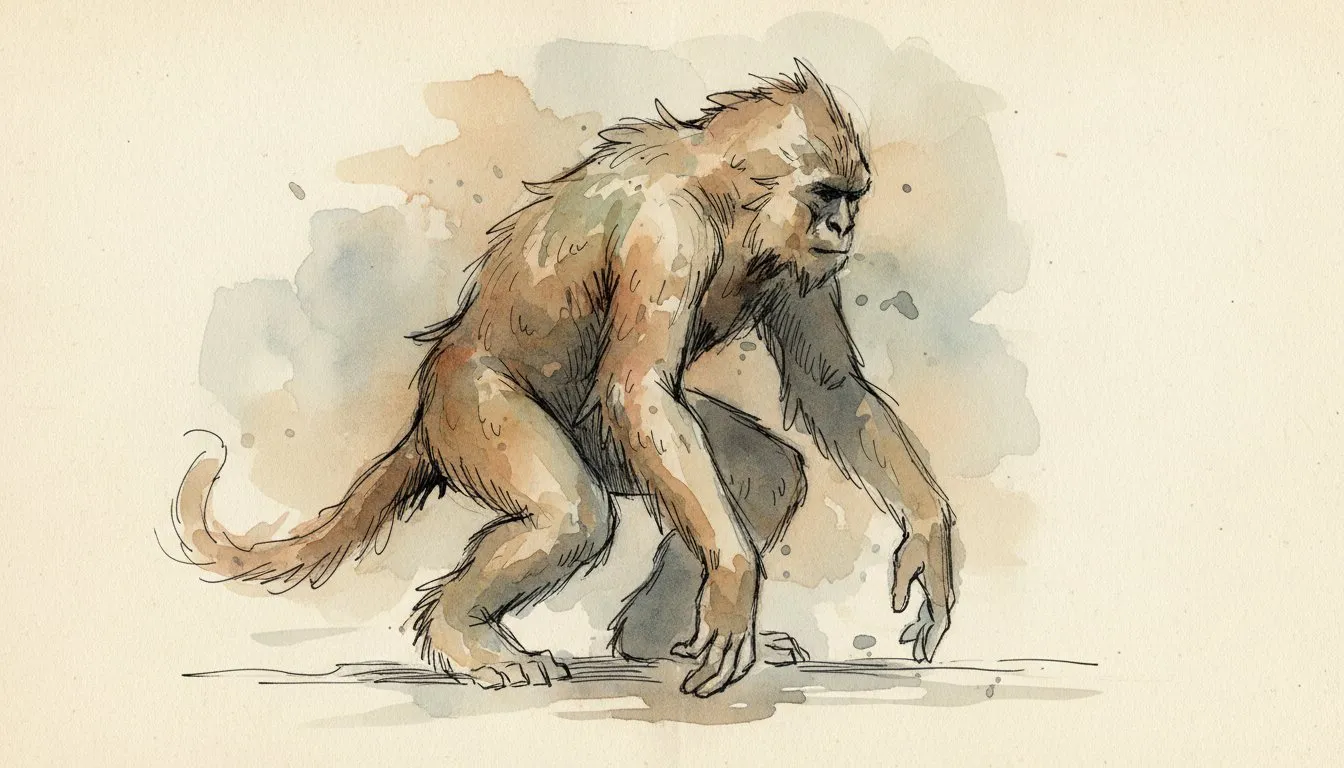
Barmanou
Also known as: Barmanu, Big Hairy One, Pakistani Bigfoot
A foul-smelling ape-man reportedly abducts women and kills livestock in the remote mountain passes of northern Pakistan.
Ancient oral tradition, documented by Magraner in 1990s
Chitral, northern Pakistan and eastern Afghanistan
About 6 feet tall
Aggressive, approaches villages
Reports continue from remote valleys
The Lore
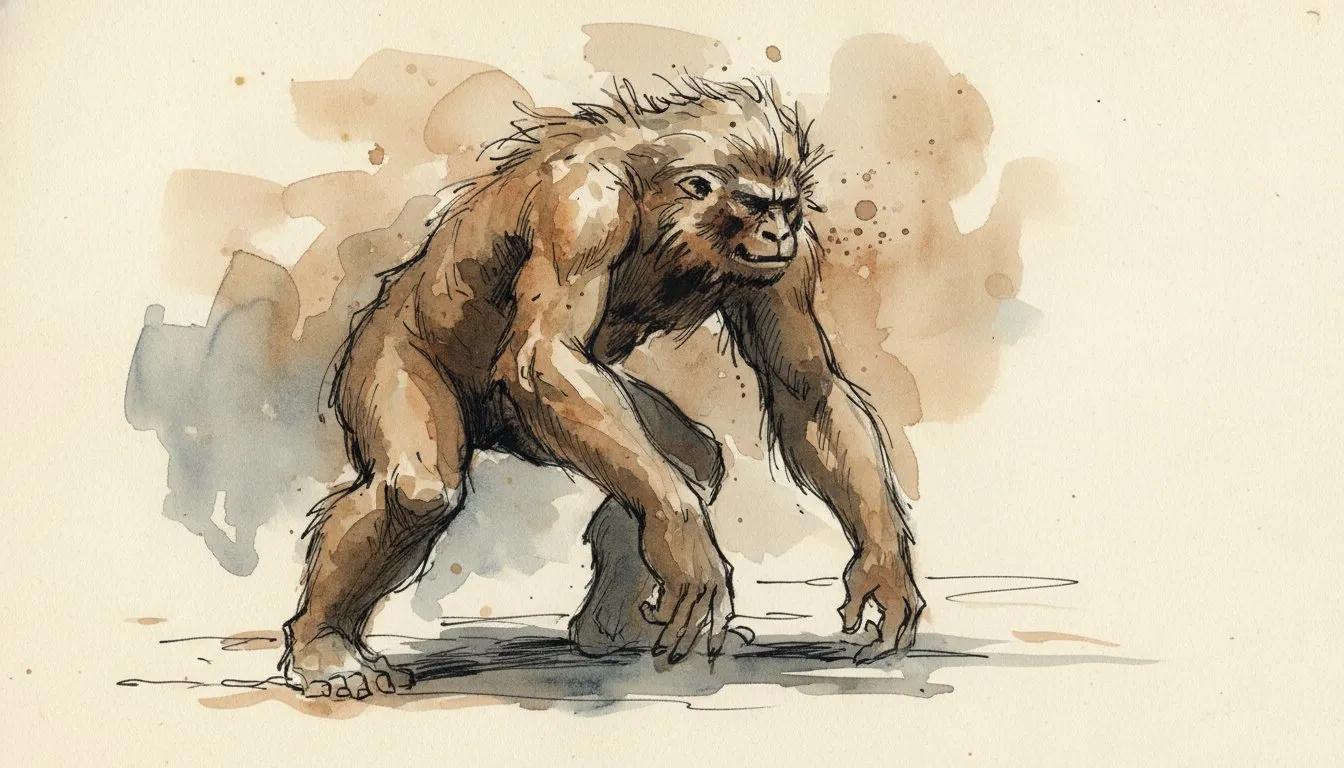
The Barmanou is a Bigfoot-like creature reported in the Chitral and Shishi Koh valleys of northern Pakistan and parts of Afghanistan. Local communities describe it as a large, hairy biped around 6 feet tall that walks upright and emits a powerful stench. Reports claim it wears animal skins and has been known to approach villages at night. Spanish zoologist Jordi Magraner spent years in the region interviewing witnesses and claimed to have found footprints. He believed the creature could represent a surviving Neanderthal population.
In the high mountain ranges of northwestern Pakistan and northeastern Afghanistan - particularly in the remote valleys of Chitral, Nuristan, and the Hindu Kush - local communities have described a large, hairy, man-like creature for generations. Known as the Barmanou, a name that translates roughly as "big hairy one" in the Khowar language of Chitral, this creature occupies a place in the regional cryptid landscape analogous to the Yeti of the Himalayas and the Bigfoot of North America, though it possesses features that distinguish it sharply from either.
What sets Barmanou accounts apart from other large hominid reports is the creature's reported behavior. Multiple accounts collected from different communities describe the Barmanou as attempting to abduct human women - an element treated with deep seriousness rather than as folklore. The creature is also described as wearing animal skins, a detail that some researchers have seized upon as evidence of a primitive, tool-using intelligence. Barmanou is sometimes compared by local informants to both an ape and a savage human, rather than being placed cleanly in either category.
The most significant Western investigation of the Barmanou was conducted by Spanish zoologist Jordi Magraner, who lived among communities in Chitral and Nuristan between 1987 and 1992 collecting testimonies. Magraner interviewed over 50 witnesses and compiled a detailed physical profile based on their accounts. He concluded that the Barmanou was a genuine unknown primate and hypothesized that it could be a surviving Neanderthal or related archaic human species. Magraner was murdered in Pakistan in 2002 under circumstances that were never fully resolved, leaving the most thorough Western investigation permanently incomplete.
The Hindu Kush and adjacent ranges are among the most inaccessible mountain environments on Earth, with valleys that remained largely unvisited by outside researchers throughout the 20th century due to political instability and difficult terrain. Brown bears (Ursus arctos) are known to inhabit the region and can walk upright for short distances, and macaque populations have been documented in some lower valleys. Whether either animal accounts for the full range of Barmanou descriptions - particularly the behavioral reports - remains unresolved. No researcher of comparable expertise and community access has taken up Magraner's work in the same depth since his death, leaving the Barmanou tradition in an unusual limbo: extensively documented yet still entirely unresolved.
Notable Witnesses
- Jordi Magraner (zoologist)
- Chitral Valley shepherds
Further Reading
No book is devoted to this creature. These are the general references that cover the field, plus a direct search if you want to dig further.
- Cryptozoology A to Z by Loren Coleman and Jerome Clark (1999)
The standard one-volume encyclopedia, roughly two hundred entries covering creatures, investigators, and hoaxes.
- Mysterious Creatures: A Guide to Cryptozoology by George M. Eberhart (2002)
The larger reference guide, stronger on sourcing and on creatures that never reached the popular books.
Search Amazon for Barmanou books
As an Amazon Associate, Cryptid Vault earns from qualifying purchases. Links open Amazon in a new tab.
Get the Field Notes.
Field notes from the Vault, when there is something worth sending. No spam.
No spam. Unsubscribe anytime.
You might also like
Almas
Nomadic herders across Mongolia and Central Asia have described encounters with a stocky, hairy humanoid that walks upright and avoids civilization.
Orang Pendek
A short, bipedal ape covered in golden-brown fur walks the jungles of Sumatra, and credible scientists have spent decades trying to prove it exists.
Fear Liath
Climbers on Scotland's second-highest peak report a towering grey figure following them through the mist, accompanied by crunching footsteps and overwhelming dread.
Moehau
A hairy, rock-throwing giant reported in New Zealand's Coromandel Range long before the Bigfoot craze.
Batutut
A bipedal ape spotted by both Vietnamese villagers and American soldiers during the war.
Hibagon
A foul-smelling ape-man stalking the misty slopes of Mount Hiba in rural Japan.
Ebu Gogo
The people of Flores Island describe small, hairy cave-dwellers who stole food and children, and the story gained credibility when Homo floresiensis fossils were found.
Nguoi Rung
Deep in Vietnam's jungles, soldiers and scientists have reported a powerfully built ape that walks like a man.