
Emela-ntouka
Also known as: Killer of Elephants, Aseka-moke
Something in the Congo swamps kills elephants with a single horn and has no interest in eating them.
1954
Likouala Swamp, Republic of the Congo
Elephant-sized, roughly 20 feet long
Extremely territorial, kills intruders
Unverified
The Lore
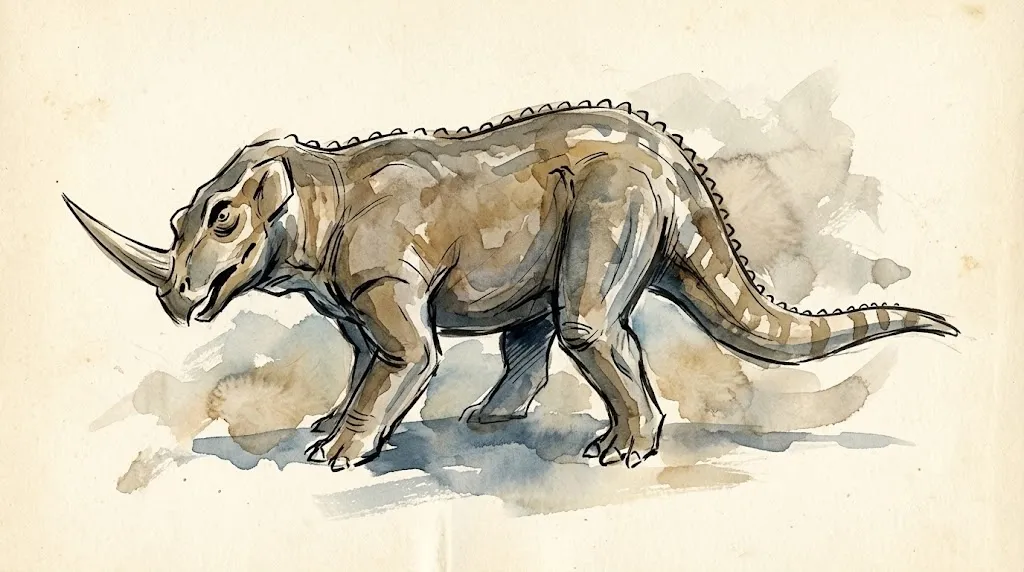
The Emela-ntouka is a large, aggressive creature reported in the swamps of the Congo Basin. About the size of an elephant, it has a single large horn on its snout and a heavy tail. Local Pygmy communities say it kills elephants and hippos on sight but is entirely herbivorous, attacking only when its territory is invaded. Some cryptozoologists suggest it could be a surviving ceratopsian dinosaur or an unknown species of semi-aquatic rhinoceros.
In the swamps and river systems of the Congo Basin, communities neighboring those who describe Mokele-mbembe also report a second large, unknown animal with a very different physical profile. The Emela-ntouka - whose name in Lingala and related languages translates roughly as "killer of elephants" - is described not as a long-necked browser but as a heavily built, rhinoceros-like creature with a single prominent horn projecting from its forehead or nose, a large tail, and a body mass comparable to a hippopotamus or small elephant.
Accounts collected from the Aka and Bangombe Pygmy communities of the Central African Republic and the Republic of the Congo describe Emela-ntouka as a semi-aquatic animal that inhabits deep swamps and the margins of large rivers. Unlike the hippo, which it superficially resembles in habitat, the Emela-ntouka is said to be herbivorous but highly aggressive, using its horn to gore hippos and elephants that enter its territory. The creature is described as having no visible external ears and making a low, trumpeting sound. Witnesses consistently describe a brownish or grayish color and an animal comfortable in both water and on land.
Early 20th-century European naturalists working in the Congo region documented accounts of a horned, semi-aquatic animal from multiple independent communities that matched no recognized species. Roy Mackal, who led expeditions seeking Mokele-mbembe in the 1980s, also collected testimony about Emela-ntouka and proposed in his 1987 book that the creature could represent a surviving ceratopsian dinosaur - a relative of Triceratops - though he acknowledged this was an extreme hypothesis given the lack of physical evidence.
More parsimonious explanations focus on known animals. A hornless black rhinoceros historically inhabited parts of West and Central Africa, and misidentified rhinos seen near water could account for some accounts. A large, aggressive male hippo viewed in poor lighting could also produce many of the reported features. Cryptozoologists point out, however, that the Emela-ntouka's reported single horn and aquatic behavior distinguish it clearly from the black rhino in the accounts of witnesses who are intimately familiar with their local fauna and make the distinction consistently across communities separated by considerable distance. The Congo Basin's extraordinary ecological richness means the theoretical possibility of an unknown large vertebrate cannot be dismissed on purely geographic grounds. New mammal species have been formally described from the region within recent decades, and the bonobo was not distinguished from the common chimpanzee as a separate species until 1929 - reminding researchers that the Congo Basin's biodiversity has repeatedly surprised the scientific community with genuinely significant discoveries.
Notable Witnesses
- Lucien Blancou
Media Appearances
- MonsterQuest (TV)
Further Reading
No book is devoted to this creature. These are the general references that cover the field, plus a direct search if you want to dig further.
- Cryptozoology A to Z by Loren Coleman and Jerome Clark (1999)
The standard one-volume encyclopedia, roughly two hundred entries covering creatures, investigators, and hoaxes.
- Mysterious Creatures: A Guide to Cryptozoology by George M. Eberhart (2002)
The larger reference guide, stronger on sourcing and on creatures that never reached the popular books.
Search Amazon for Emela-ntouka books
As an Amazon Associate, Cryptid Vault earns from qualifying purchases. Links open Amazon in a new tab.
Get the Field Notes.
Field notes from the Vault, when there is something worth sending. No spam.
No spam. Unsubscribe anytime.
You might also like
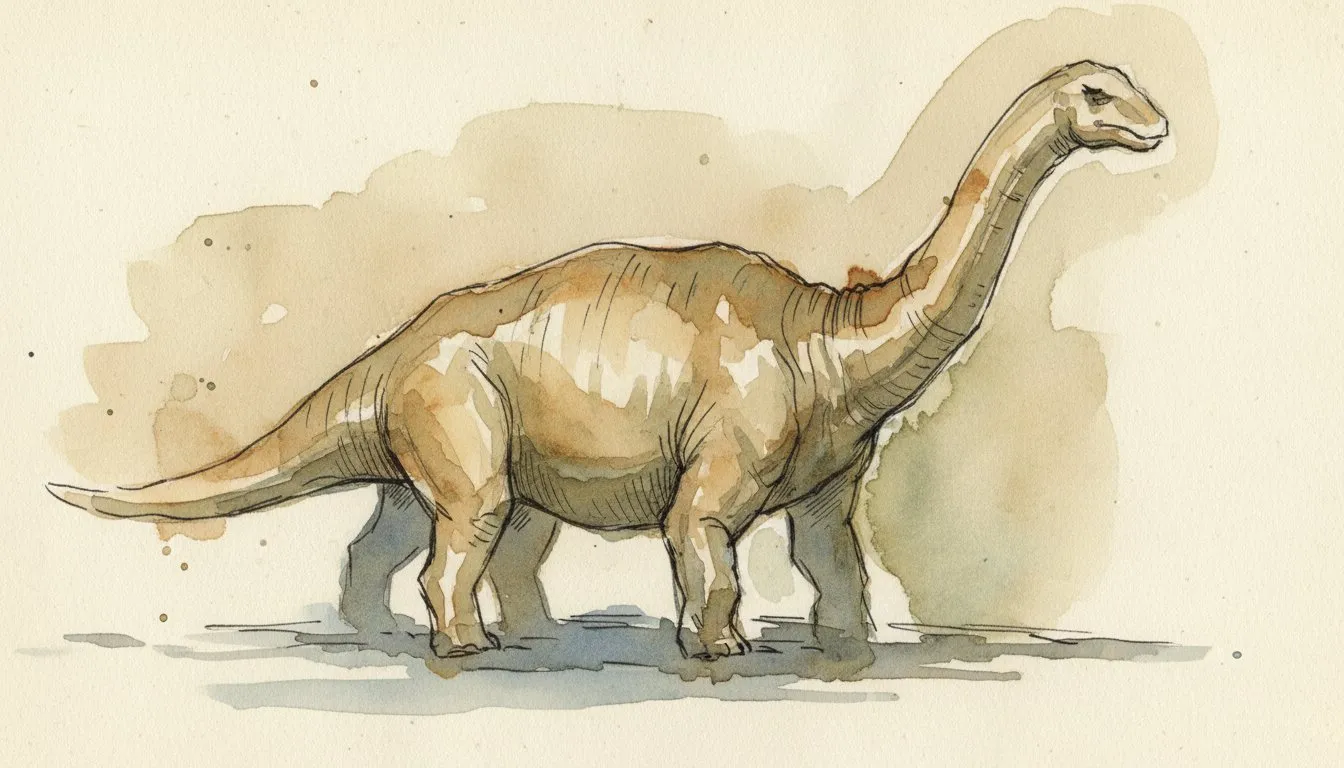
Mokele-mbembe
Deep in the Congo Basin, local tribes describe a living dinosaur with total consistency across generations.
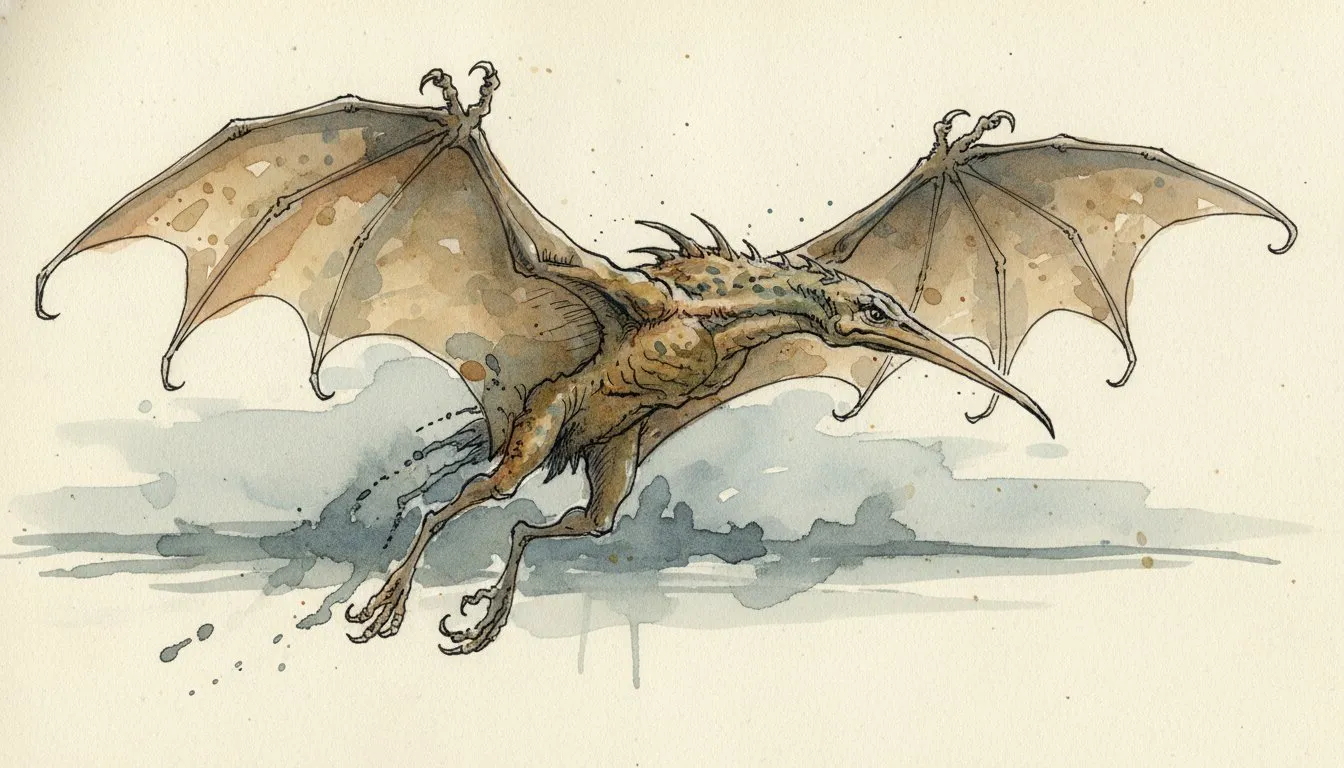
Kongamato
Zambian fishermen describe a flying reptile with leathery wings and teeth that capsizes their boats.
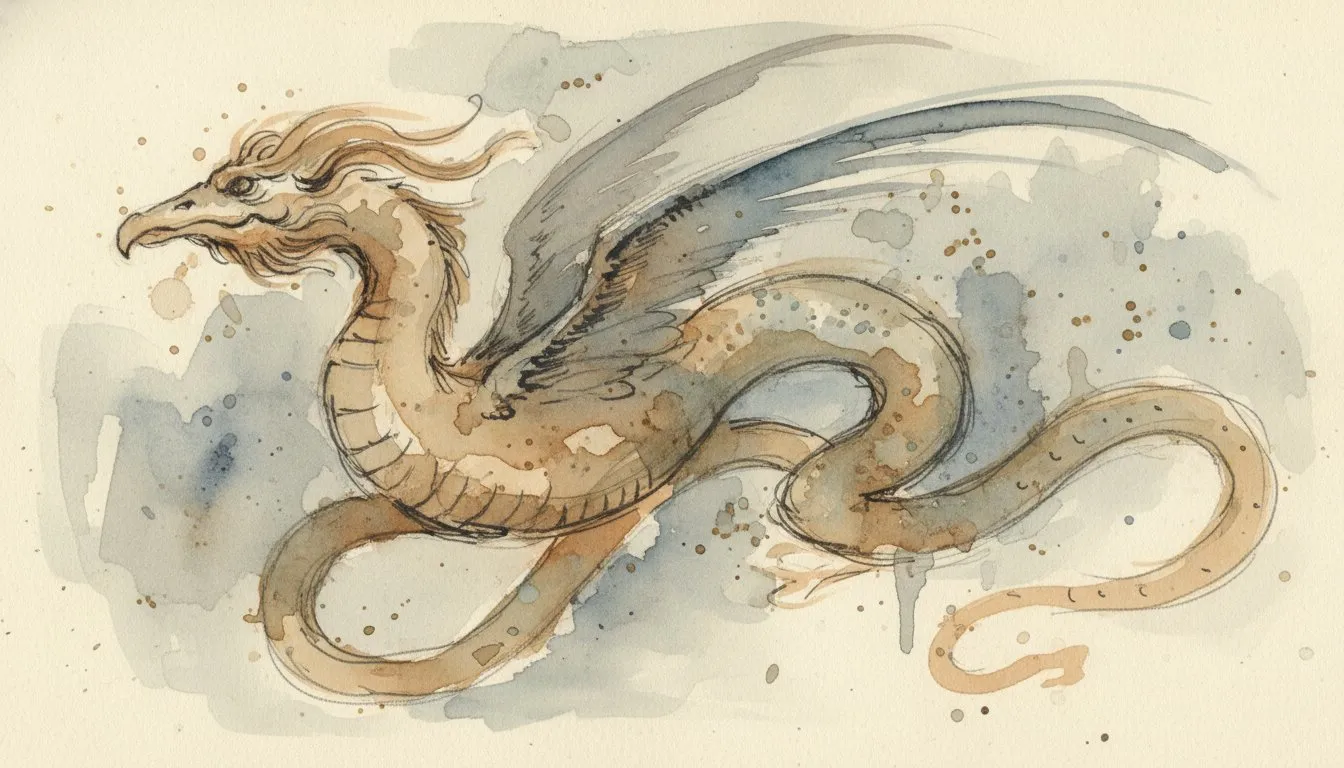
Chipfalamfula
In Zambian lakes, a massive horned beast surfaces with enough force to capsize fishing boats.
Ninki Nanka
West African elders say that anyone who sees this swamp dragon dies shortly after.
Dingonek
A saber-toothed, armored aquatic predator was reported in a Kenyan river by a big-game hunter in 1907.
J'ba Fofi
In the Congo, locals describe a spider with a leg span wider than a grown man is tall.
Muhuru
In a remote Kenyan river valley, locals describe an armored, club-tailed reptile that has no business still existing.
Grootslang
South African legend says the gods made a creature so powerful they had to split it into elephants and snakes.