
Huallepen
Also known as: Waillepen, Huallpen
A cow-headed amphibian haunts Chilean marshes, and seeing one means birth defects for the unborn.
Pre-colonial Mapuche tradition
Southern Chile marshlands
Sheep-sized, roughly 4-5 feet long
Non-aggressive but feared as an omen
Folklore
The Lore
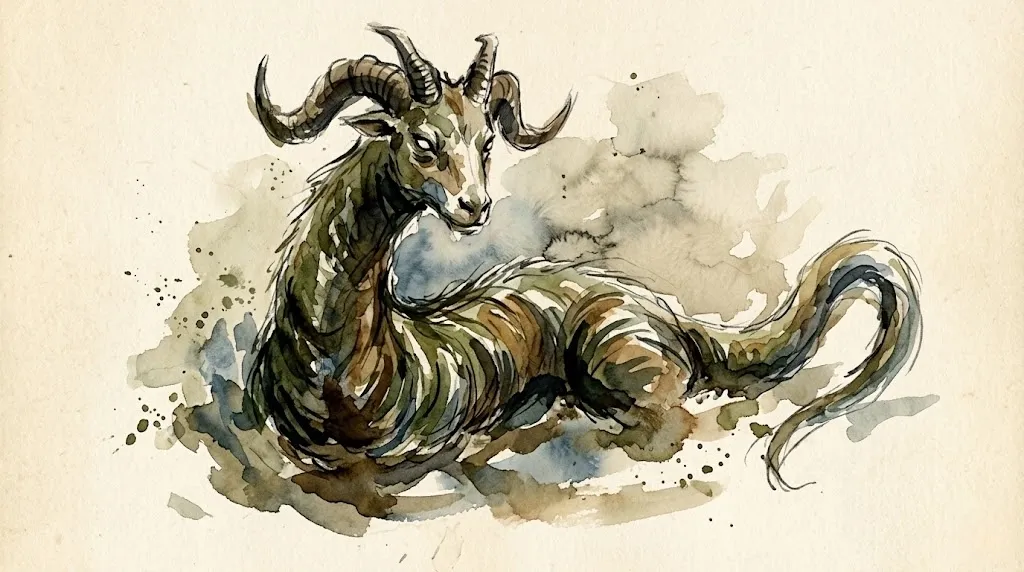
The Huallepen is a bizarre amphibious creature from Mapuche mythology found in southern Chile. It has the body of a sheep and the head of a calf, with twisted legs that allow it to move through marshes. Pregnant women were warned never to look at a Huallepen, as the sight was said to cause deformities in their children. Its agonized bellowing at night was considered a terrible omen.
Among the Mapuche people of southern Chile and Argentina, the Huallepen is a creature associated with bodies of water, specifically the swamps, river mouths, and coastal wetlands of the Lake District and surrounding regions. It is described as a chimeric animal, combining features of different species in ways that defy normal zoological categories. The most consistent descriptions portray a creature with the body of a sheep or calf, the head of a calf but with unusual, sometimes twisted features, and short, malformed legs. It is said to move awkwardly on land but to be at home in the water, often seen resting on riverbanks or wading in shallow swamp channels.
The Huallepen occupies a specific and deeply felt role in Mapuche tradition: it is considered an omen of misfortune and a cause of birth defects. Pregnant women were traditionally warned to avoid water sources where the Huallepen was believed to live, particularly at dawn and dusk when the creature was thought to be most active. The belief held that if a pregnant woman saw the Huallepen, or was touched by its breath, her child would be born with physical abnormalities, particularly twisted or malformed limbs. The creature's own physical malformation was thus understood as something contagious, a quality of wrongness that could transfer to the unborn.
The Huallepen was also said to emerge at night and mate with livestock, particularly sheep and cattle, producing offspring that were visibly deformed. When farmers found animals born with obvious physical defects, including bent legs, fused limbs, or unusual facial features, the Huallepen was often cited as the cause. This belief served a social function, providing an explanation for events that were otherwise medically inexplicable in communities without access to veterinary science.
Modern folklorists have analyzed the Huallepen as a symbolic figure that addresses community anxieties about bodily integrity, reproductive uncertainty, and the dangers of liminal spaces. The animal's hybrid nature, combining domestic and wild features, marks it as a transgressor of natural categories, and its association with the threshold between land and water reinforces its identity as a creature of dangerous boundaries. Whether understood as a misidentified real animal, an elaborate symbolic construct, or a genuine unknown species, the Huallepen remains one of the most distinctive and culturally embedded cryptids in South American tradition.
Further Reading
No book is devoted to this creature. These are the general references that cover the field, plus a direct search if you want to dig further.
- Cryptozoology A to Z by Loren Coleman and Jerome Clark (1999)
The standard one-volume encyclopedia, roughly two hundred entries covering creatures, investigators, and hoaxes.
- Mysterious Creatures: A Guide to Cryptozoology by George M. Eberhart (2002)
The larger reference guide, stronger on sourcing and on creatures that never reached the popular books.
Search Amazon for Huallepen books
As an Amazon Associate, Cryptid Vault earns from qualifying purchases. Links open Amazon in a new tab.
Get the Field Notes.
Field notes from the Vault, when there is something worth sending. No spam.
No spam. Unsubscribe anytime.
You might also like
Cuero
It lies flat on the water like a discarded cowhide, until something steps on it.
Cherufe
Inside Chilean volcanoes lives a molten humanoid that demands human sacrifice to stay dormant.
Carbunclo
A small, armored creature with a glowing gemstone embedded in its head, spotted in the Andes at twilight.
Peuchen
A shapeshifting flying serpent from Chilean forests that drains the blood of livestock from the air.
Nahuelito
Something enormous has been surfacing in an Argentine lake for over a century.
Boto
The Amazon's pink river dolphin comes ashore at night disguised as a handsome stranger.
Emela-ntouka
Something in the Congo swamps kills elephants with a single horn and has no interest in eating them.
Grootslang
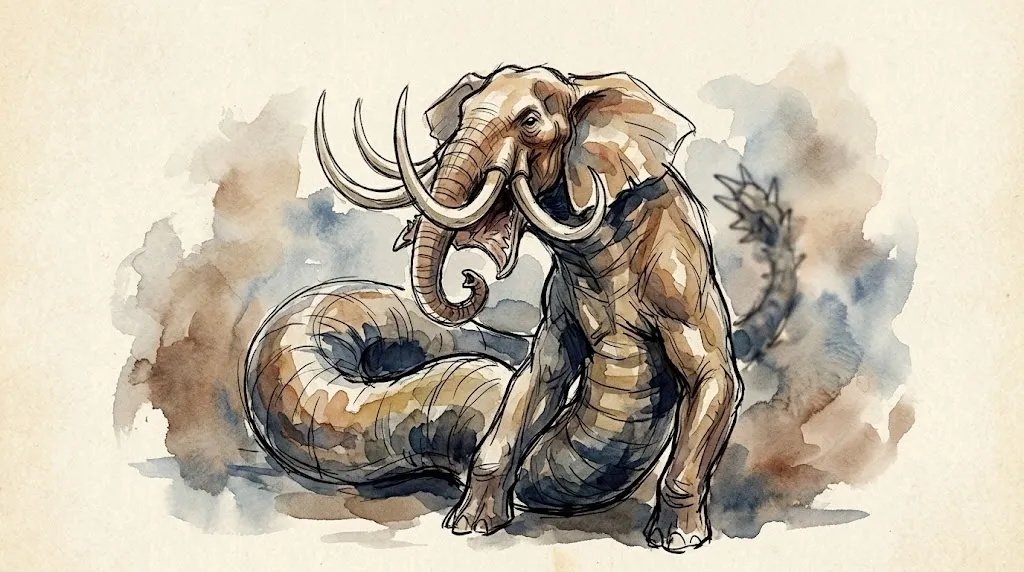
South African legend says the gods made a creature so powerful they had to split it into elephants and snakes.