
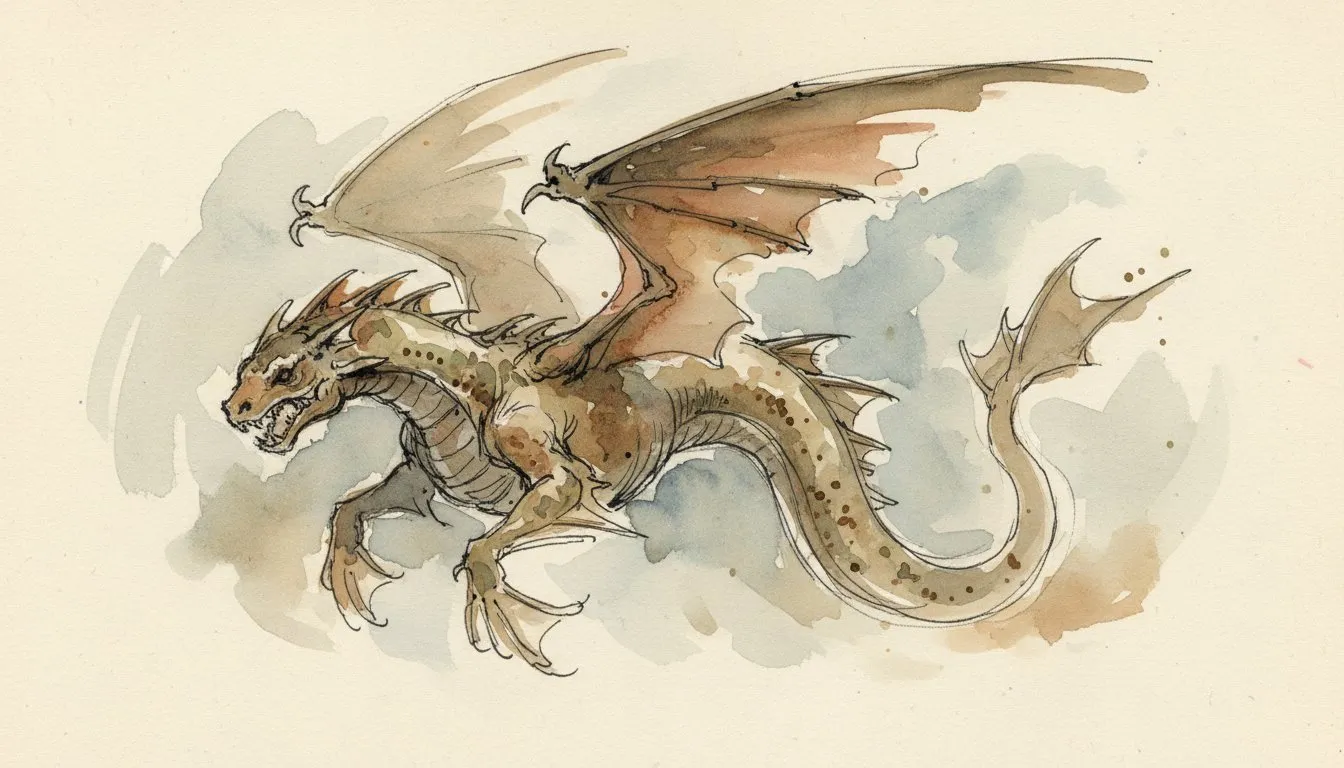
Morgawr
Also known as: Sea Giant, Cornish Sea Serpent
A humped sea serpent has been spotted off the coast of Cornwall since the 1900s, sometimes close enough to shore that beachgoers scatter.
1906
Falmouth Bay, Cornwall, England
Up to 40 feet long
Passive, avoids boats
Sporadic sightings continue
The Lore
Morgawr, meaning 'sea giant' in Cornish, is a long-necked sea creature reported in Falmouth Bay and along the southern Cornwall coast. Descriptions typically include a dark humped body, a long neck, and a small head. The most famous sighting came in 1976 when a woman known only as 'Mary F' sent two photographs to the Falmouth Packet newspaper. Fishing trawlers and coastal walkers have continued to report encounters.
Cornwall's dramatic coastline, where granite cliffs fall into the churning waters of the Atlantic, has given rise to one of the British Isles' most persistent sea monster legends. Morgawr, the Cornish word for sea giant, is the name given to a large, long-necked creature reportedly inhabiting the waters around Falmouth Bay and the Helford River estuary on Cornwall's southern coast. Unlike many cryptids whose origins are lost in time, Morgawr's modern legend has a reasonably well-documented recent history, beginning in earnest in the 1970s.
The creature first received widespread attention in September 1975, when two witnesses reported seeing a humped, long-necked animal offshore near Falmouth. The following February brought the most famous piece of Morgawr evidence: a set of photographs submitted to the Falmouth Packet newspaper by a woman who identified herself only as Mary F. The photos, never definitively authenticated or debunked, show what appears to be a long-necked creature with a small head rising from the water. Mary F. described the animal as about eighteen feet long, with a small head on a long neck, two humps above the waterline, and rough, bristly skin. She estimated she watched it for several minutes before it submerged.
The Falmouth area accumulated additional sighting reports through the late 1970s and into the 1980s, with witnesses including a local fisherman who claimed to see the creature from his boat and a pair of birdwatchers who reported watching a long-necked shape surface and dive repeatedly off Pendennis Point. In 1976, two men claimed to see Morgawr take a large bird from the water's surface. The creatures described in these reports are broadly consistent with one another: a plesiosaur-like silhouette, dark in color, moving with a slow, undulating motion.
Cornwall's relationship with maritime mystery is ancient. Tin and copper miners have worked its shores for millennia, and the sea has always been simultaneously livelihood and threat. Morgawr fits neatly into a cultural tradition of respecting unknown forces in the water. Skeptics note that Falmouth Bay is home to large conger eels, grey seals, and occasional basking sharks, all of which can present confusing silhouettes to an observer on shore. But the Morgawr legend continues to attract investigators and has made Falmouth a minor destination for cryptid tourism, particularly during the summer months when sea conditions bring visitors close to the shoreline.
Notable Witnesses
- Mary F (anonymous photographer)
- Tony 'Doc' Shiels
Further Reading
No book is devoted to this creature. These are the general references that cover the field, plus a direct search if you want to dig further.
- Cryptozoology A to Z by Loren Coleman and Jerome Clark (1999)
The standard one-volume encyclopedia, roughly two hundred entries covering creatures, investigators, and hoaxes.
- Mysterious Creatures: A Guide to Cryptozoology by George M. Eberhart (2002)
The larger reference guide, stronger on sourcing and on creatures that never reached the popular books.
Search Amazon for Morgawr books
As an Amazon Associate, Cryptid Vault earns from qualifying purchases. Links open Amazon in a new tab.
Get the Field Notes.
Field notes from the Vault, when there is something worth sending. No spam.
No spam. Unsubscribe anytime.
You might also like
Morag
Scotland's other lake monster lurks in the deepest freshwater loch in the British Isles, far from the tourist cameras of Loch Ness.
Lagarfljot Worm
Iceland's answer to the Loch Ness Monster lives in a glacial river-lake and may have been sighted on camera in 2012.
Selma
Norway's lake monster has been sighted over 500 times in a small mountain lake, making it one of the most reported freshwater cryptids in Europe.
Beast of Bodmin Moor
A large black cat prowls the foggy moors of Cornwall, shredding livestock and vanishing into the granite landscape.
Storsjoodjuret
Sweden's most famous lake monster has been reported for centuries and was officially designated a protected species in 1986.
Globster
Massive, fleshy, unidentifiable masses that wash ashore worldwide, defying easy explanation until the lab results come in.
Kraken
The ship-swallowing sea beast of Norse legend, now partially explained by giant squid.
Owlman
A towering owl-humanoid haunting the woods around a Cornish church.