
Real Animals That Were Once Cryptids
The Boundary Between Legend and Taxonomy
There is a moment in the history of every newly discovered species when the scientific establishment has to quietly revise its position. Not with fanfare - science rarely announces its embarrassments loudly - but in the form of a paper published in a journal, a new entry in a taxonomy database, a museum specimen quietly added to a drawer that was previously labeled "impossible."
Cryptozoology is often dismissed as the domain of wishful thinkers and credulous campers. But the history of natural science is littered with creatures that spent decades in that uncomfortable liminal space between folklore and field guide. The okapi was an African unicorn. The mountain gorilla was a fever dream of frightened porters. The giant squid was a sailor's excuse for a lost anchor. The coelacanth had been extinct for sixty-five million years - until it wasn't.
None of this means that every creature reported around campfires and in grainy photographs is real. It means something more precise: dismissal is not the same as disproof. When we survey what we know about the natural world versus what likely remains undiscovered - particularly in deep ocean trenches, equatorial rainforest interiors, and the cave systems that riddle every continent - the confident scoff begins to look less like skepticism and more like incuriosity. The archive of former cryptids deserves a serious read.
The Okapi: Africa's Unicorn
In the late nineteenth century, rumors filtered out of the Belgian Congo about a forest animal that resembled a cross between a horse, a zebra, and a giraffe. Indigenous Mbuti people called it the *o'api*. They described a large, solitary browser that haunted the deep Ituri rainforest, striped on its hindquarters, dark-coated on its body, and impossibly shy. British and Belgian explorers who relayed these accounts back to Europe were met with polite skepticism - or outright ridicule.
Sir Harry Johnston, British commissioner of Uganda, became obsessed with tracking down the animal after hearing consistent accounts from multiple independent sources, including a group of Congolese Pygmies and a contingent of German soldiers. In 1900, he obtained skin fragments and two skulls. In 1901, he shipped a complete skin and two skulls to the Natural History Museum in London, where the animal was formally described as *Okapia johnstoni* - a living relative of the giraffe, the only other surviving member of the family Giraffidae.
The okapi was not a hybrid. It was not a myth. It was a large, unmistakable mammal that had been living in a rainforest and described accurately by local peoples for generations, while Western science confidently catalogued it as legend. Today, okapis are kept in zoos worldwide and are a flagship species for Congo Basin conservation efforts.
The lesson is straightforward: the Ituri forest is dense, the okapi is secretive, and the people who actually lived alongside it knew what they were talking about. The continent that produced the okapi still harbors Mokele-mbembe reports from the Congo basin swamps - a sauropod-like creature described by local communities with the same consistency that the Mbuti once described the okapi. The parallel is uncomfortable, and deliberately so.
The Mountain Gorilla: The Giant Ape That Couldn't Exist
By the turn of the twentieth century, the lowland gorilla was a known - if poorly understood - species. But reports of a larger, darker, higher-altitude ape from the Virunga volcanoes of central Africa were treated as exaggeration at best, outright fabrication at worst. Local accounts described massive, black-furred primates living in highland mist forest, aggressive, enormously strong, and unlike the coastal gorillas already in European museums.
In 1902, German army officer Captain Robert von Beringe led an expedition into the Virunga mountains near what is now Rwanda. He shot two large apes at approximately 3,000 meters elevation. One specimen was recovered and shipped to Berlin, where it was formally described as *Gorilla beringei* - the mountain gorilla. The species had been, in scientific terms, impossible. Then a dead one arrived in a museum crate.
The mountain gorilla connection to the broader cryptid tradition is not subtle. For decades, serious scientists argued that a large, bipedal, hair-covered primate could not exist in the forests of the Pacific Northwest or the Himalayas - that the witness reports were misidentification, hoax, or wishful thinking. That argument had more force before 1902. After von Beringe's specimen, the categorical claim that large undiscovered primates are impossible became harder to sustain. Bigfoot, the Yeti, and China's Yeren operate in the same conceptual space the mountain gorilla once occupied: a large primate reported consistently by people who live near it, dismissed by institutions that don't.
The mountain gorilla population today numbers just over one thousand individuals. It is critically endangered, which partly explains how it remained hidden so long - not through supernatural elusiveness, but through rarity, terrain, and institutional incuriosity.
The Giant Squid: When the Kraken Got a Binomial
Norse sailors called it the Kraken. Medieval maps depicted it capsizing ships. For centuries, the giant squid existed in the same cultural register as sea serpents and mermaids - the sort of thing you drew in the margins when you ran out of coastline. The occasional tentacle washed ashore, the occasional fragment retrieved from a sperm whale's stomach, was explained away as anomaly or error.
The species *Architeuthis dux* had been formally named in 1857, based on fragmentary remains. But "formally named" and "confirmed as a living animal" are different things. For a century and a half after its naming, no living or newly dead giant squid had ever been observed in its natural habitat. The largest invertebrate on Earth - reaching lengths of up to thirteen meters - was simultaneously known to science and effectively mythological.
In 2004, Japanese marine biologist Tsunemi Kubodera and his colleague Kyoichi Mori deployed an automated camera system at 900 meters depth north of the Ogasawara Islands. They photographed a live giant squid attacking bait for the first time in recorded history. The images were published in the Proceedings of the Royal Society in 2005. The Kraken - imprecisely, incompletely, but unmistakably - was real.
The deep ocean constitutes roughly ninety-five percent of Earth's habitable space by volume, and we have directly observed only a fraction of it. The Kraken story is essentially a proof of concept: something enormous enough to anchor a millennium of maritime legend spent most of recorded history in a category indistinguishable from mythology. The Loch Ness Monster draws obvious comparisons, though Loch Ness is a lake with a volume many orders of magnitude smaller than the Pacific. The squid's lesson applies most powerfully to what might still be living in water we haven't pointed a camera at.
The Coelacanth: The Fish That Forgot to Go Extinct
On December 23, 1938, a young museum curator named Marjorie Courtenay-Latimer was sorting through the catch of a South African fishing trawler operating near the mouth of the Chalumna River when she noticed something wrong. An enormous fish - blue-finned, strange-lobed, unlike anything she recognized - lay among the usual haul. She sketched it, preserved it as best she could, and sent the sketch to ichthyologist J.L.B. Smith.
Smith's response, when he saw the sketch, became one of the more famous reactions in the history of natural science: he later wrote that he would not have been more surprised if he had seen a live dinosaur on the street. The fish Courtenay-Latimer had found was a coelacanth - a member of a lineage thought to have gone extinct at the end of the Cretaceous period, sixty-five million years ago. It was an animal that appeared in the fossil record and then simply stopped. Until it didn't.
The coelacanth (*Latimeria chalumnae*) has since been found living in populations off the Comoro Islands, along the South African coast, and in Indonesian waters - a second species, *Latimeria menadoensis*, was identified in 1999. These are not small, secretive fish. Coelacanths can exceed 1.8 meters in length and weigh over 90 kilograms.
The implications for cryptozoology are serious. If a large, ancient fish can survive undetected in well-trafficked ocean waters for sixty-five million years past its official extinction date, then the argument that any creature "would have been found by now" becomes considerably weaker. Reports of Mokele-mbembe - a large, long-necked animal allegedly inhabiting the Congo basin swamps - and the broader category of living dinosaurs rest on precisely this logic: something ancient, large, and unlikely might persist in places humans have not thoroughly examined. The coelacanth did not read the paleontology textbooks.
The Komodo Dragon: Island Dragons Were Real
European sailors who passed through the Lesser Sunda Islands brought back accounts of enormous lizards - "land crocodiles," some called them - lurking on a remote island called Komodo. The accounts were consistent but easy to dismiss: large predatory lizards capable of killing deer and water buffalo did not fit neatly into the European understanding of what a lizard could be.
In 1910, Lieutenant van Steyn van Hensbroek of the Dutch colonial administration became curious about the rumors and organized a visit to Komodo Island. What he found was *Varanus komodoensis* - the Komodo dragon, the largest living lizard on Earth, capable of reaching three meters in length and ambushing prey many times its own weight. His report prompted a formal scientific expedition in 1912, and the species was formally described that same year.
The Komodo dragon is a reminder that island ecosystems can harbor evolutionary surprises that mainland naturalists would dismiss on first principles. An animal essentially unchanged from its Pleistocene ancestors, hunting like an apex predator, had been openly discussed by local and regional populations for generations before a European officer decided to go look. The dragons of Komodo Island were not metaphorical.
The Platypus: A Hoax Assembled by God
When the first platypus specimen arrived in Britain in 1799, the naturalist George Shaw examined it carefully and then, according to accounts of the time, took a pair of scissors to it. He was looking for the stitches. Shaw was convinced the specimen was a taxidermist's prank - a duck's bill sewn onto a beaver-like body. He was a serious scientist, and serious scientists knew that mammals did not lay eggs and did not have bills.
He found no stitches. The platypus (*Ornithorhynchus anatinus*) is real: a venomous, egg-laying, semi-aquatic mammal with a bill that can detect electrical fields, a beaver's tail, and the metabolic tendencies of an animal that evolution apparently designed by committee. It is now the faunal emblem of New South Wales and an icon of Australian identity.
The platypus story is the sharpest illustration of a principle that runs through all of these cases: the human tendency to use existing categories as evidence of what can exist. Shaw knew what mammals were. He knew what bills were. Therefore, this thing in his hands was impossible. The natural world has never been particularly interested in our categories.
What the Archive Means
None of this is an argument that every reported cryptid is waiting to be confirmed. Most are not. The evidence threshold for a real animal and for a folklore creature are genuinely different, and wishful thinking is not a field method. But the archive of former cryptids establishes something more modest and more important: the boundaries of the known are not the boundaries of the possible.
Current candidates worth watching include Orang Pendek, the small bipedal primate reported by Sumatran forest communities for over a century - a report that carries the same quality of local, consistent, independent witness testimony that preceded formal confirmation of the mountain gorilla. The Congo basin's Mokele-mbembe shares the dense-forest, indigenous-knowledge profile of the okapi. The deep oceans that revealed the giant squid in 2004 are still mostly dark.
Science works. The species in this article were confirmed by science, not despite it. The point is that science works on timelines that don't respect the impatience of any given generation, and in terrain that defeats any given expedition. The okapi was real while it was being laughed at. The coelacanth was swimming while its genus was being written into extinction.
For a curated look at creatures that have already made the crossing from legend to taxonomy - and the living cryptids most likely to follow - see our Former Cryptids collection. And if you want to explore the full range of creatures that remain, as of today, officially unconfirmed, browse the vault.
The next confirmed species is already out there. Someone, somewhere, has already seen it.
A third continent, Asia, produced the Yeti and the Yeren, two of the cases still waiting: see our guide to Asian cryptids.
Two continents produced most of the cases that made the crossing, and most of the ones still waiting. For their current rosters, see our guides to African cryptids and South American cryptids.
Get the Field Notes.
Field notes from the Vault, when there is something worth sending. No spam.
No spam. Unsubscribe anytime.
Creatures mentioned in this post
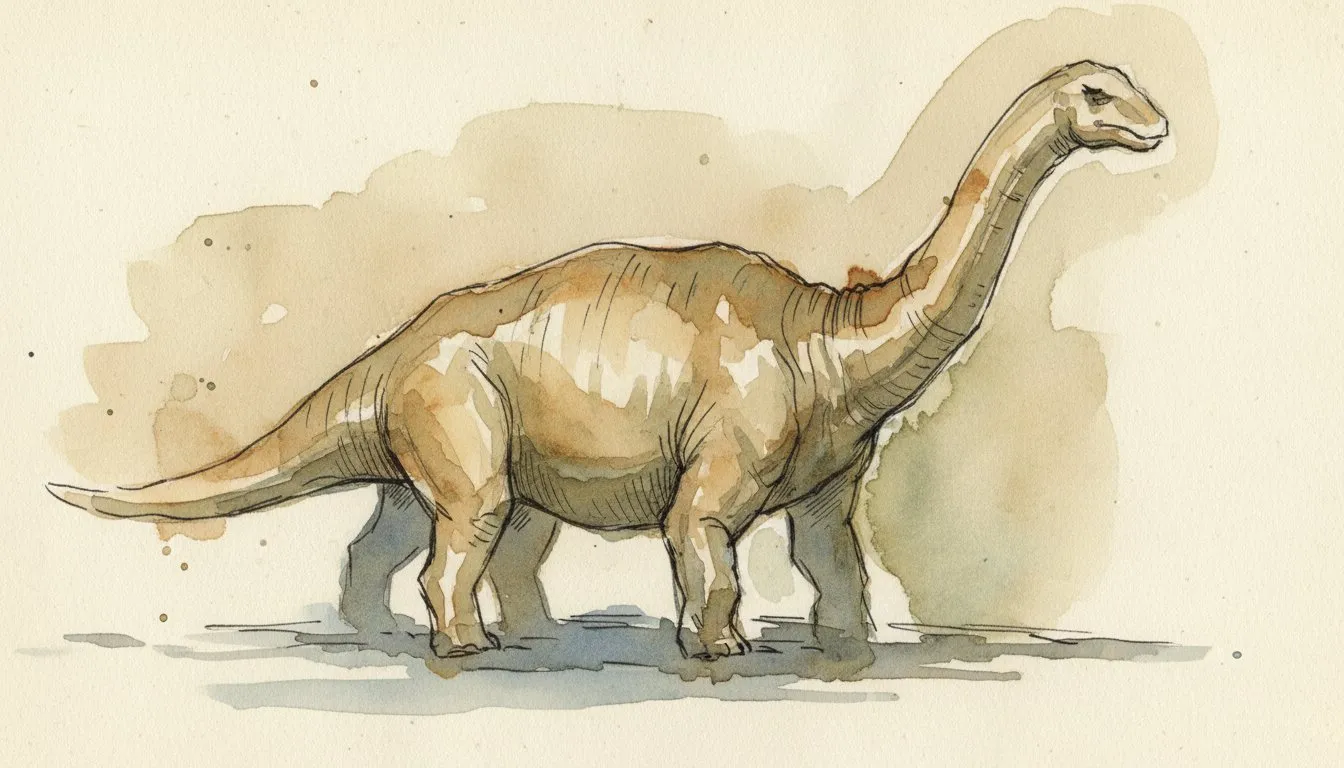
Mokele-mbembe
Deep in the Congo Basin, local tribes describe a living dinosaur with total consistency across generations.
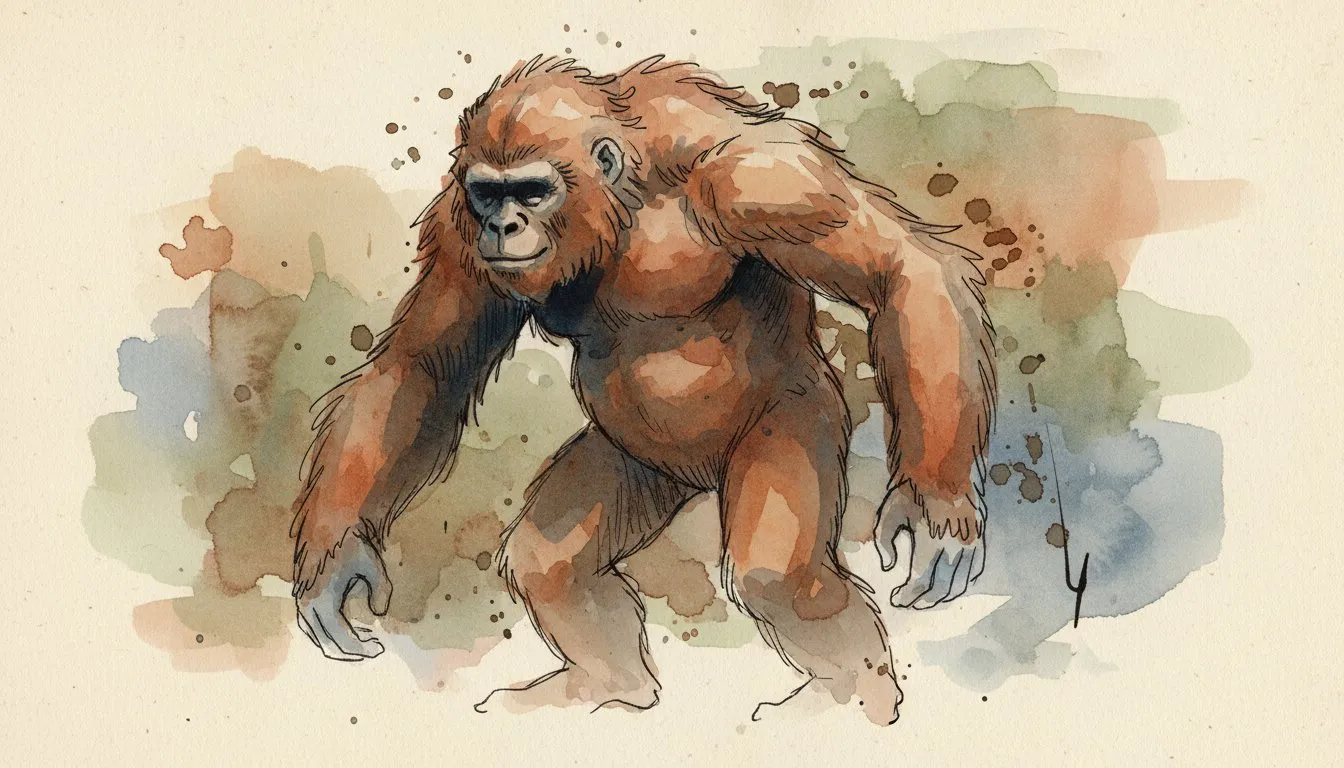
Orang Pendek
A short, bipedal ape covered in golden-brown fur walks the jungles of Sumatra, and credible scientists have spent decades trying to prove it exists.
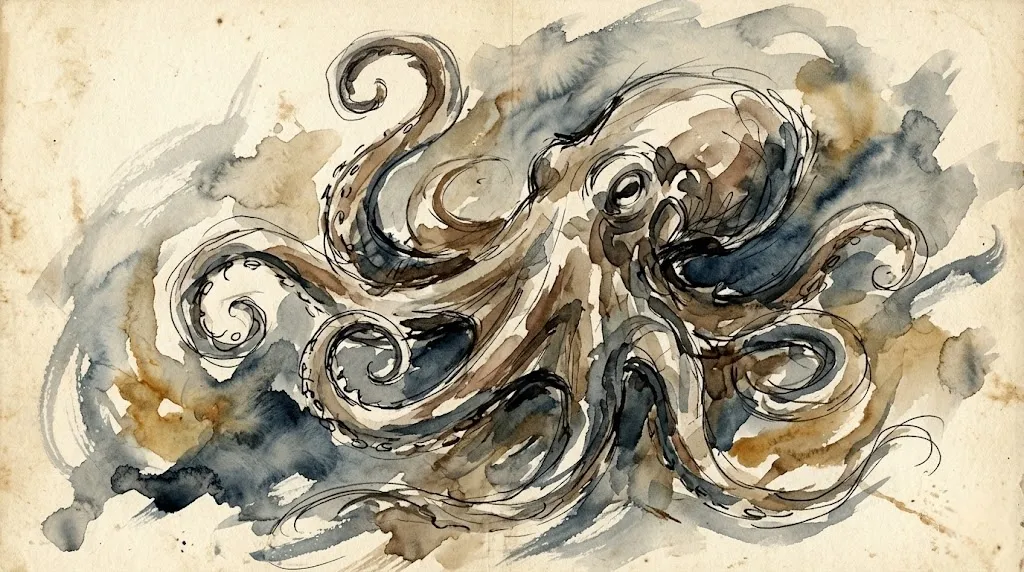
Kraken
The ship-swallowing sea beast of Norse legend, now partially explained by giant squid.
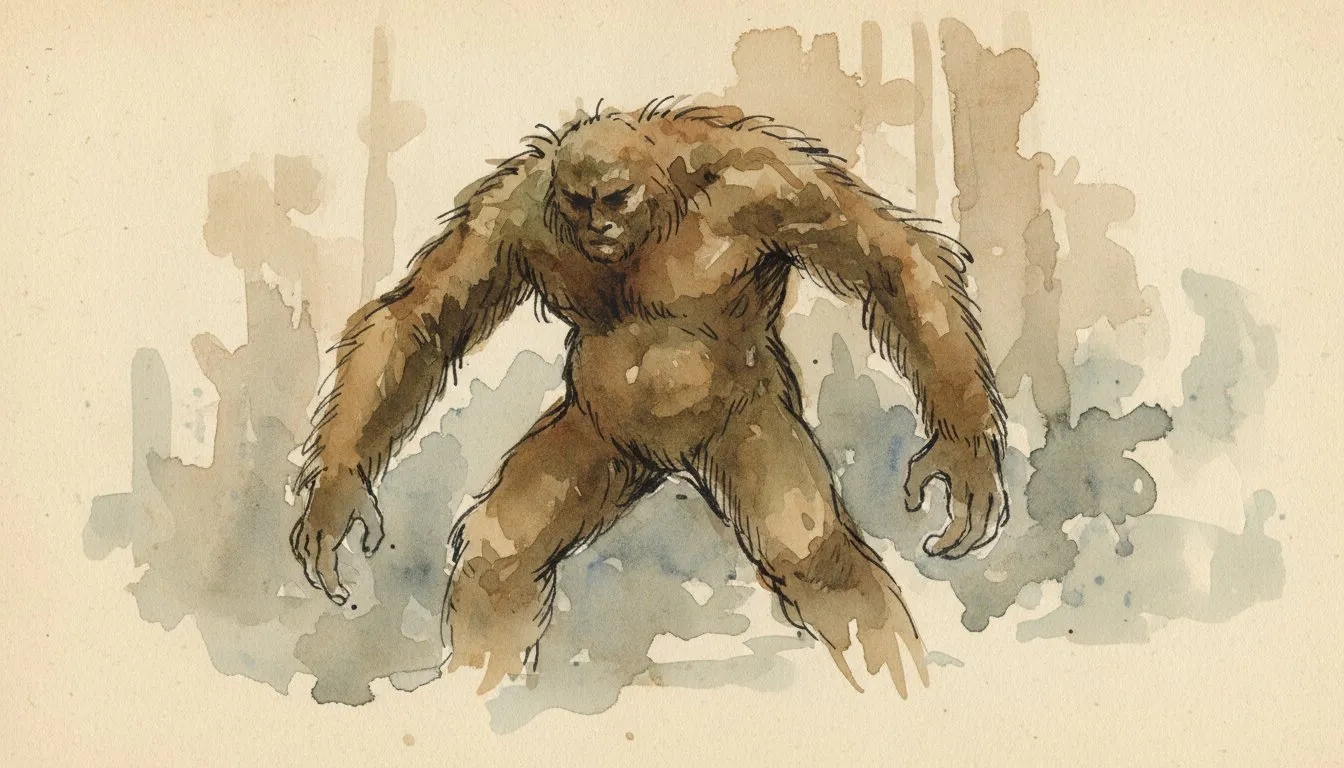
Yeren
China's Bigfoot roams the thick forests of Hubei Province, backed by thousands of reported sightings.