
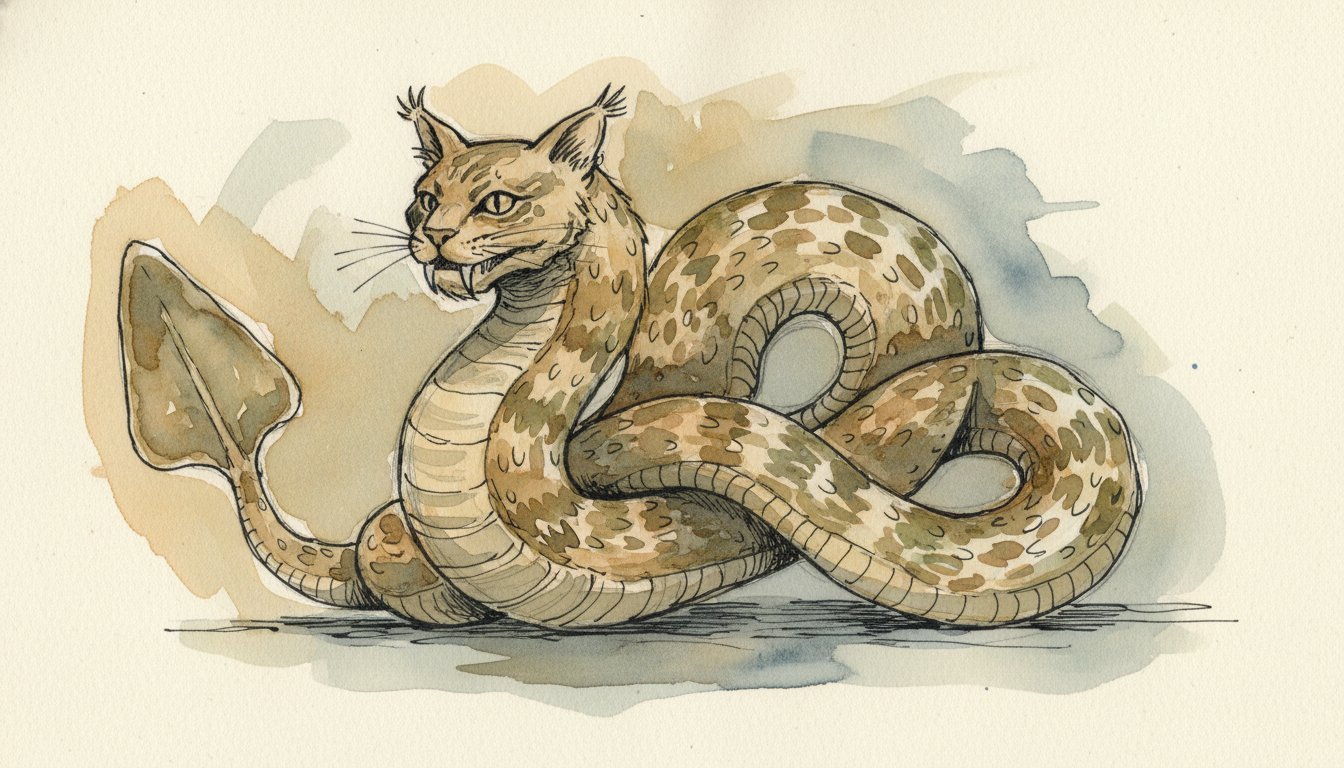
Death Adder Cat
Also known as: Queensland Tiger, Yarri, Marsupial Lion
A striped, cat-sized predator prowling the Australian bush, matching nothing in the known fossil record since the Pleistocene.
1871 (earliest European report)
North and central Queensland, Australia
Cat-sized to medium dog-sized, 3-5 ft including tail
Shy but capable predator
Unconfirmed
The Lore
The Queensland Tiger, or Death Adder Cat, is a large striped carnivorous marsupial reported in remote bushland across northern and central Queensland, Australia. Described as cat-sized or larger with distinct dark stripes on a tawny body, powerful jaws, and a long tail, it matches no living Australian animal. Aboriginal oral traditions describe a fierce striped predator, and European settlers from the 1870s onward have reported sightings. Australia's fossil record includes Thylacoleo carnifex, a marsupial lion with powerful jaws, and the thylacine once ranged across the mainland. Either could be an ancestor, or this could be something else entirely. Sightings continued through the 2000s.
In the remote regions of Queensland and New South Wales, particularly in the rough hill country and dense scrub of the Great Dividing Range and its western slopes, stockmen, hunters, and bushwalkers have accumulated a body of reports describing an unusual feline predator unlike any known species in Australia. The creature, referred to in regional folklore as the Death Adder Cat or occasionally the Queensland Tiger, is described as a large, powerfully built cat or cat-like animal with distinctly striped or spotted markings, a thick, heavy tail, and a size considerably exceeding that of any domestic or feral cat. Some accounts describe the animal as resembling a small thylacine in body plan but with distinctly feline features and movement.
Aboriginal traditions from several Queensland language groups include references to a large cat-like predator distinct from other known species, described as a fierce hunter capable of taking prey larger than itself. These traditions predate European settlement and have been interpreted by some researchers as evidence that a native felid or thylacine-like predator persisted in the region's dense scrub country until recently, possibly surviving the general megafaunal extinction that followed human arrival. The name Death Adder Cat does not refer to any relationship with the death adder snake but rather reflects the creature's reputation as a deadly and stealthy ambush predator in the manner of the death adder itself.
The most detailed European-era accounts come from the early to mid 20th century, when cattlemen working remote stations in Queensland described animals that killed calves in ways inconsistent with known predators. The marks left on livestock suggested a large, clawed animal rather than a canid, and dingo tracks were specifically ruled out in several accounts. Naturalist and author Bernard Heuvelmans included accounts of the Queensland Tiger in his foundational 1958 survey of cryptozoology, considering it one of the more plausible unknown animals in Oceania.
The most likely candidates proposed by mainstream zoologists are either a very large feral cat, descendants of domestic cats that have been living wild in Australia since European settlement and have grown to impressive sizes in isolated populations, or a misidentified marsupial such as a large spotted-tail quoll, which is the largest surviving carnivorous marsupial on mainland Australia. Neither explanation fully accounts for the most dramatic accounts, which describe animals 4 to 5 feet long not counting the tail, but both remain more parsimonious than proposing a previously unknown large predator.
Notable Witnesses
- Multiple Queensland bushmen (1870s-1900s)
- Rex Gilroy (cryptozoologist)
Media Appearances
- Mysterious Australia (documentary)
Further Reading
No book is devoted to this creature. These are the general references that cover the field, plus a direct search if you want to dig further.
- Cryptozoology A to Z by Loren Coleman and Jerome Clark (1999)
The standard one-volume encyclopedia, roughly two hundred entries covering creatures, investigators, and hoaxes.
- Mysterious Creatures: A Guide to Cryptozoology by George M. Eberhart (2002)
The larger reference guide, stronger on sourcing and on creatures that never reached the popular books.
Search Amazon for Death Adder Cat books
As an Amazon Associate, Cryptid Vault earns from qualifying purchases. Links open Amazon in a new tab.
Get the Field Notes.
Field notes from the Vault, when there is something worth sending. No spam.
No spam. Unsubscribe anytime.
You might also like
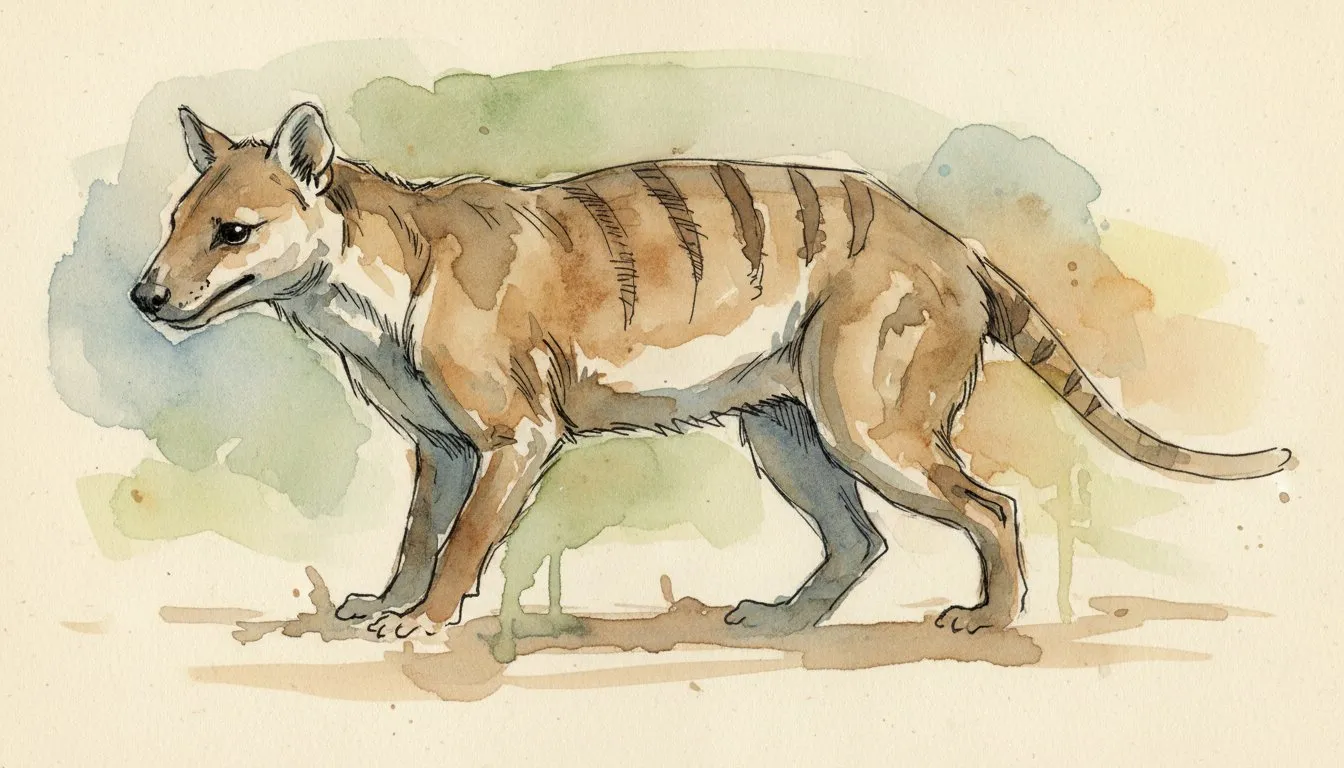
Thylacine
Officially extinct since 1936, the Tasmanian tiger is the subject of more credible survival sightings than almost any other lost species.
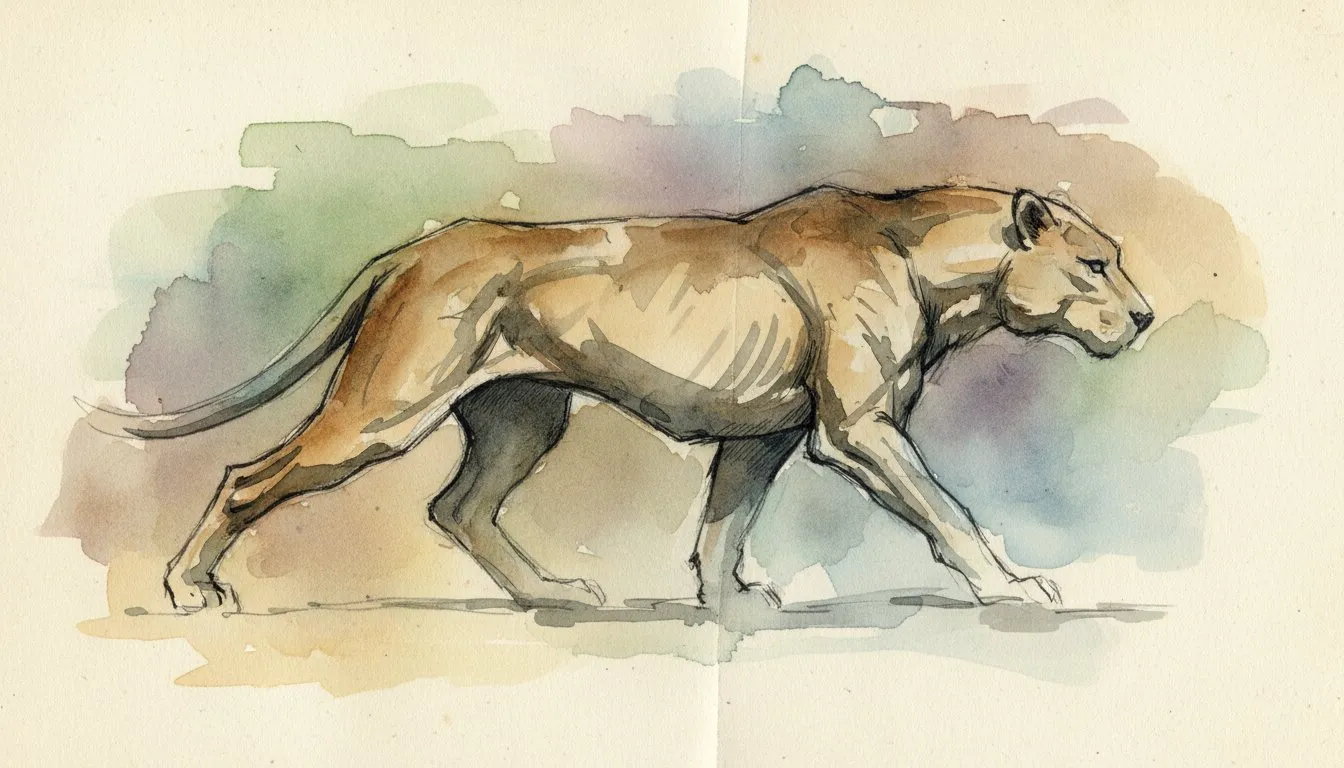
Beast of Bodmin Moor
A large black cat prowls the foggy moors of Cornwall, shredding livestock and vanishing into the granite landscape.
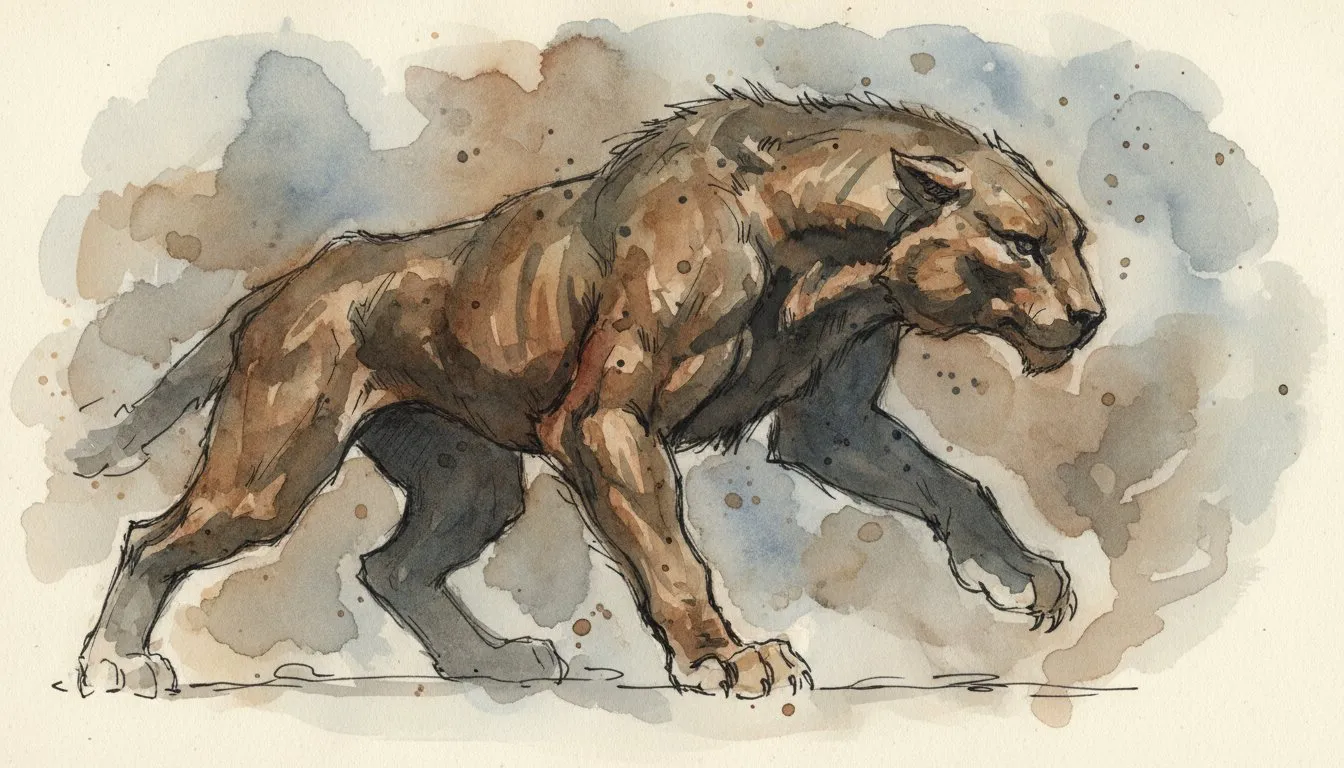
Beast of Dartmoor
Something large, dark, and feline stalks the misty moorlands of Devon, leaving torn livestock and fleeting glimpses behind.
Gazeka
An enormous, tapir-like beast reported by a colonial officer in the unexplored highlands of Papua New Guinea.
Burrunjor
A bipedal reptilian predator stomping through the Australian outback, leaving three-toed tracks in places nothing large should be.
Hawkesbury River Monster
A plesiosaur-shaped creature in the murky tidal waters north of Sydney, reported by fishermen for over a century.
Mokoi
In the Australian outback, a malevolent spirit stalks those who practice sorcery and kills them in their sleep.
Beast of Gevaudan
A massive wolf-like predator terrorized rural France for three years, killing over 100 people before it was finally brought down.