
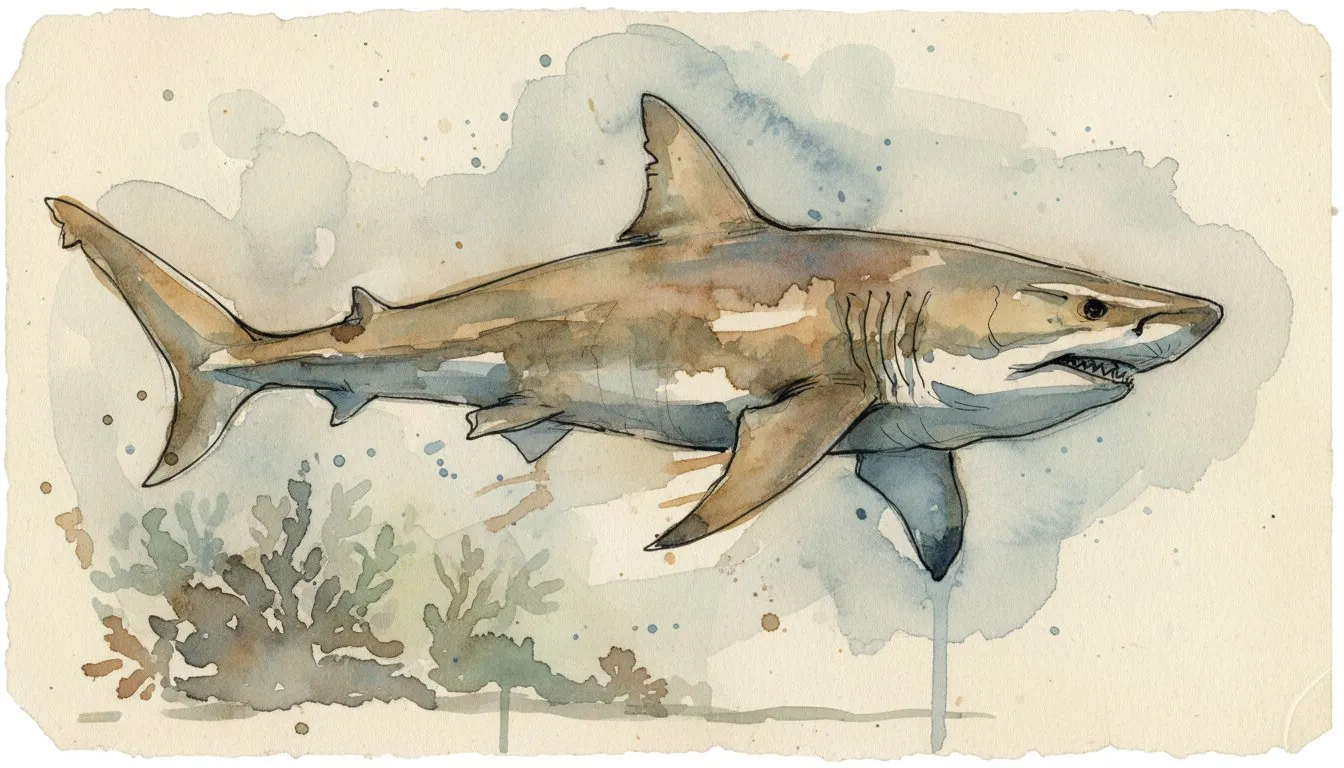
Megalodon
Also known as: Meg, Giant White Shark, Carcharocles megalodon
The largest shark that ever lived went extinct 3.6 million years ago, unless the deep ocean is hiding something.
Fossil record, survival claims 20th century
Worldwide oceans (historically)
15-20 meters long
Apex predator
Scientifically extinct, survival claims debated
The Lore
Megalodon was a massive prehistoric shark that reached lengths of 15 to 20 meters and dominated the oceans for roughly 20 million years before going extinct approximately 3.6 million years ago. Despite firm scientific consensus on its extinction, claims of surviving megalodons persist. Proponents cite the ocean's unexplored depths and occasional reports of unusually large sharks. Skeptics note that megalodon required warm, shallow coastal waters and abundant large prey, making deep-ocean survival implausible. The debate remains one of cryptozoology's most popular topics.
Otodus megalodon was not a legend. It was a real apex predator that dominated the world's oceans from roughly 23 million to 3.6 million years ago during the Miocene and Pliocene epochs. What places the Megalodon in the cryptid category is the persistent belief among some that this enormous shark may still survive in the deep ocean today.
The evidence for Megalodon's past existence is abundant. Fossilized teeth, some measuring over 7 inches long, have been found on every continent. Based on tooth size and comparison with modern great white sharks, scientists estimate Megalodon reached lengths of 50 to 65 feet, with some estimates pushing toward 80 feet. Its jaws could open wide enough to swallow a small car. Bite marks on fossilized whale bones confirm that Megalodon fed on large marine mammals.
The idea that Megalodon might still be alive gained popular traction after a 2013 Discovery Channel mockumentary, "Megalodon: The Monster Shark Lives," which blended fictional footage with documentary-style presentation. The program drew record viewership and widespread criticism from scientists for misleading the public. Despite disclaimers, surveys showed a significant portion of viewers believed the shark might still exist.
Proponents of a surviving Megalodon point to the vastness of the deep ocean, which remains largely unexplored. They cite rare catches of presumed-extinct species like the coelacanth, rediscovered alive in 1938, as evidence that large marine animals can evade detection. Some have suggested that deep-sea megafauna could inhabit ocean trenches where human observation is virtually impossible.
Marine biologists counter these claims with several compelling arguments. Megalodon was a warm-water predator that relied on coastal nurseries and large marine mammal prey. The cooling of ocean temperatures during the Pliocene likely destroyed its habitat. A predator of that size would require enormous quantities of food and would leave detectable traces in the marine ecosystem, including bite marks on whale carcasses, which have not been found in modern samples. Additionally, Megalodon teeth, which shed continuously throughout the animal's life, would accumulate on the ocean floor. No Megalodon tooth younger than 3.6 million years has ever been found.
The Megalodon occupies a unique position in cryptozoology as a creature whose past existence is scientifically confirmed but whose present survival is considered extremely unlikely by the scientific community. It continues to fascinate the public and has become a staple of popular culture, appearing in films, video games, and novels.
Notable Witnesses
- David Stead (reported fishermen's account from 1918 near Broughton Island, Australia)
Media Appearances
- Megalodon: The Monster Shark Lives (Discovery Channel, 2013)
- The Meg (film, 2018)
- Meg 2: The Trench (film, 2023)
- Shark Week (TV, multiple episodes)
- Steve Alten's MEG novel series (1997-present)
- Jurassic World: The Game (video game)
Further Reading
No book is devoted to this creature. These are the general references that cover the field, plus a direct search if you want to dig further.
- Cryptozoology A to Z by Loren Coleman and Jerome Clark (1999)
The standard one-volume encyclopedia, roughly two hundred entries covering creatures, investigators, and hoaxes.
- Mysterious Creatures: A Guide to Cryptozoology by George M. Eberhart (2002)
The larger reference guide, stronger on sourcing and on creatures that never reached the popular books.
Search Amazon for Megalodon books
As an Amazon Associate, Cryptid Vault earns from qualifying purchases. Links open Amazon in a new tab.
Get the Field Notes.
Field notes from the Vault, when there is something worth sending. No spam.
No spam. Unsubscribe anytime.
You might also like
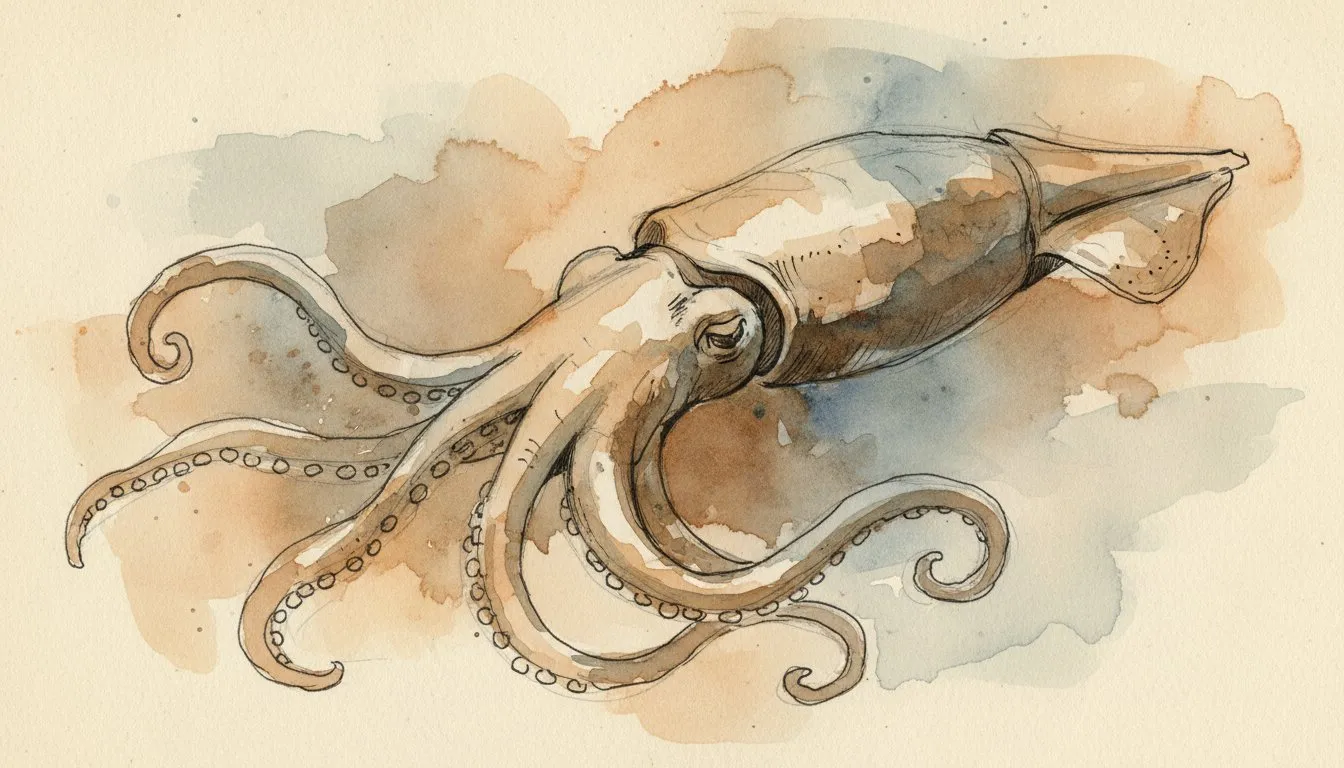
Con Rit
A segmented, armored sea creature with dozens of lateral fins, washed ashore in Vietnam in 1883.

Globster
Massive, fleshy, unidentifiable masses that wash ashore worldwide, defying easy explanation until the lab results come in.
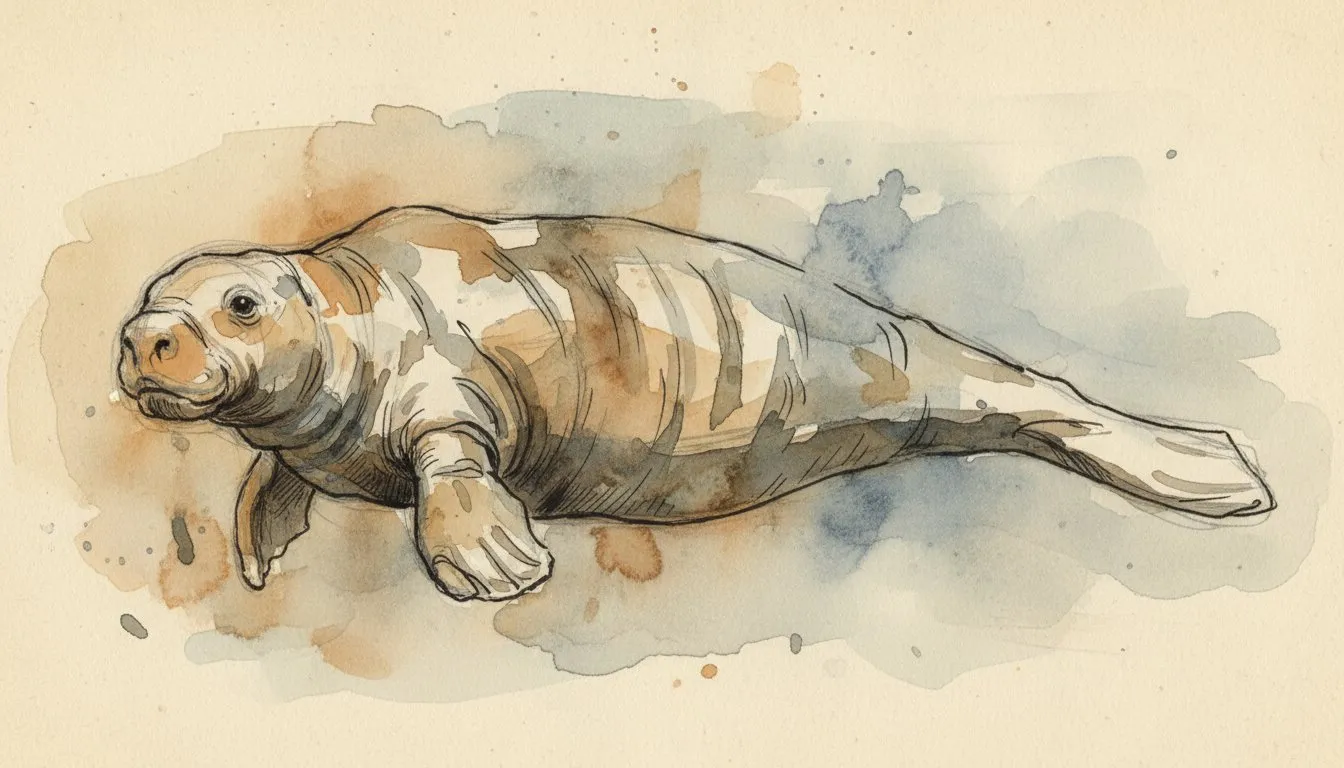
Steller's Sea Cow
Hunted to extinction just 27 years after Western science discovered it, some believe pockets of this gentle giant survive in remote Arctic waters.
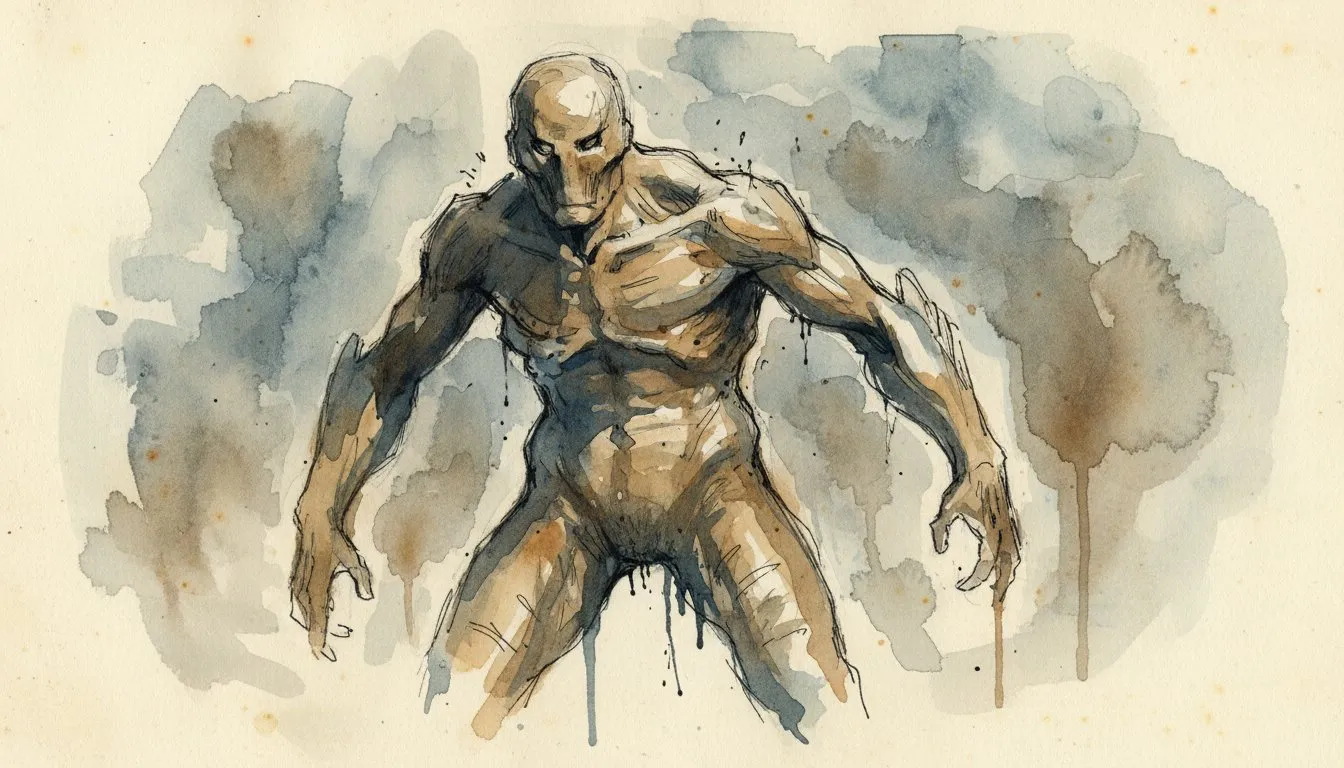
Ningen
A ghostly white humanoid shape rising from Antarctic waters, seen by Japanese fishermen.
Trunko
A massive white carcass with an elephant-like trunk that washed ashore in South Africa.
Kraken
The ship-swallowing sea beast of Norse legend, now partially explained by giant squid.
Morgawr
A humped sea serpent has been spotted off the coast of Cornwall since the 1900s, sometimes close enough to shore that beachgoers scatter.
Cadborosaurus
A horse-headed sea serpent weaving through the waters of the Pacific Northwest.