
Desert Cryptids: What Gets Reported Where There Is Nowhere to Hide
The Habitat That Removes the Excuse
Ask why a large unknown animal has never been recovered and you will get the same answer in different accents. The forest is too dense. The lake is too deep. The swamp is too big to walk. Cover is the load-bearing element of nearly every cryptid argument on this site.
The desert removes it. Open ground, thin vegetation, long sightlines, and terrain that holds tracks better than almost anywhere else. A large animal in the Mojave or the Gobi has fewer places to be. That makes desert reports the most interesting category in the catalog and the hardest to argue for, and the people who report them tend to know it.
Here is what the desert habitat actually holds.
The Gobi: Olgoi-Khorkhoi
The Mongolian Death Worm is known locally as Olgoi-Khorkhoi, which translates roughly as intestine worm. It is described as a thick, dark-red animal two to five feet long that is said to kill at a distance, by electric discharge or by acidic venom depending on the account. Western documentation dates to 1926.
The part that keeps the case alive is behavioral rather than physical. Nomadic herders who have every practical reason to know their own ground treat the animal as a real hazard and avoid specific sandy areas after rain. That is not evidence of a worm. It is evidence of a consistent, place-specific belief held by people who work the terrain, which is a different and more interesting fact.
The Mojave: The Yucca Man
The Yucca Man has been reported around Joshua Tree and the Twentynine Palms Marine Corps base since about 1971: seven to ten feet tall, dark matted hair, and an overpowering smell. Marines stationed at Twentynine Palms have filed official reports.
It is the clearest example of the problem this article is about. A forest Bigfoot has an explanation ready for why it is never found. A creature of that size in open Mojave scrub, near an active military installation with its own surveillance, does not. The Vault keeps the entry because the reports are real and attributed. The habitat is the argument against it, and it is a strong one. The wider regional picture is in our American Southwest guide.
The Australian Interior
The Australian outback carries three entries and they are usefully different from one another.
The Burrunjor is reported from Arnhem Land in the Northern Territory: a bipedal reptile twenty to twenty-five feet long. Aboriginal rock art in the region depicts creatures that resemble theropods, and cattle station workers since the 1950s have reported heavy footfalls and livestock killed near three-clawed tracks. It is filed under eyewitness reports.
The Marrul is a giant snake described across inland Queensland, the Northern Territory, and western New South Wales, twenty to forty feet long and as thick as a telegraph pole, living in deep waterholes and river bends. Aboriginal tradition connects it to Rainbow Serpent stories, and nineteenth and twentieth century settlers reported tracks that exceeded any known Australian snake.
The Mokoi is not a creature report at all. It is a Yolngu spirit tradition about a malevolent presence that kills those who practice sorcery, and the Vault files it as folklore only. Grouping it with the other two would be a category error, which is precisely the kind of error this site tries not to make.
Central Asia: The Almas
The Almas is reported across Mongolia, Kazakhstan, and the Caucasus: a stocky hairy humanoid, five to six feet tall, that avoids people. Written accounts go back to the fifteenth century, and the Soviet researcher Boris Porshnev took the question seriously enough to build a research program around it.
Unlike Bigfoot, the Almas is consistently described as small, shy, and unremarkable rather than enormous. That modesty is one reason some researchers have found the reports more plausible than their North American counterparts. It has still never been produced.
The Four Corners and the Borderlands
The Skinwalker belongs to Navajo tradition in the Four Corners country and is not a cryptid in the same sense as the others here. It is a witch who takes animal form, a cultural and moral tradition rather than a wildlife claim, and treating it as a creature to be hunted misreads it badly. Modern reports attached to the Utah ranch that took the name, from the Sherman family, the schoolteacher Junior Hicks, and the investigator Colm Kelleher, are real reports of experiences and are logged as such.
The Chupacabra is the borderland's most famous case, first reported in Moca, Puerto Rico in March 1995. The desert-country version of the story is different from the original: the bipedal, spined creature Madelyne Tolentino described in 1995 has largely been replaced in Texas and the Southwest by a hairless quadruped. When Phylis Canion recovered a specimen in Texas in 2007 it typed as canine. That is a resolution, and the site records it as one.
The Desert Lake, the Deep Past, and the Honest Hoax
Three outliers round out the habitat.
Nebraska's Alkali Lake Monster is tagged desert for the dry high-plains country around it. Reported at forty feet long in a lake about eight feet deep, it is the clearest concealment paradox in the catalog.
The Roc and the Sirrush are the deep-historical layer. The Roc comes to us through One Thousand and One Nights and the Indian Ocean sailing routes, with Marco Polo and Ibn Battuta referencing it secondhand. The Sirrush is a scaly, long-necked figure on the Ishtar Gate of Babylon, built around 575 BCE, standing among depictions of real animals. That juxtaposition is the entire argument that it was drawn from life, and it is also the entire counterargument, since ancient art mixes categories freely.
And the Jackalope is the honest one. Douglas Herrick made the first in Douglas, Wyoming in 1932 out of taxidermy and a straight face. It is a confirmed hoax, a genuine folk artifact, and a reminder that the desert West produced its monsters commercially as well as sincerely.
What the Desert Tells You
Cover is not just a hiding place for an animal. It is a hiding place for an argument. In the desert both are thin, and the reports that survive there are worth reading closely for that reason.
The Mongolian Death Worm and the Almas belong to a much larger Asian file: see our guide to Asian cryptids. For the habitat where nowhere is flat instead of nowhere is hidden, see our field guide to mountain cryptids.
More in the desert and wasteland collection, and in our field guide to winged cryptids for the sky above them.
Get the Field Notes.
Field notes from the Vault, when there is something worth sending. No spam.
No spam. Unsubscribe anytime.
Creatures mentioned in this post
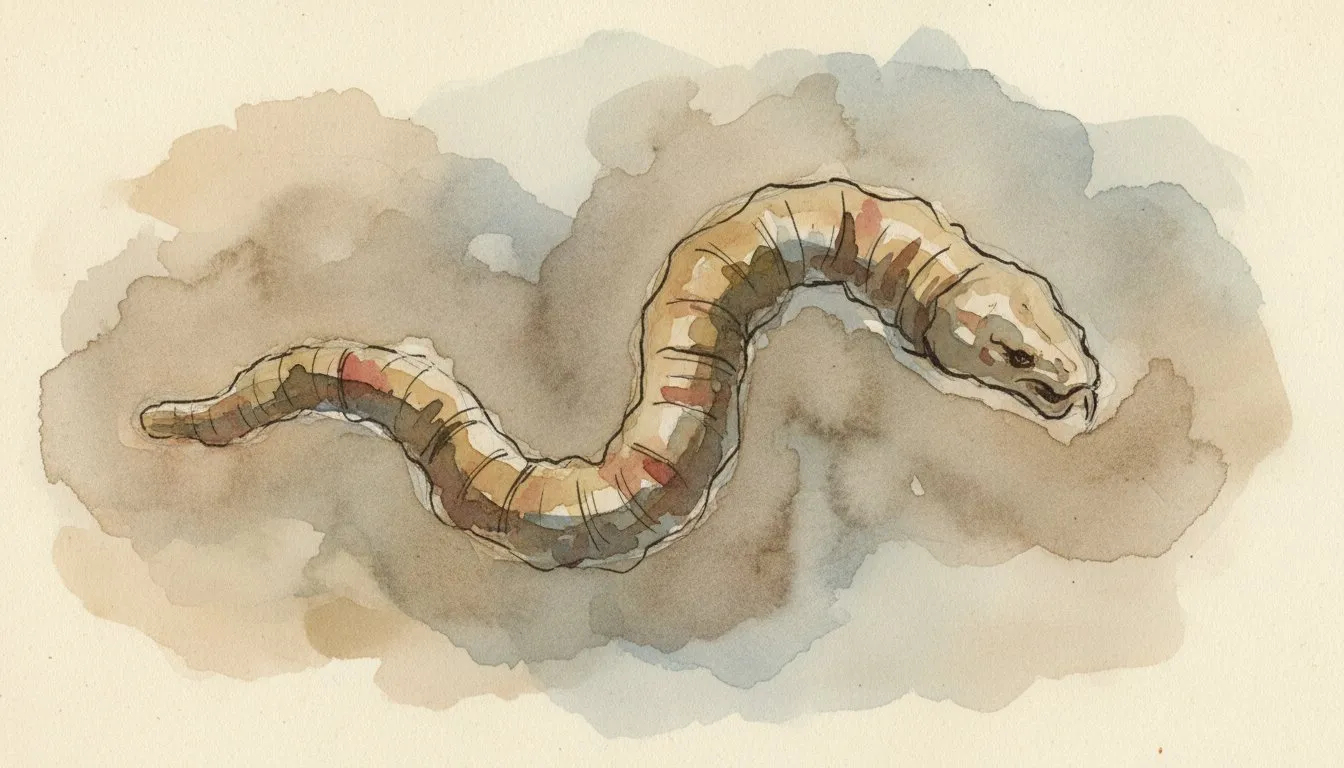
Mongolian Death Worm
A blood-red worm said to kill with electric shocks and acid venom from beneath the Gobi sands.
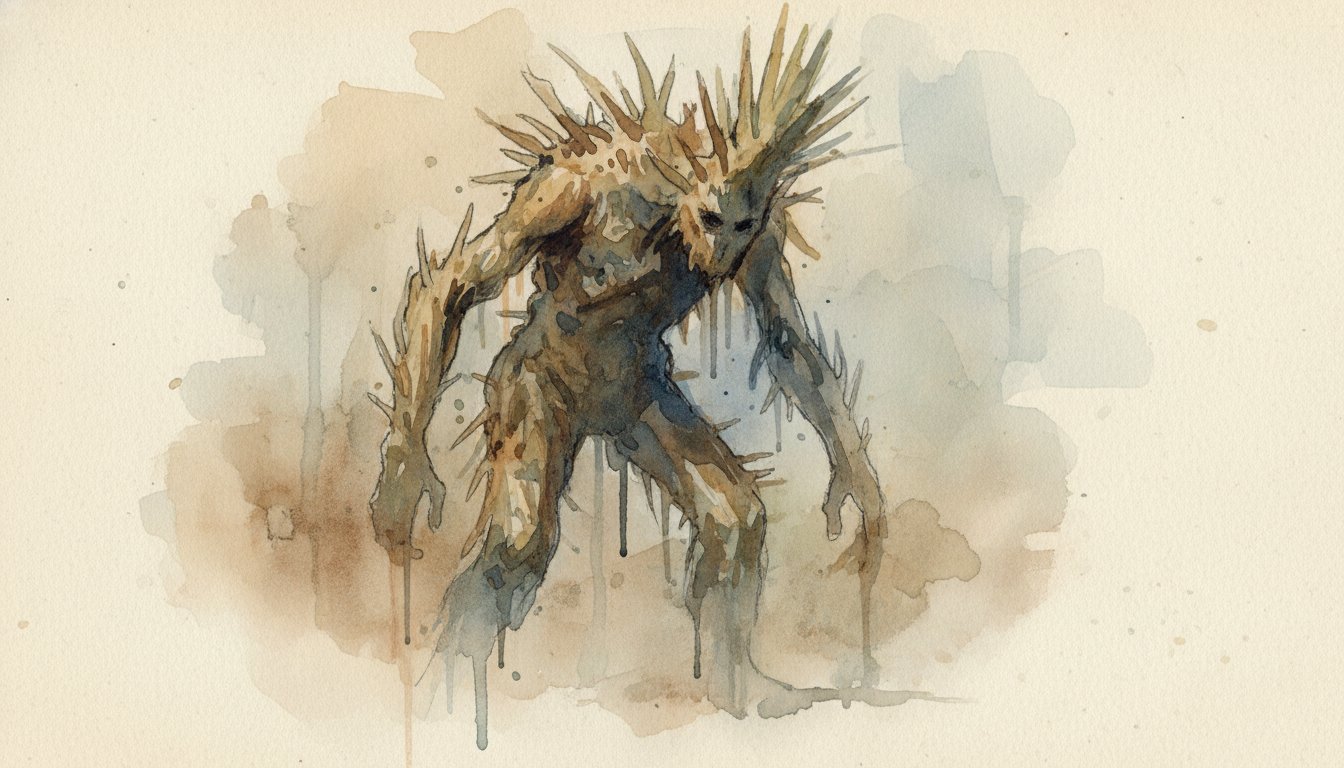
Yucca Man
A massive, foul-smelling humanoid stalking the Mojave near Joshua Tree, where the desert watches back.
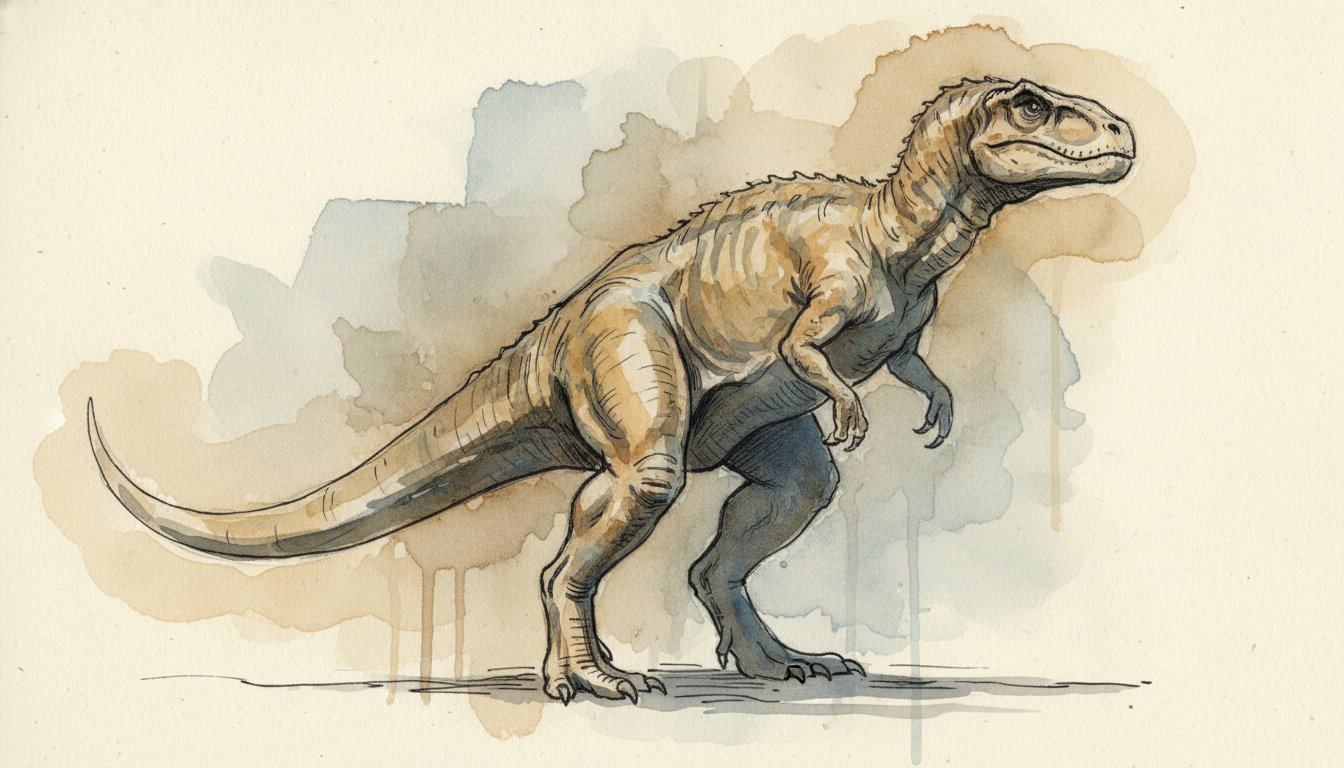
Burrunjor
A bipedal reptilian predator stomping through the Australian outback, leaving three-toed tracks in places nothing large should be.
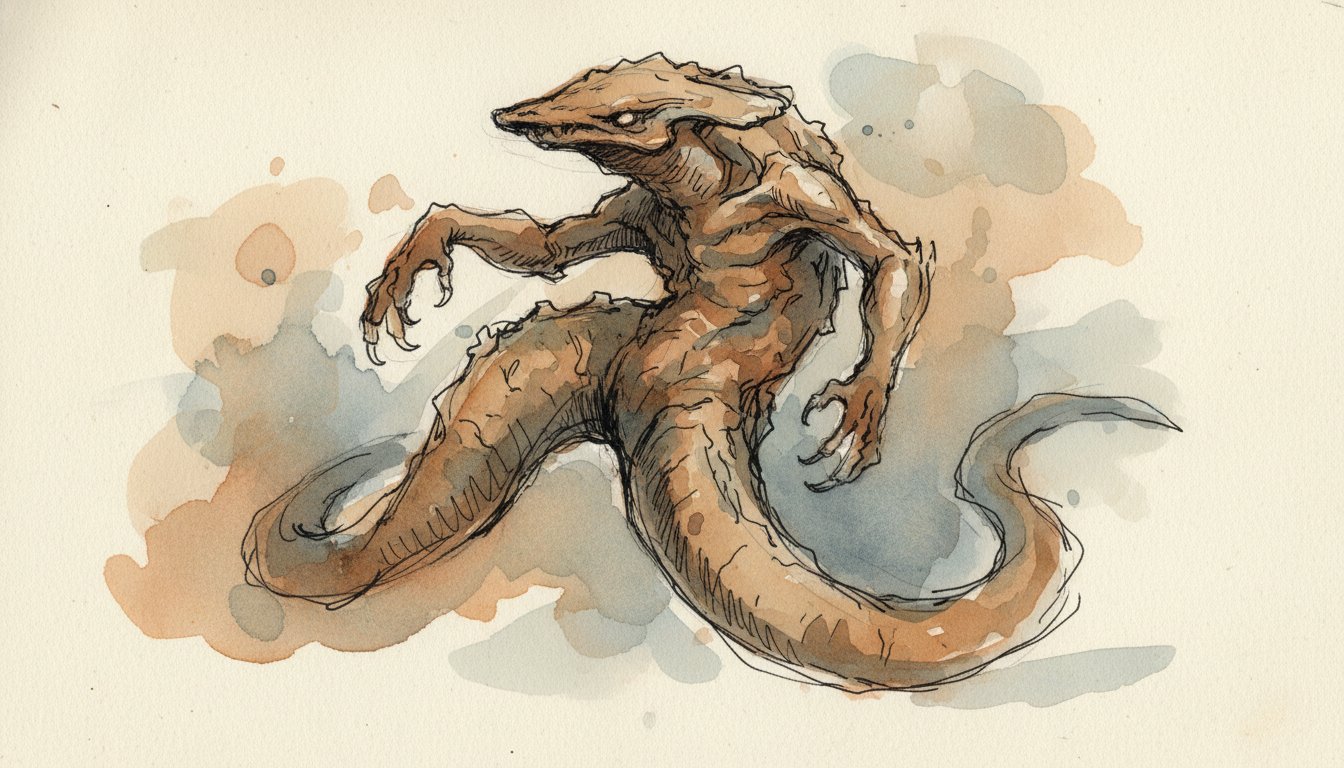
Marrul
A giant serpent of the Australian interior, thick as a tree trunk, still reported near remote waterholes.