
Asian Cryptids: The Largest Region This Site Hadn't Covered
Thirty-One Entries, No Guide Until Now
Asia holds more entries in this catalog than any region except North America, and until now it has never had a guide of its own. Part of that is a coverage gap. Part of it is that Asia's cryptid tradition does not organize itself the way North America's does, around named lakes and named towns, so much as around yokai, aswang, and forest spirits woven into living folk belief in ways that predate the word cryptid by centuries. Here is the roster, country by country.
Japan: The Deepest Bench of Any Single Country
No country in this catalog has a denser or stranger cast than Japan. The Kappa is the best known: a child-sized, turtle-like water imp with a water-filled dish on its head that is the source of its strength, reported in rivers and ponds nationwide and recorded in village accounts going back to the Edo period. The Jorogumo is a spider grown old enough to take the shape of a beautiful woman, luring victims to waterfalls before binding them in silk, a legend that may trace back to the real Nephila clavata spider, whose Japanese name is literally jorogumo. The Nure-Onna haunts riverbanks with a woman's head on a serpent's body, sometimes cradling what looks like an abandoned infant that becomes impossibly heavy the moment a passerby picks it up. And the Gashadokuro, a skeleton fifteen times human height formed from the unburied dead of famine and battle, announces itself with nothing but a ringing in the ears before it strikes, a detail that has kept the 1844 woodblock print of it in circulation for close to two centuries.
Japan's file runs deeper still. The Hibagon is a foul-smelling, gorilla-like biped reported around Mount Hiba in Hiroshima Prefecture, with a wave of sightings peaking in 1970 before fading out almost entirely. The Tsuchinoko is a folk favorite rather than a fright: a fat, beer-bottle-shaped snake said to jump and even talk, real enough in the popular imagination that several municipalities still offer bounties for its capture. And the Kirin, shared with China, breaks the pattern entirely: a gentle chimera of deer and dragon said to appear only as an omen of a wise ruler's arrival, historically taken as a good sign rather than a warning.
The Philippines: A Single Country, Four Entries
No country in Asia crowds this catalog quite like the Philippines. The Aswang is the archipelago's most feared shapeshifter, an ordinary neighbor by day and a hunting animal by night, embedded deeply enough in rural belief that specific countermeasures, garlic, salt, vinegar, a stingray's tail, are still common knowledge. The Manananggal is its own kind of visceral: by night its torso tears free of its legs and grows bat wings, hunting with an elongated tongue while its abandoned lower half waits to be salted by anyone brave enough to find it. The Sigbin walks backward with its head between its hind legs and is said to be kept as a wealth-bringing pet by certain families. And the Tikbalang is a towering, horse-headed trickster that leads travelers in circles through the forest, defeated only by wearing your shirt inside out. Four distinct creatures, one archipelago, each with its own specific folk countermeasure still passed down today.
Indonesia and Malaysia: Where the Science Gets Involved
This corner of Asia produces the cryptids mainstream researchers are most willing to take seriously. The Orang Pendek of Sumatra, a short, upright ape reported around Kerinci Seblat National Park, has drawn credentialed field researchers including Debbie Martyr, who spent 15 years in the forest and reported her own sighting. The Ebu Gogo of Flores Island describes small, hairy cave-dwellers in Nage oral tradition, and the case gained real scientific weight in 2003 when the fossil species Homo floresiensis, standing about the same height the legends describe, was discovered on the very same island. Malaysia contributes the Orang Minyak, an oil-coated figure blamed for periodic nighttime panics since the 1960s, while Java holds both the Ahool, a bat with a wingspan over 10 feet first documented by a naturalist in 1925, and the Jenglot, a palm-sized mummy-like figure that owners claim to feed with drops of blood, some specimens of which have tested as constructed from animal parts without settling the tradition's hold on the culture.
The Mainland: Forest People and a Drained Valley
Vietnam's Nguoi Rung, literally "forest people," describes a large bipedal primate in the central highlands, reported by indigenous communities, French colonists, and American and Vietnamese soldiers alike, in a region that has since produced a real zoological surprise, the saola, discovered in 1992. China's Yeren occupies similar ground in Hubei Province's Shennongjia forest, where the Chinese Academy of Sciences ran actual expeditions in the late 1970s and collected hair samples that never matched a known animal. India's Buru is different in kind: a large aquatic lizard the Apatani people of Arunachal Pradesh say they exterminated generations ago after draining its swamp habitat, a rare cryptid case where the folklore's own ending is that the people won.
What This Guide Leaves for Elsewhere
A few of Asia's biggest names get their full due in other guides rather than repeated here. The Yeti and the Himalayan cases anchor our mountain cryptids field guide. The Mongolian Death Worm already carries the desert cryptids guide's Gobi section. And Japan's ocean-going Akkorokamui is folded into our ocean cryptids guide alongside the rest of the world's coastal cases.
The full roster lives in our Asian folklore creatures collection and on the Asia region page.
Get the Field Notes.
Field notes from the Vault, when there is something worth sending. No spam.
No spam. Unsubscribe anytime.
Creatures mentioned in this post
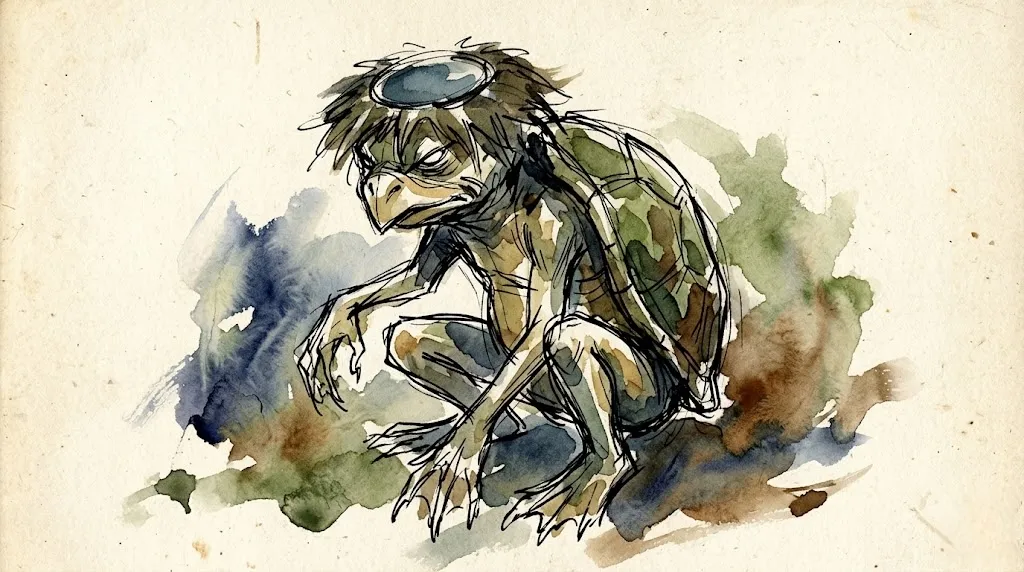
Kappa
Japan's mischievous water imp with a bowl of power on its head.
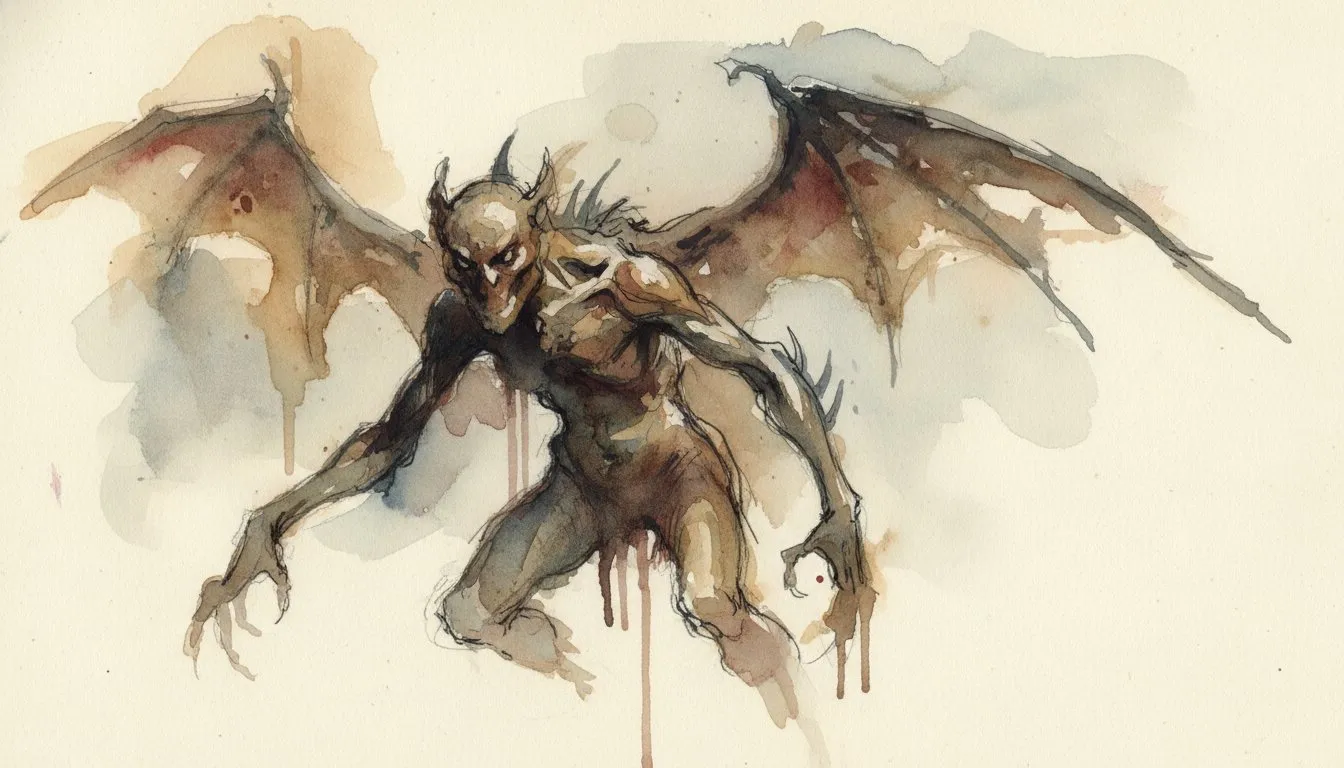
Aswang
The Philippines' most feared shapeshifter hides as your neighbor by day and hunts as a beast by night.
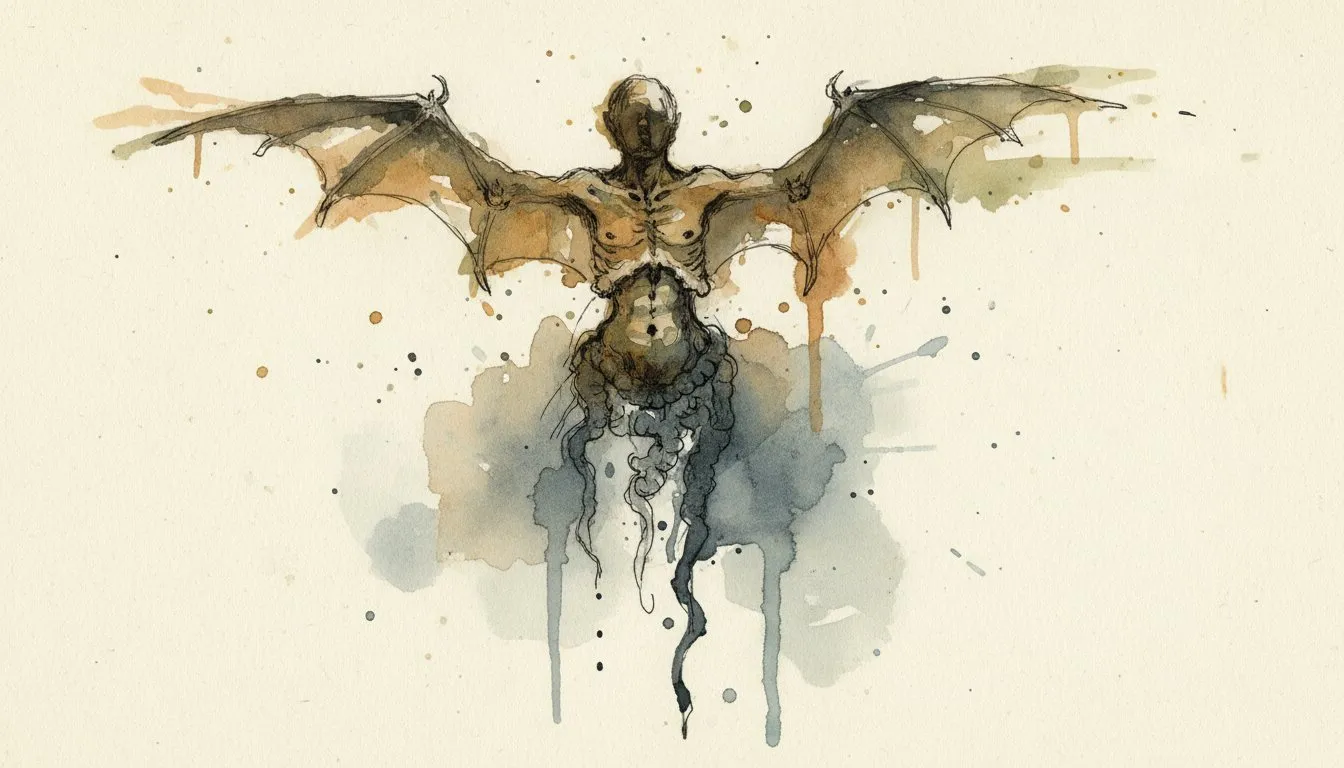
Manananggal
A vampire that tears its own torso free and flies through the night on bat-like wings, trailing its entrails below.
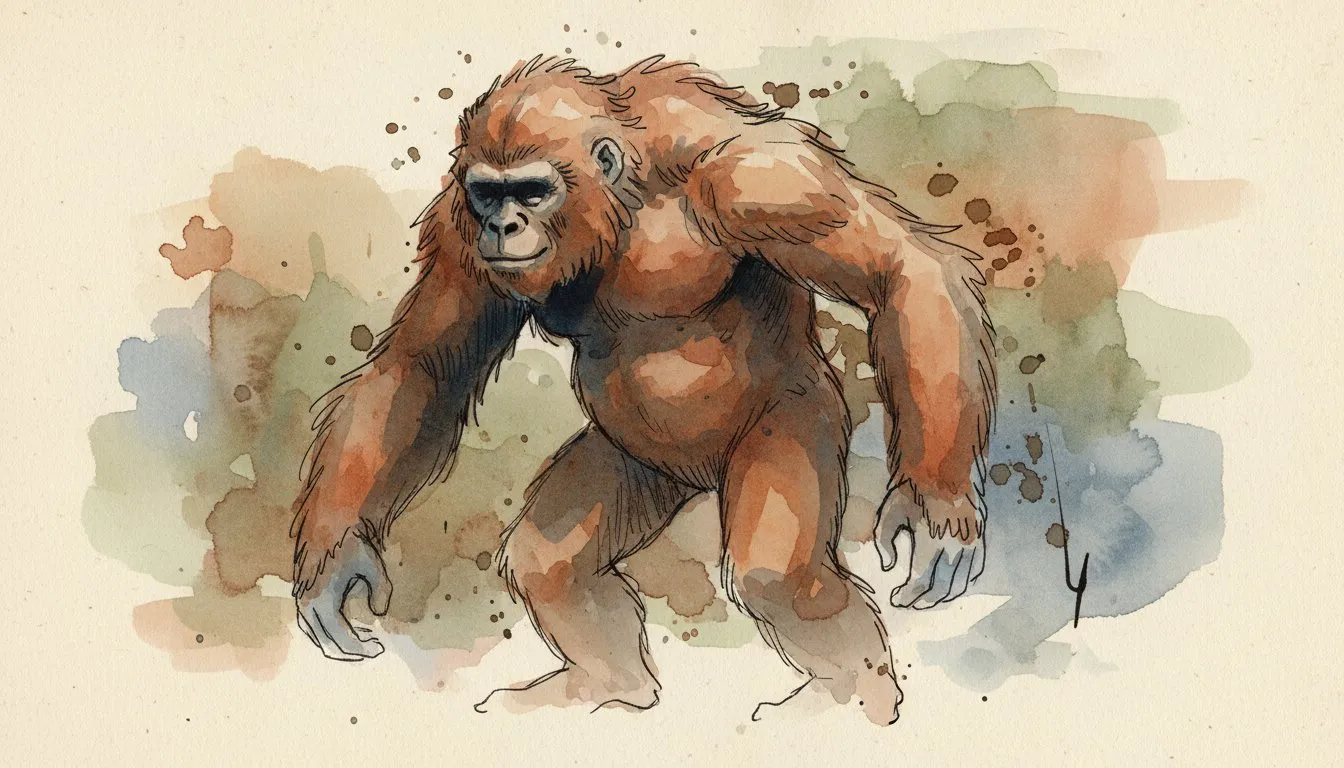
Orang Pendek
A short, bipedal ape covered in golden-brown fur walks the jungles of Sumatra, and credible scientists have spent decades trying to prove it exists.