
Midwest Cryptids: The Creatures Reported Between the Great Lakes and the Plains
The Region That Files Paperwork
The Pacific Northwest has the forest. Appalachia has the hollows. The Midwest has county roads, woodlots, drainage ditches, and a lot of small newspapers, and that last detail is why its cryptid record reads differently from everywhere else in the country.
Most Midwestern cases come with a date, a town, and a name. A farmer. A banker. A hardware store owner. Two police officers. A radio DJ who set out to make a joke and got mail he did not expect. The creatures are no better proven here than anywhere else, but the paper trail behind them is unusually good, and paper trails are the part of this subject that can actually be examined.
Here is what twelve states report, grouped by the kind of case rather than by the alphabet.
The Upright Canines of the Upper Midwest
The densest cluster of anything in the region is the upright-canine report, and it is concentrated in Wisconsin and Michigan.
The Beast of Bray Road was first reported near Elkhorn, Wisconsin in 1989: a large, muscular, gray-brown creature standing six to seven feet on its hind legs, described in one account as feeding on roadkill. The journalist Linda Godfrey collected dozens of witness accounts, which is what turned a rural rumor into the most documented modern werewolf case in the United States. Documented is doing precise work in that sentence. It means the accounts were written down and attributed, not that the animal was ever found. That distinction, between well documented and actually true, is the whole subject of our guide to how to research a cryptid sighting.
The Michigan Dogman is older, first reported in Wexford County in 1887, and its history contains the strangest wrinkle in Midwestern cryptozoology. In 1987 the WTCM-FM radio host Steve Cook recorded a song about the creature as an April Fools bit. The song ran, and listeners began calling in with sincere reports, some of them from law enforcement and military witnesses who asked to stay anonymous. Whatever that tells you about the Dogman, it is a clean demonstration of how a regional legend gets fed.
Both animals belong to the wider dogmen and werewolf tradition, which is much older than either sighting.
The Three-Night Sieges
The Midwest has a recurring case shape that barely appears elsewhere: a creature turns up in a small town, terrifies it for a few consecutive nights, and then stops completely.
In Illinois, the Enfield Monster appeared on April 25, 1973. Residents described a grayish, four-and-a-half-foot figure with three legs and short arms that scratched at doors and hissed. At least one homeowner fired at it. After three nights it was gone, and it has not been reported since.
Seventy years earlier and one state west, Iowa had the Van Meter Visitor. In October 1903 the town reported a large winged creature that emitted a blinding light from a horn on its forehead, seen over three consecutive nights by a doctor, a banker, and a hardware store owner among others. Armed townspeople fired at it with no effect. On the final night two of the creatures were reported going into an old coal mine, and the story ends there.
In Missouri, the summer of 1972 produced Momo, reported first by two young girls near the town of Louisiana: a dark-furred biped carrying a dead dog, with a smell that witnesses said lingered at every location. The flap ran for weeks and drew armed search parties before it stopped as abruptly as it started.
Three towns, three sieges, three endings with nothing recovered. The pattern is the interesting part.
The Water
Nebraska has the region's best paradox. The Alkali Lake Monster has been reported in Walgren Lake near Hay Springs since the 1920s, described as forty feet long with a horn or bony ridge. The lake is roughly eight feet deep at its maximum. Witnesses included ranchers, fishermen, and the editor of the Hay Springs Herald, and the state legislature at one point considered protecting the animal. Nobody has ever explained where a forty-foot animal would be during the day.
Indiana has the Beast of Busco, a snapping turtle reported at roughly five feet long in a farm pond near Churubusco in 1949. Gale Harris's attempts to catch it drew national press and crowds. The pond was partially drained. Nothing was found, and Churubusco has held Turtle Days every June since.
The big water is its own subject. Pressie is the name attached to reports out of Lake Superior, the deepest and coldest of the five, and to the older Ojibwe tradition of Mishipeshu, the underwater panther that controls the lake's storms. Minnesota and Michigan both border it. The full lake-by-lake record is in our Great Lakes guide.
The Ones the Towns Kept
Three of the region's most famous creatures are not in dispute at all. They are confirmed inventions, and their towns adopted them anyway.
The Hodag was produced in 1893 by Eugene Shepard of Rhinelander, Wisconsin, who claimed he had needed dynamite to kill one and later exhibited a convincing fake at the 1896 Oneida County Fair. Rhinelander made it the city mascot. It belongs to the fearsome-critter tradition of the lumber camps, the tall-tale bestiary that was collected into print in 1910 and that also produced Colorado's Slide-Rock Bolter.
The Piasa Bird is older and different in kind. Jacques Marquette and Louis Joliet documented a large winged, antlered figure painted on the limestone bluffs above the Mississippi near present-day Alton, Illinois in 1673. The original painting is gone and a recreation marks the site. It is a genuine piece of Illini tradition that has been repainted, moved, and commercialized for three centuries, which makes separating the tradition from the tourism its own research problem.
The City Case
Ohio has the Loveland Frog, reported by two police officers in 1972 as a three-to-four-foot humanoid crouched on a guardrail before it went over into the Little Miami River. One officer later recanted and said it was a large iguana. The site logs both halves of that, because the recantation is as much a part of the record as the report.
The region's most active current case is urban. Since 2011, and sharply since 2017, the Mothman of Chicago has been reported across the metro area: a large dark winged figure with red eyes, more than a hundred sightings logged by the Singular Fortean Society, clustered near the lakefront and O'Hare. Unlike the 1966 West Virginia wave it echoes, this one has no endpoint. It is still going.
What the Midwest Record Is Good For
This region will not settle any argument about whether cryptids exist. What it does offer is an unusually clean look at how these cases are actually built: a newspaper editor who prints the ranchers, a radio bit that comes back as sincere mail, a drained pond, a town that trademarks its own hoax.
Kansas sits right at the edge of a much larger, emptier file. See our guide to Great Plains cryptids for what the open country to its west actually reports.
The rest of the Midwest roster runs through Kansas, where reports cluster along the wooded river bottoms, and the state pages carry the full list for each. For the national picture, start with our state-by-state guide.
Get the Field Notes.
Field notes from the Vault, when there is something worth sending. No spam.
No spam. Unsubscribe anytime.
Creatures mentioned in this post
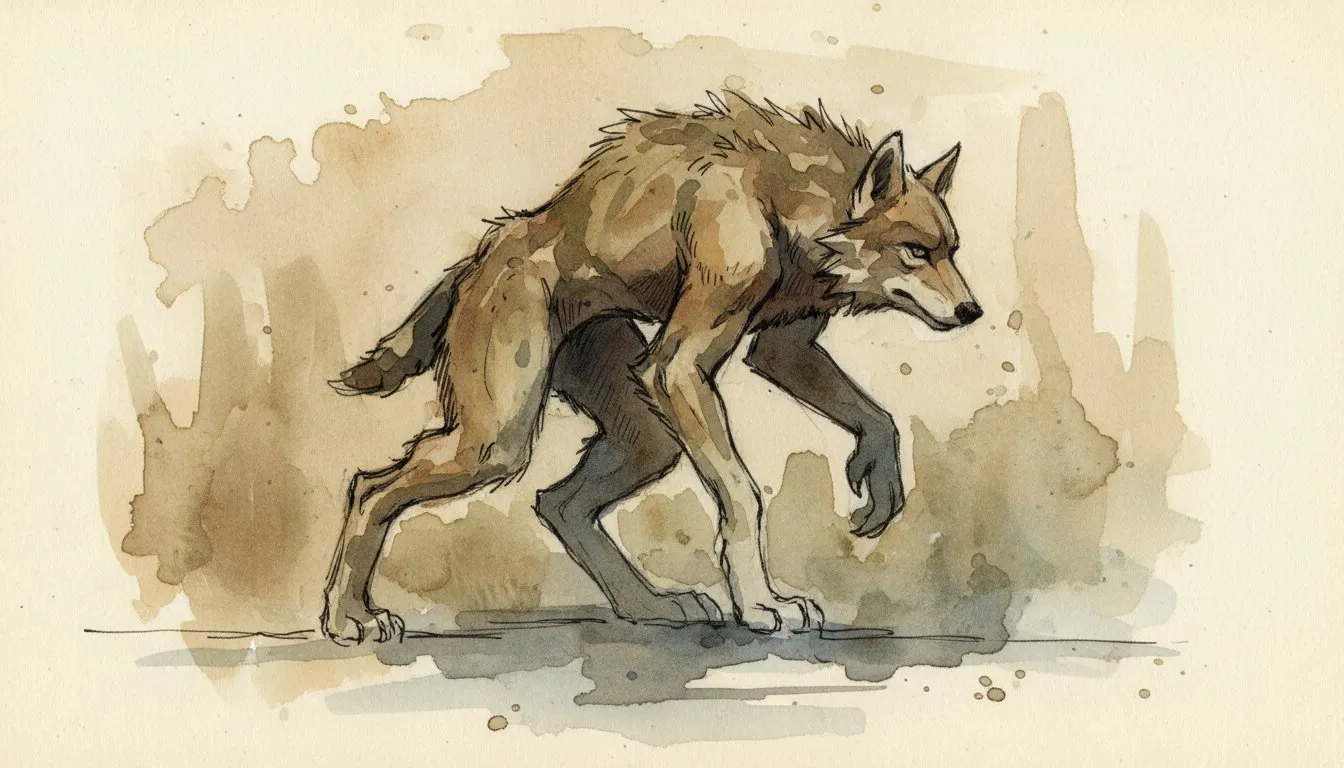
Beast of Bray Road
A shaggy, upright canine prowling a rural Wisconsin road since the 1980s.
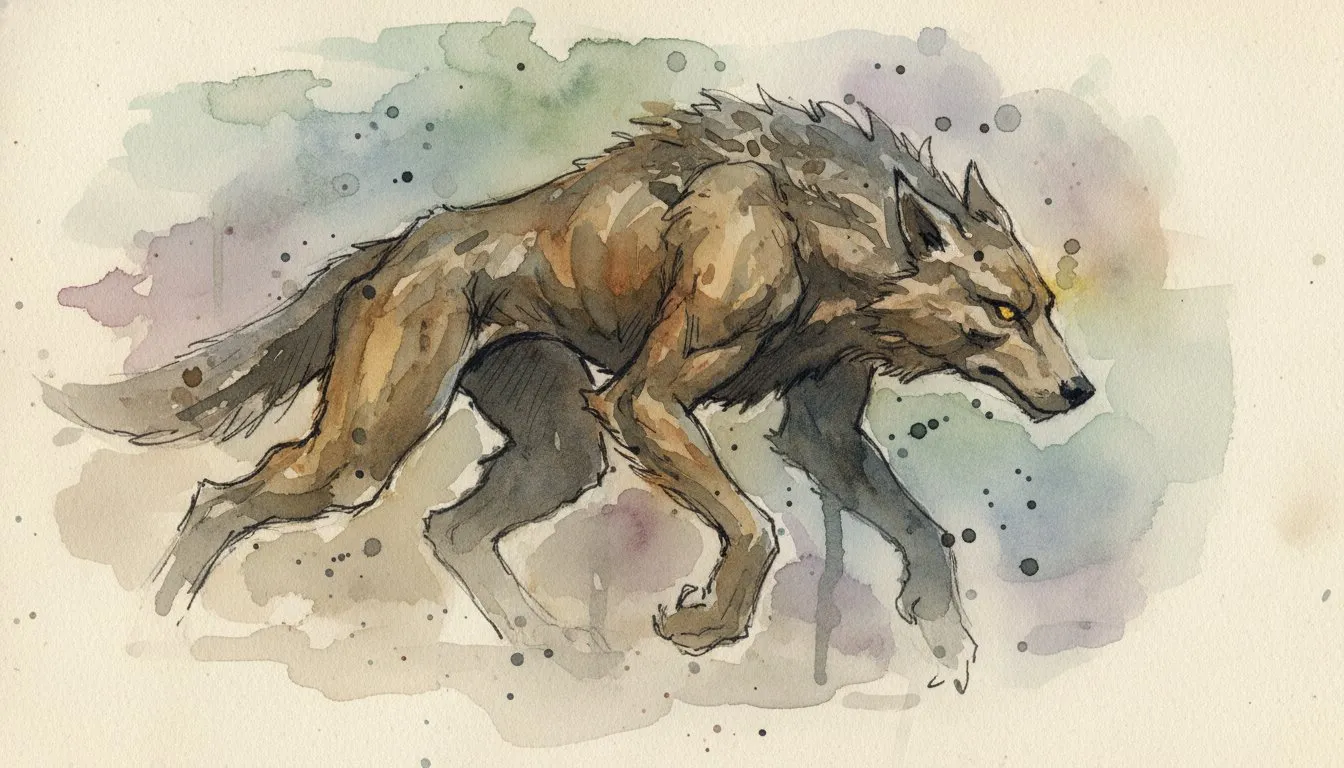
Michigan Dogman
An upright canine terror first reported in 1887, stalking Michigan's north woods ever since.
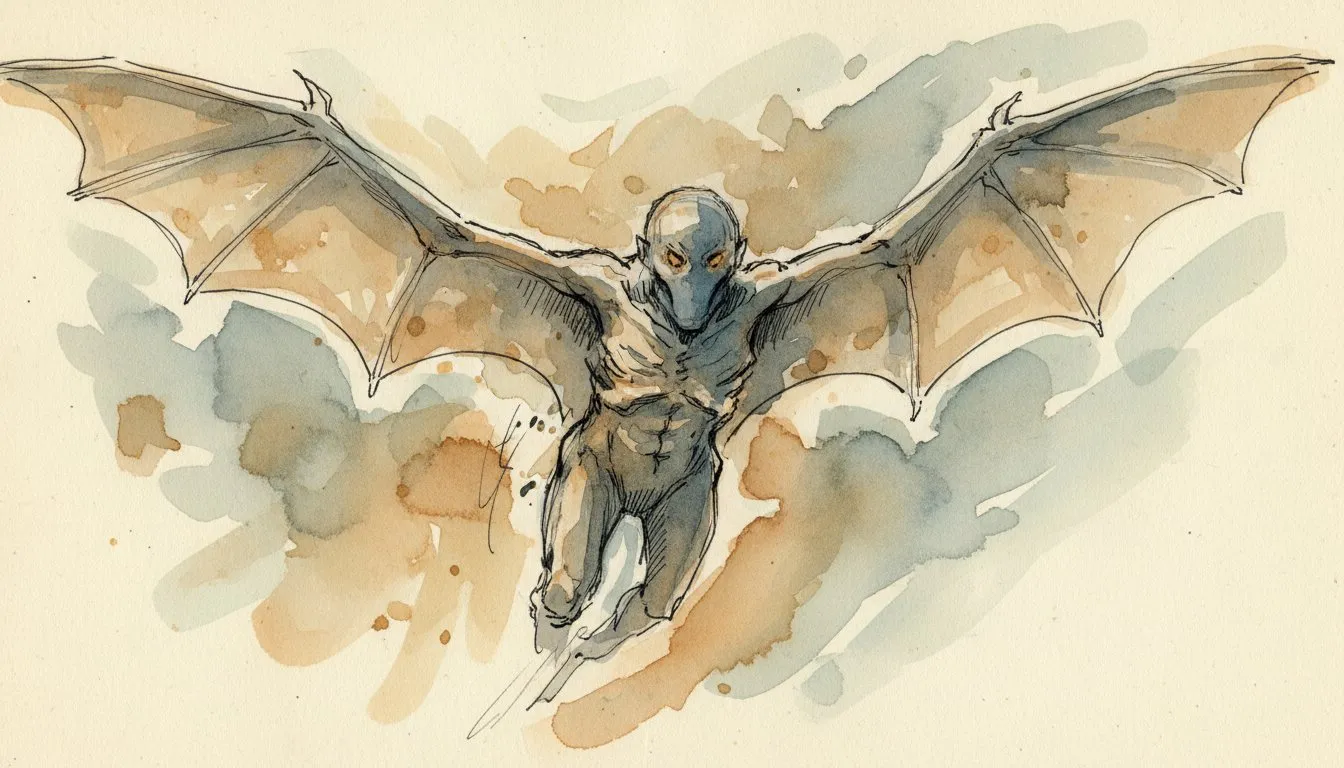
Van Meter Visitor
A winged, light-emitting creature that besieged a small Iowa town for three nights in 1903.
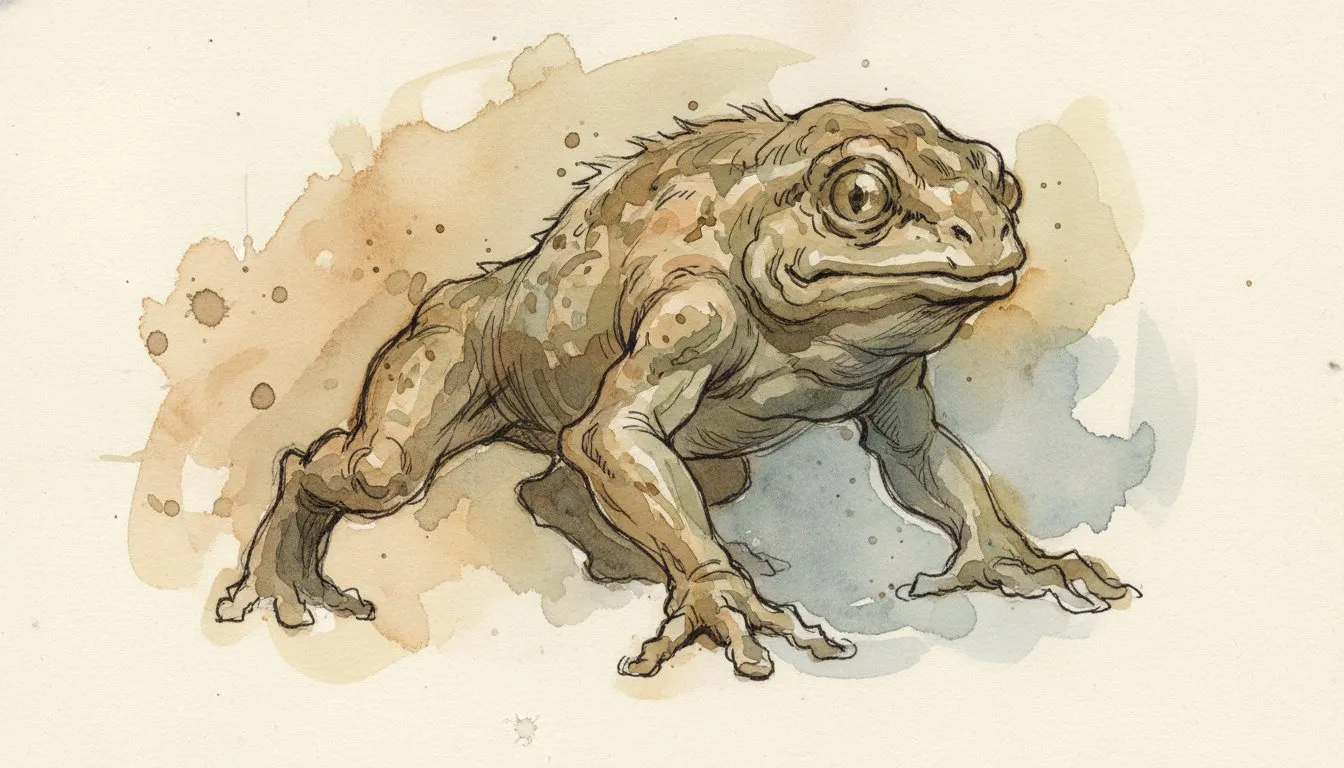
Enfield Monster
A three-legged, gray-skinned creature that terrorized an Illinois town for three nights.