
Cryptids by State: A Complete U.S. Map
Why Every U.S. State Has at Least One Cryptid
America is enormous, and most of it is wild. Even the most densely populated states - New Jersey, Massachusetts, Connecticut - contain pockets of old forest, isolated coastline, and terrain that hasn't changed much since the first settlers arrived. That wilderness, combined with centuries of Indigenous tradition, European folklore, and genuine unexplained encounter reports, means that every single U.S. state has at least one creature attached to it.
Some states have one iconic cryptid that dominates the national imagination. West Virginia has Mothman. New Jersey has the Jersey Devil. Wisconsin has the Beast of Bray Road. Others are quieter, their creatures less famous but just as deeply embedded in local tradition.
This guide maps them all. Not invented folklore, not fabricated legends - documented creatures with sighting histories, named by the communities that encountered them. If a state has a well-attested cryptid in our database, we link to the full profile. If the state's creature catalog is thin, we say so rather than make something up.
Cryptid distribution across the U.S. is not random. Patterns emerge when you look at the full map: the extraordinary density of Appalachian creatures, the Pacific Northwest's dominance in large bipedal sightings, the swamp corridor running from Louisiana through Florida, the Great Lakes' collection of aquatic mysteries. By the end of this guide, you'll see those patterns clearly.
How We Organized This Guide
We grouped the 50 states into five regions that reflect both geography and cryptid culture:
- The Northeast: New England plus New York, New Jersey, and Pennsylvania
- The South: The mid-Atlantic states through Texas and Oklahoma
- The Midwest: Ohio through the Dakotas and Kansas
- The Mountain West: Montana through New Mexico
- The Pacific: Washington, Oregon, California, Alaska, and Hawaii
For each state, we name the most iconic or best-documented cryptid, link to the full creature profile and the state's dedicated page, and note if the state shares a creature with a neighbor. Where our database doesn't have a strong match, we say so honestly rather than stretch.
This post is designed as a reference, not a quick read. Use the regional headers to jump to the area you care about, then follow the creature links to go deeper.
The Northeast
The Northeast is older than most of the country, and its cryptid tradition reflects that age. Indigenous creatures predate European settlement by millennia. Colonial-era sea serpent reports along the coast are among the oldest documented sightings in American history. And a handful of modern encounters - the Dover Demon chief among them - have generated some of the most rigorous investigations the field has ever seen.
Maine is vast and largely unpopulated north of Portland. Maine generates consistent Bigfoot reports in its interior forests, and the Gulf of Maine coast has produced sea serpent accounts stretching back centuries, related to the Gloucester Sea Serpent tradition of the region. No single creature dominates, but the quantity of encounter reports is significant.
Vermont is home to Champ, the Lake Champlain serpent, shared with New York. Vermont residents have reported the creature from the eastern shore of the lake since the 1800s, with Sandra Mansi's 1977 photograph - taken from a Vermont beach - remaining one of the most analyzed pieces of lake monster evidence ever produced.
New Hampshire sits at the center of New England's quietest cryptid zone. New Hampshire has Bigfoot reports in the White Mountains, and the coastal area falls within the range of regional sea serpent traditions, but the state lacks a single flagship creature the way its neighbors do.
Massachusetts punches well above its weight. Massachusetts has three documented cryptids with distinct histories: the Dover Demon, a spindly pale humanoid seen by multiple witnesses over two days in April 1977; the Pukwudgie, a small trickster creature from Wampanoag tradition still reported in the Freetown-Fall River State Forest; and the Gloucester Sea Serpent, a massive marine creature with over two hundred years of documented sightings off Cape Ann.
Rhode Island is small and largely urban but has produced persistent coastal creature reports. Rhode Island falls within the sea serpent corridor of southern New England, though no creature is as well-documented here as in Massachusetts to the north.
Connecticut shares creatures with its neighbors. Connecticut has reports tied to the Dover Demon tradition and the Pukwudgie range - both creatures whose territories extend throughout southern New England. The Melon Heads, a regional humanoid legend, circulate in Connecticut and Ohio but lack the documentation of the creatures above.
New York is Champ country on its northern edge. New York shares Lake Champlain with Vermont, and Champ has been sighted from both shores. The lake runs 120 miles along the state's border with Vermont, and sightings have been reported from dozens of locations along its length. The rest of the state has scattered Bigfoot reports but nothing that approaches Champ's documentation.
New Jersey has one of America's most storied cryptids. New Jersey is home to the Jersey Devil, a creature reported continuously since 1735 from the Pine Barrens, a million-acre stretch of sandy forest that covers much of the state's interior. The creature's most famous moment came in January 1909 when thousands of residents across southern New Jersey and Philadelphia reported seeing it over a single week, triggering school closures and mass panic.
Pennsylvania is cryptid-rich. Pennsylvania has extensive Bigfoot reports concentrated in the north-central counties, documented Thunderbird sightings over the Susquehanna Valley, and sits on the eastern edge of Snallygaster territory. The state's topography - dense forest, isolated river valleys, minimal development in its northern tier - makes it genuinely good habitat for whatever is being reported.
The South
The South is Appalachian in the north, swamp and bayou in the deep south, and everything in between. It contains some of America's most iconic cryptids, a disproportionate number of which emerged from specific, well-documented encounter waves rather than gradual folklore accumulation.
Delaware is the smallest state and sits in the shadow of its neighbors' stronger traditions. Delaware falls within Snallygaster territory - the creature's range extended from Maryland's Frederick County outward - but no Delaware-specific encounters are as well-documented as those from Maryland proper.
Maryland gave America the Snallygaster. Maryland newspapers in 1909 published a wave of encounter reports describing a flying creature with tentacles and a metallic beak that terrorized the Middletown Valley in Frederick County. The Smithsonian Institution reportedly offered a reward for its capture. The coverage was so extensive that President Theodore Roosevelt considered postponing an African safari to investigate.
Virginia sits at the edge of both the Snallygaster range and Mothman's documented territory. Virginia has Bigfoot reports throughout its Appalachian counties and has produced Mothman sightings over the years - the creature's original 1966 wave in neighboring West Virginia drew witnesses from across the tri-state area.
West Virginia is the single most cryptid-dense state in America per capita. West Virginia produced Mothman in 1966-67, the Flatwoods Monster in 1952, the Grafton Monster in 1964, and the Sheepsquatch in its western counties. Four distinct, well-documented creatures from a state with fewer than two million residents. No other state comes close to that ratio.
North Carolina spans Appalachian peaks to Atlantic coast, generating creature reports at both ends. North Carolina is Wampus Cat country in its mountain counties, where the creature's Appalachian range extends south from Tennessee. The Blue Ridge Parkway corridor has produced Bigfoot reports for decades.
South Carolina has one of the South's most specific and well-investigated cryptid encounters. South Carolina is home to the Lizard Man of Scape Ore Swamp, a seven-foot, three-toed reptilian humanoid first reported near Bishopville in June 1988. Multiple witnesses, physical evidence including damaged vehicles, and a concentrated geographic footprint make this one of the region's most credible modern encounters.
Georgia straddles multiple cryptid traditions. Georgia has the Altamaha-ha, a large serpentine creature reported in the Altamaha River since at least the 1820s - named by the Tama tribe long before European documentation. The state's Okefenokee Swamp has produced Bigfoot-type reports, and the Wampus Cat tradition extends into Georgia's northern mountains.
Florida has the Skunk Ape. Florida has produced more Bigfoot-type sightings than almost any state outside the Pacific Northwest, with the creature's range concentrated in the Everglades, Big Cypress Swamp, and the forested interior of the panhandle. For the state's other creatures, see our Florida cryptid field guide. The Skunk Ape is named for the distinctive, powerful odor witnesses consistently report. Multiple photographs exist, the most famous taken by an anonymous woman in Sarasota County in 2000.
Kentucky is one of Appalachia's most cryptid-active states. Kentucky has the Pope Lick Monster - a goat-human hybrid said to lure victims onto a railroad trestle in Jefferson County - and the Hopkinsville Goblin, the alien or creature that besieged a farmhouse outside Hopkinsville in August 1955 in one of the most investigated close-encounter cases in American history. The Wampus Cat tradition is also strong in Kentucky's eastern mountain counties.
Tennessee is Wampus Cat country. Tennessee carries one of the strongest traditions of this shapeshifting Appalachian predator, rooted in Cherokee legend, with consistent modern sightings in the Smoky Mountains and Cumberland Plateau. The creature's range extends through much of the southern Appalachians.
Alabama shares the Wampus Cat tradition with Tennessee and Kentucky. Alabama sightings concentrate in the Appalachian foothills of the north. The creature's reputation in the region is old - predating written records in most accounts.
Mississippi produced one of America's most credible and investigated close-encounter cases. Mississippi is the site of the Pascagoula Alien Abduction of October 1973, when two fishermen reported being taken aboard a craft by crab-clawed beings on the Pascagoula River. The case was investigated by the U.S. Air Force and remains one of the most documented encounter reports in the country.
Louisiana has deep cryptid traditions rooted in both Indigenous history and French colonial folklore. Louisiana is home to the Honey Island Swamp Monster, a large primate-like creature with webbed feet first reported in the Pearl River swamp in the 1960s, and the Rougarou, Louisiana's own werewolf tradition that traces to French-Canadian loup-garou legends brought south with Acadian settlers.
Arkansas is one of the most documented Bigfoot states in the country. Arkansas has the Fouke Monster - the Bigfoot-type creature from Fouke, Arkansas that sparked the 1972 film *The Legend of Boggy Creek* and generated decades of subsequent reports - the White River Monster, a large aquatic creature reported in the White River near Newport, and the Ozark Howler, a large dark cat-like creature with a distinctive howl reported throughout the Ozark Plateau.
Texas is large enough to contain multiple distinct cryptid traditions. Texas has Chupacabra reports concentrated in the south, particularly in ranch country around San Antonio and Cuero where livestock deaths with unusual wound patterns have been documented since the 1990s. The Lake Worth Monster was reported by dozens of witnesses near Fort Worth in the summer of 1969 - a seven-foot, goat-fish hybrid that threw a tire at a car. The eastern Piney Woods carry Bigfoot reports consistent with the larger southeastern sighting corridor.
Oklahoma sits at the confluence of several creature traditions. Oklahoma has consistent Bigfoot activity in the Ouachita Mountains and Ozark foothills. The state's southeastern counties, sharing terrain with Arkansas's Fouke Monster country, produce ongoing reports that rarely make national attention but are well-documented in regional circles.
The Midwest
The Midwest is often overlooked in national cryptid coverage. That's a mistake. The Great Lakes alone have produced some of America's most interesting aquatic creature reports, Wisconsin has one of the most rigorously investigated werewolf cases ever documented, and the Midwest's river systems and forested bottomlands generate more encounter reports than the region's reputation suggests.
Ohio has the Loveland Frog, a bipedal frog-like creature with a reported history going back to the 1950s in the Little Miami River valley near Cincinnati. Ohio is also one of the most active Bigfoot states in the eastern U.S., with reports concentrated in the Appalachian counties of the southeast.
Michigan has the Dogman. Michigan has documented upright-canine sightings since 1887, with the creature's range concentrated in the northern Lower Peninsula. Country music DJ Steve Cook's 1987 radio ballad about the creature sparked a flood of calls from listeners with their own sightings. The case for Michigan Dogman as a genuine phenomenon - distinct from werewolf folklore - is one of the more interesting ongoing debates in cryptozoology.
Indiana has the Beast of Busco. Indiana generated significant regional attention in 1949 when a farmer near Churubusco reported a massive snapping turtle - estimated at 500 pounds - in a small lake on his property. The story drew crowds, newspaper coverage, and a failed effort to drain the lake. The turtle, if it existed, was never captured.
Illinois had an unexpected Mothman wave. Illinois produced the Mothman of Chicago beginning in 2017, when dozens of witnesses in and around Chicago reported a large winged humanoid. The sightings were concentrated near Lake Michigan and O'Hare International Airport. The state also has the Piasa Bird, a creature from Illini tradition documented in pictographs on the Mississippi River bluffs near Alton, and the Enfield Monster, a three-legged creature that attacked a house in White County in 1973.
Wisconsin has the Beast of Bray Road. Wisconsin produced one of America's best-documented werewolf investigations after multiple witnesses reported a large, wolf-like creature walking upright near Elkhorn beginning in 1989. Journalist Linda Godfrey's investigation for the Walworth County Week generated national coverage and a book that effectively founded the modern Dogman genre. Wisconsin also has the Hodag, a horned creature from the logging camps of Rhinelander whose hoax origins in 1893 don't diminish its place in Wisconsin culture.
Minnesota sits in the heart of Wendigo tradition. Minnesota and the broader Great Lakes region carry one of North America's oldest creature traditions - the Wendigo, a malevolent cannibal spirit from Algonquian-speaking cultures that has generated both traditional accounts and modern encounter reports in the Boundary Waters area.
Iowa has one of the most unusual cryptid events in American history. Iowa is the site of the Van Meter Visitor incident of October 1903, when residents of Van Meter, Iowa reported a winged creature with a blinding horn-light that emerged from an abandoned mine shaft over several nights, was shot at repeatedly, and apparently retreated underground. The incident was covered in multiple Iowa newspapers at the time.
Missouri has Momo the Monster. Missouri generated a genuine cryptid wave in the summer of 1972 when residents of Louisiana, Missouri reported a large, hair-covered bipedal creature with a pumpkin-shaped head and a smell described as a mix of blood and garbage. The Ozark Howler tradition is also strong in Missouri's southern counties, shared with Arkansas.
North Dakota, South Dakota, Nebraska, and Kansas are quieter on the national cryptid radar, but not empty. North Dakota and South Dakota have Bigfoot reports in their forested western regions. Nebraska has the Alkali Lake Monster, a large aquatic creature reported in Alkali Lake in Sioux County in the 1800s. Kansas has Bigfoot reports in its eastern wooded counties and sits within the regional Thunderbird sighting range.
The Mountain West
The Mountain West is defined by extremes - the highest peaks, the driest deserts, the most isolated terrain in the lower 48. Its cryptids reflect that extremity: shapeshifters, ancient traditions, creatures with deep roots in Indigenous knowledge systems that predate European contact by centuries.
Montana is vast and wild. Montana has Bigfoot reports throughout its forested western counties and in the river valleys of the Glacier Country. The sheer scale of Montana's backcountry - millions of acres of wilderness with almost no human presence - makes it one of the more plausible habitats for any large undocumented animal.
Wyoming gave the world the Jackalope. Wyoming is the origin point for the jackalope - a jackrabbit with antelope horns - which originated as a taxidermy joke in Douglas, Wyoming in the 1930s and became one of America's most beloved folk cryptids. Yellowstone's backcountry also generates Bigfoot reports from hikers and backcountry rangers.
Colorado has the Slide-Rock Bolter. Colorado is the origin of one of American folklore's most creative creatures - a whale-like beast from logging camp tradition that lived on steep mountain slopes, using its tail as an anchor while waiting to slide down on prey below. The creature is rooted in occupational tall-tale tradition rather than genuine sightings, but its documentation in Colorado is thorough.
Idaho shares the Bear Lake Monster with Utah. Idaho and Utah both border Bear Lake, a glacial lake on their shared border that has produced serpent-like creature reports since at least the 1860s. The first accounts were collected by Mormon settler Joseph Rich, who may have exaggerated for effect, but subsequent independent reports suggest something was actually being seen.
Utah is home to Skinwalker Ranch. Utah hosts what is arguably the most studied paranormal location in America - Skinwalker Ranch in the Uintah Basin, where decades of documented incidents have included cattle mutilations, poltergeist activity, UFO sightings, and shapeshifter encounters consistent with the Skinwalker tradition of Diné (Navajo) culture. Utah also shares the Bear Lake Monster with Idaho.
Nevada shares the Skinwalker tradition with its neighbors. Nevada has Bigfoot reports in its northern mountain ranges and sits at the edge of Skinwalker territory. The state's classified military zones have generated their own category of creature and aerial phenomenon reports that occupy a different corner of the anomalous research world.
Arizona is Chupacabra country. Arizona has documented livestock deaths with unusual wound patterns consistent with the Chupacabra phenomenon, concentrated in the southern ranch counties near the Mexican border. The state's desert terrain and sparse population make reports difficult to investigate but also difficult to dismiss.
New Mexico sits at the intersection of the Southwest's two most significant cryptid traditions. New Mexico has Chupacabra reports in its southern livestock country and is considered part of the core Skinwalker territory - the creature comes from Diné tradition rooted in the Four Corners region that includes northwestern New Mexico.
The Pacific
The Pacific region is Bigfoot's heartland and one of the most cryptid-active zones on earth. The old-growth forests of Washington and Oregon, the volcanic terrain of the Cascade Range, and the remote coastline produce more documented large-bipedal sightings than any comparable region in the world. California adds its own distinct contributions, Alaska operates at a scale that dwarfs the lower 48, and Hawaii carries creature traditions rooted in Polynesian culture.
Washington is Bigfoot ground zero. Washington is where the Patterson-Gimlin film was shot in 1967 - the most analyzed piece of wildlife footage in history, still disputed but never definitively debunked. The Olympic Peninsula, the North Cascades, and the forests east of the Cascades all produce ongoing reports. Washington also has Batsquatch, a large purple-winged creature first reported near Mount St. Helens in 1994, sighted by multiple witnesses during the volcano's active phase.
Oregon has Bigfoot throughout its old-growth forests and Cascade Range. Oregon also falls within the range of Cadborosaurus, the sea serpent documented along the Pacific Coast from California to Alaska, with reports from Oregon's coastal waters over the decades. The state's combination of dense forest interior and rugged coastline makes it one of the most habitat-rich states for anomalous creature reports.
California has three distinct documented cryptids beyond Bigfoot. California is home to the Fresno Nightcrawler - a strange white bipedal creature with no visible torso captured on security cameras in Fresno in 2007 and again in Yosemite, with no satisfactory conventional explanation ever established. The Dark Watchers are tall silhouetted figures reported on the ridgelines of the Santa Lucia Mountains in Big Sur since at least the 18th century, documented by John Steinbeck and Robinson Jeffers. The Yucca Man is a large bipedal primate reported near the Yucca Valley and Joshua Tree area by Marines stationed at Twentynine Palms since the 1970s. California also shares Tahoe Tessie with Nevada - a large aquatic creature reported in Lake Tahoe, a body of water deep enough (1,600 feet) to plausibly hide something very large.
Alaska operates at a different scale entirely. Alaska has the Iliamna Lake Monster, reported in one of Alaska's largest lakes - 80 miles long, 22 miles wide - by Indigenous communities, pilots, and fishermen consistently enough that the state offered a bounty for evidence in the 1970s. The creature is described as a large, dark, torpedo-shaped animal, possibly a massive freshwater fish. Alaska's remoteness means that most of what happens in its wilderness simply goes unwitnessed and unreported.
Hawaii carries creature traditions rooted in Polynesian culture rather than the North American cryptid mainstream. Hawaii has the Mo'o - giant lizard spirits from Hawaiian mythology that guard sacred freshwater sources - and a broader tradition of supernatural animals tied to specific geographic locations across the islands. Hawaii's isolation and distinct cultural heritage give its creature traditions a character unlike anything else on this list.
Patterns Observed
Stepping back from the state-by-state detail, three geographic patterns stand out.
Appalachia is the densest cryptid zone in the United States. The mountain system running from Pennsylvania through West Virginia, Virginia, Kentucky, Tennessee, North Carolina, and into Georgia has produced an extraordinary concentration of distinct, documented creatures - Mothman, the Flatwoods Monster, the Grafton Monster, the Sheepsquatch, the Pope Lick Monster, the Hopkinsville Goblin, the Wampus Cat, and the Lizard Man of Scape Ore Swamp all emerge from this relatively narrow corridor. The combination of extreme isolation, old Indigenous traditions, coal mining culture, and communities with limited access to outside verification may all contribute.
The Pacific Northwest is the world capital of large bipedal primate sightings. Washington, Oregon, and northern California produce more Bigfoot-type reports per square mile of wilderness than any comparable region on earth. The old-growth forest ecosystem, the volcanic terrain, and the abundance of salmon in the river systems all make the region plausible habitat for a large omnivore. Whether or not Bigfoot is real, the Pacific Northwest takes that question more seriously than anywhere else.
Aquatic cryptids cluster around specific water bodies. Lake Champlain (Vermont/New York), Lake Michigan (Illinois), Bear Lake (Utah/Idaho), Iliamna Lake (Alaska), and the Altamaha River (Georgia) all have documented, multi-witness creature traditions tied to specific bodies of water. This is worth noting: these aren't vague regional legends but specific locations where multiple independent witnesses have reported similar things over decades.
The United States is a strange country. Its wilderness is larger than most people realize, its Indigenous knowledge traditions are older than most people consider, and its encounter reports are more consistent, more widespread, and more carefully documented than the mainstream gives them credit for.
Every state on this map has something worth investigating. Start with the creature that interests you most, then follow the links.
Browse all cryptids by state, habitat, and body type at Cryptid Vault →
Further Reading
A state-by-state read runs past a lot of creatures with no dedicated literature. These are the two references that carry the long tail, plus the book behind many of the regional tall tales.
- Cryptozoology A to Z by Loren Coleman and Jerome Clark (1999)
Roughly two hundred entries, arranged for looking things up rather than reading through.
- Mysterious Creatures: A Guide to Cryptozoology by George M. Eberhart (2002)
The deeper sourcing guide, and the better of the two if you want to chase a claim to its origin.
- Fearsome Creatures of the Lumberwoods by William T. Cox (1910)
The 1910 bestiary that seeded a good share of the state-level tall tales still repeated today.
As an Amazon Associate, Cryptid Vault earns from qualifying purchases. Links open Amazon in a new tab.
Get the Field Notes.
Field notes from the Vault, when there is something worth sending. No spam.
No spam. Unsubscribe anytime.
Creatures mentioned in this post
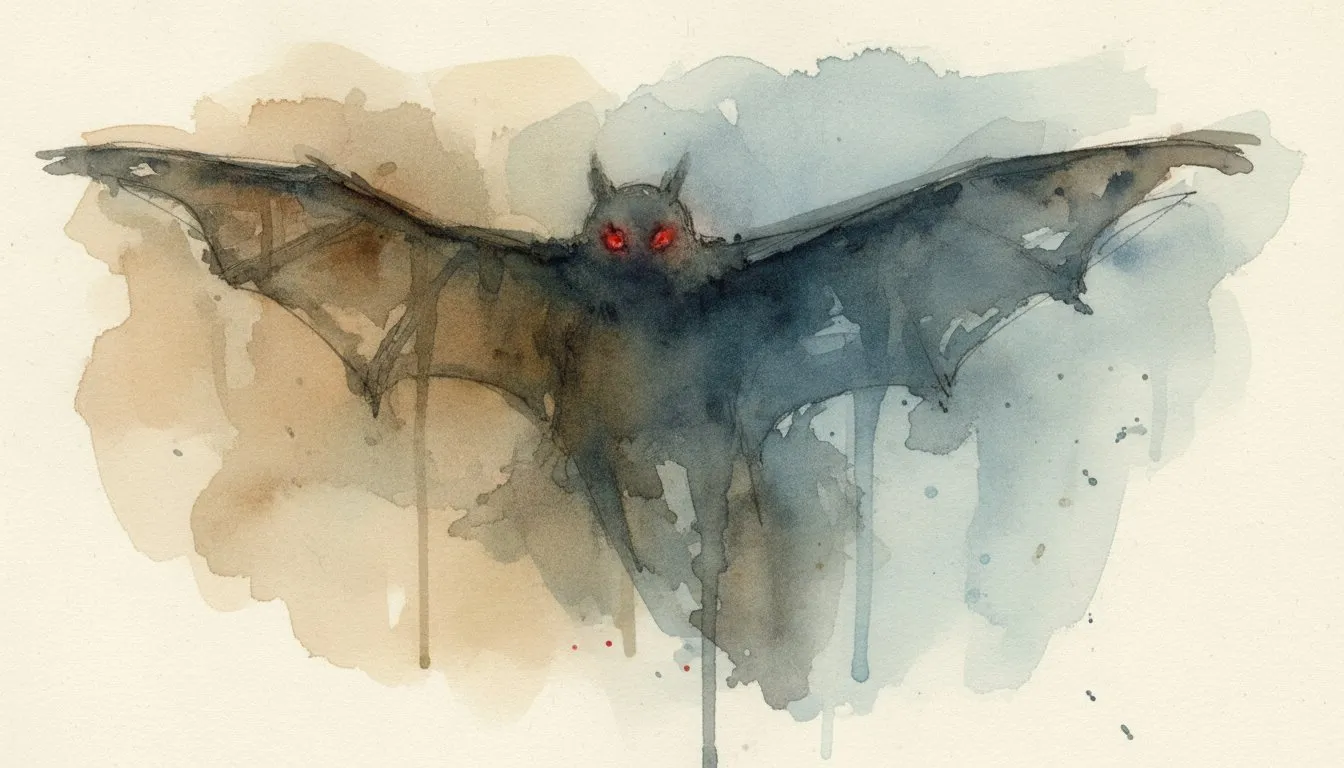
Mothman
A winged humanoid with blazing red eyes, haunting Point Pleasant before disaster struck.
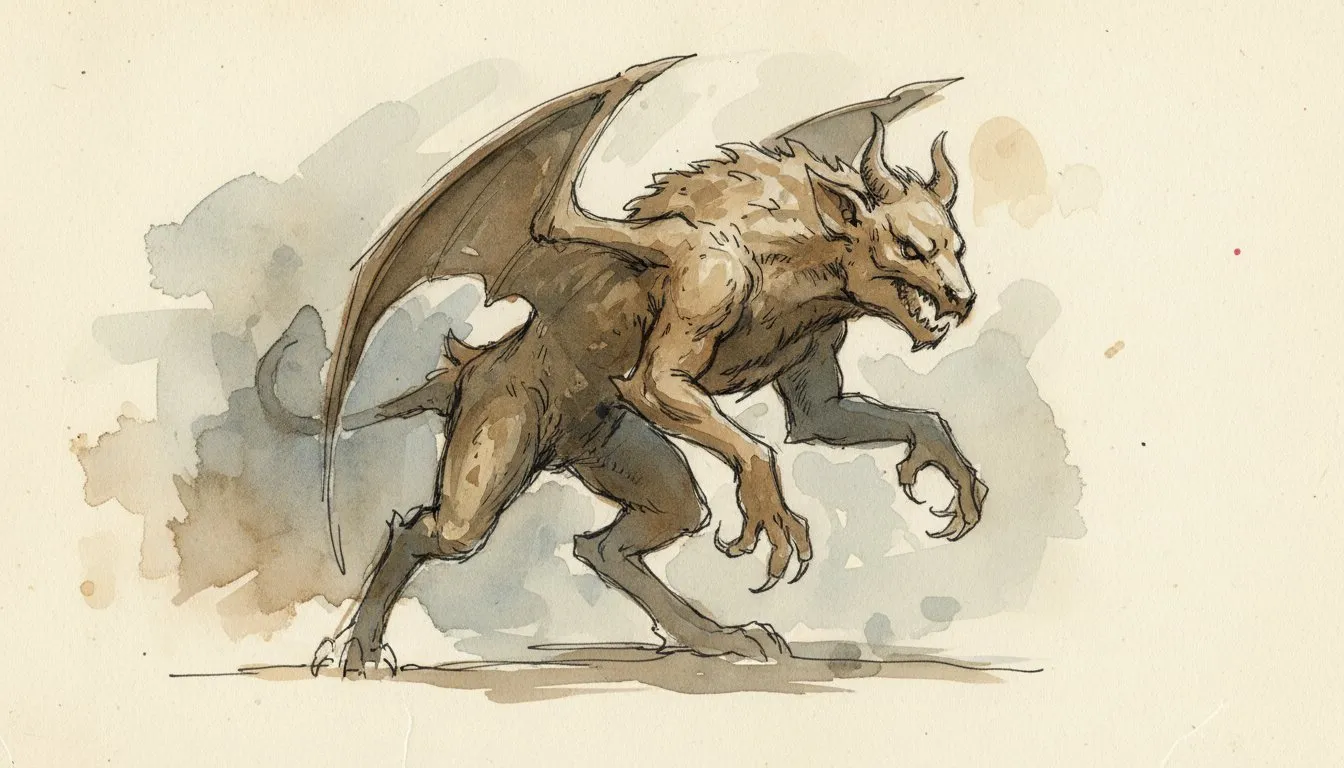
Jersey Devil
A bat-winged, hoofed terror born from a colonial curse in the Pine Barrens.
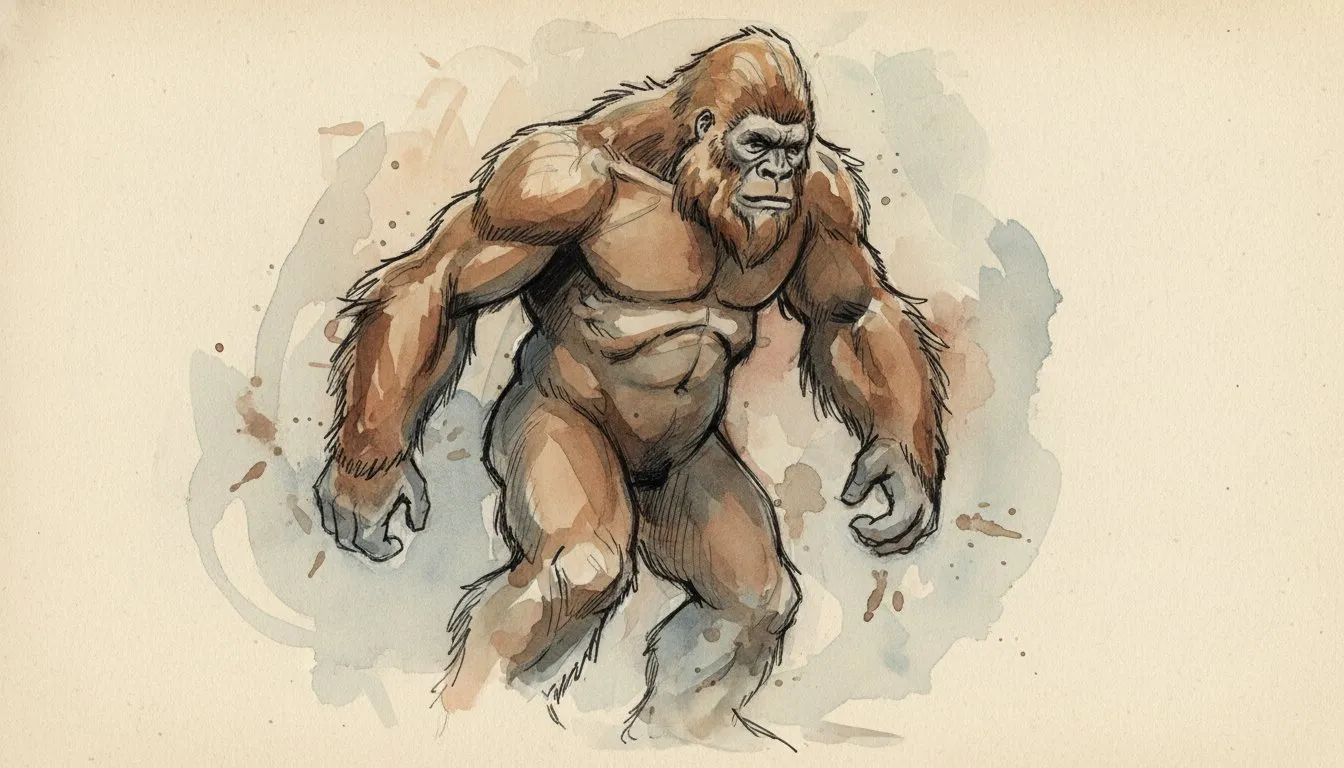
Bigfoot
The towering ape-man of the Pacific Northwest, glimpsed in fog and legend for centuries.
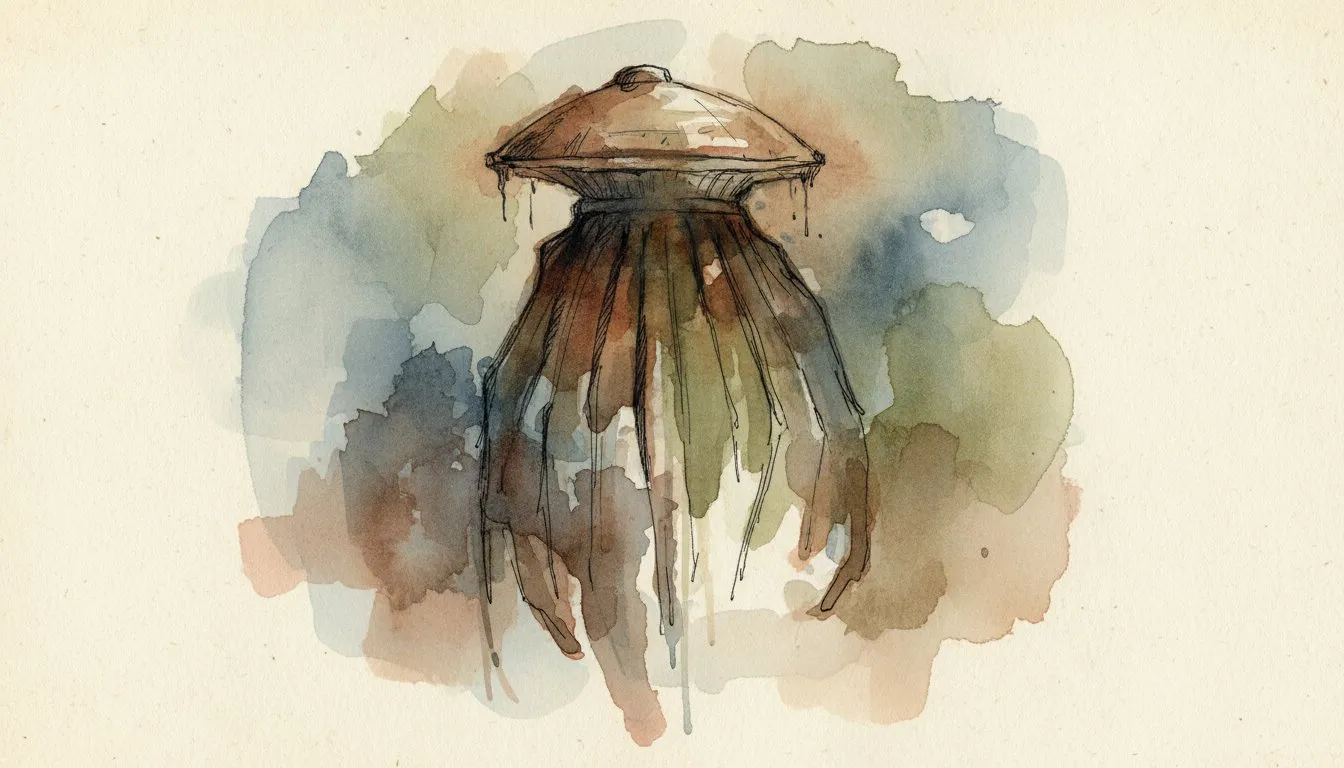
Flatwoods Monster
A towering, ace-of-spades-headed figure that appeared after a UFO streaked overhead.