
10 Cryptids You've Never Heard Of
The Deep Cuts
Bigfoot gets the documentaries. Loch Ness Monster gets the merch. Mothman gets the TikTok fan art. These are the celebrities of cryptozoology - household names with museums, festivals, and entire Netflix specials dedicated to them. But the cryptid world is vast, and the most interesting creatures are almost never the most famous ones.
Below are ten creatures that most people have never heard of. They come from six continents, range from ancient folklore to twentieth-century newspaper reports, and include everything from a mountain-dwelling whale to a small hairy forest people who eat everything in sight. Some are terrifying. Some are absurd. All of them are real traditions, reported by real communities, and worth knowing about.
1. Slide-Rock Bolter
Colorado, United States
Lumberjack tall tales are a distinctly American art form, and the Slide-Rock Bolter is their crowning achievement. According to Colorado mining-era folklore, this creature resembles a massive whale - but instead of living in the ocean, it lives on steep mountain slopes. It hooks its enormous tail over a mountain peak and lies in wait, watching the valley below for unsuspecting prey. When a target appears, it releases and slides down the slope at catastrophic speed.
The Slide-Rock Bolter first appeared in print in William Cox's 1910 collection *Fearsome Creatures of the Lumberwoods*, a catalog of exaggerated occupational hazards shared among loggers and miners. These "fearsome critters" were part warning, part entertainment - told around campfires to amuse the experienced and terrify the newly hired. But the Bolter stands out even among that crowd. The image of a mountainside whale ambushing valley travelers is so specific and so ridiculous that it loops back around to genuinely unsettling. Colorado hikers, take note.
For more North American oddities, see Wolpertinger-adjacent lore or the decidedly non-absurd Wendigo.
2. Hibagon
Hiroshima Prefecture, Japan
Japan's answer to Bigfoot is smaller, stranger, and considerably less famous. The Hibagon - named for Mount Hiba, the forested peak at the center of its territory - is a hairy bipedal hominid first reported in the early 1970s. Witnesses in Shobara described a dark-furred creature roughly five feet tall with a broad, flat nose, intelligent eyes, and a powerful smell. Sightings peaked between 1970 and 1974, with dozens of locals reporting encounters in farmland bordering the Hiba-Dogo-Taishaku Quasi-National Park.
What distinguishes the Hibagon from a simple Bigfoot clone is context. Japan has no native great apes, which makes any hominid sighting genuinely anomalous. Some researchers draw comparisons to the Yeren of southern China or the Almas of Central Asia - suggesting a broader tradition of relict hominid reports across East and Central Asia that predates and parallels the American Bigfoot phenomenon. The Hibagon sightings faded after the mid-1970s, but the creature has become a point of local pride in Shobara, with a dedicated monument and occasional festivals. Explore Asia region cryptids.
3. Trunko
KwaZulu-Natal, South Africa
In October 1924, beachgoers near Margate, South Africa, witnessed something extraordinary: a massive white creature fighting two killer whales just offshore. The battle reportedly lasted three hours. When it was over, the carcass washed ashore - a ten-meter-long body covered in white fur, with a trunk-like appendage at one end and a lobster-like tail at the other. Local newspapers dubbed it "Trunko." No scientist examined it. After ten days on the beach, it washed back out to sea.
Trunko sat in the category of unverified legend for nearly eighty years. Then, in 2010, researchers discovered photographs taken at the time - proving that something unusual did wash ashore in Margate in 1924. The creature is now classified as a globster, the informal term for decomposing marine carcasses that take on unfamiliar forms as tissue breaks down. But the photographs remain genuinely strange, and the three-hour battle with killer whales is difficult to explain as decomposition. Trunko has no tidy explanation, which puts it in excellent company. More African cryptids await.
4. Carbunclo
Patagonia, South America
Spanish conquistadors encountered a lot of things in the New World they couldn't explain. The Carbunclo was one of them. Early colonial accounts from the sixteenth century describe a small, elusive creature lurking in the forests and rivers of Patagonia and southern Chile, identifiable by a brilliant gemstone set into its forehead - a ruby or carbuncle that glowed in the dark. The creature itself was rarely seen directly; it was known primarily by the light it emitted.
Indigenous traditions across the region contain similar accounts, suggesting the Spanish weren't simply inventing the creature but rather encountering an existing local belief. The gem-headed animal appears in the folklore of several Andean and Patagonian communities under different names. Whether the light represents a bioluminescent adaptation, a reflective eye structure, or pure mythology is an open question. The Carbunclo belongs to a rich South American cryptid tradition that also includes the Peuchen, the Huallepen, and the terrifying Cherufe. Discover more South American cryptids.
5. Ebu Gogo
Flores Island, Indonesia
"Ebu gogo" means "grandmothers who eat anything" in the Nage language of Flores - which tells you most of what you need to know about how the local community regards these creatures. Described as small, hairy, pot-bellied humanoids roughly a meter tall, the Ebu Gogo are part of living oral tradition among Nage villagers, who describe them not as mythological figures but as creatures their ancestors actually encountered and eventually drove out of the area sometime in the eighteenth century.
The legend took on new significance in 2003, when archaeologists on Flores excavated remains of *Homo floresiensis* - a species of small-bodied hominin that stood about a meter tall and persisted on the island until at least 17,000 years ago. The parallel with Ebu Gogo descriptions was impossible to ignore: the size, the island location, the oral history placing them in recent memory. No serious scientist claims the Ebu Gogo are surviving *floresiensis*, but the convergence of paleoanthropology and indigenous oral tradition is striking. The Flores context also echoes the Orang Pendek of Sumatra, another small hairy hominid reported in the same archipelago. Explore the full Oceania cryptid list.
6. Sasabonsam
Ghana and Côte d'Ivoire, West Africa
West African cryptid tradition is rich and underreported in English-language cryptozoology. The Sasabonsam is one of the most striking entries: a humanoid forest creature described as tall and lean, with iron teeth, feet pointing both forward and backward, and a habit of perching in trees to drop onto prey passing below. In Akan and Ashanti tradition, the Sasabonsam is explicitly malevolent - a predator of humans, not merely an unknown animal.
The iron teeth are significant. Across West African folklore, iron-associated creatures tend to carry particular danger, linked to the transformative power of metalworking. The Sasabonsam's territory overlaps broadly with the range of the Adze, another West African cryptid, and some researchers treat both as manifestations of a wider tradition of supernatural predators in the forest interior. The creature has been compared to European vampire traditions without being derived from them - a parallel evolution of the bloodthirsty nocturnal predator concept in two separate cultural contexts.
7. Tatzelwurm
The Alps (Austria, Switzerland, Bavaria, northern Italy)
The Tatzelwurm - whose name translates roughly as "claw worm" - has been reported in Alpine communities for several centuries. Descriptions are consistent: a thick-bodied reptile between two and six feet long, with two front legs and no hind limbs, a cat-like face with prominent eyes, and a venomous bite. The creature is said to hibernate in winter and emerge in spring, when most sightings occur.
What gives the Tatzelwurm unusual credibility is the geographic spread and consistency of reports across distinct national and linguistic communities. Austrian, Swiss, Bavarian, and northern Italian accounts, separated by language and culture, describe the same basic creature. A famous photograph taken in 1934 near Meiringen, Switzerland allegedly shows a Tatzelwurm; it has never been definitively authenticated or debunked. Proposed explanations range from a relict population of monitor lizards or skinks to misidentified salamanders to an undescribed alpine reptile. The Alps are extensively mapped but not exhaustively explored at ground level. The Lindworm, a limbless serpent of Scandinavian tradition, is sometimes considered a northern cousin.
8. Buru
Arunachal Pradesh, India
The Apatani people of the Ziro Valley in Arunachal Pradesh carry a specific and detailed oral tradition about the Buru: a large aquatic reptile, roughly fifteen feet long, that once inhabited the valley's marshlands before the Apatani drained and cultivated them - forcing the creatures into deeper water or eliminating them entirely. According to the tradition, the Buru had a long neck, a broad body, short limbs, and a forked tongue; it was aggressive when disturbed but otherwise avoided contact with humans.
British naturalist Charles Stonor brought the Buru accounts to wider attention in the 1940s after interviews with Apatani elders. What distinguished the reports from generic lake-monster lore was the specificity: the elders described the drainage of the marsh as a historical event, the Buru as a creature displaced by agriculture rather than a timeless mystery. This frames the Buru not as a mythological beast but as a recently extirpated animal - which is a considerably more plausible category. Proposed identifications include giant monitor lizards or a surviving population of freshwater crocodilians in an area currently considered outside their range.
9. Pukwudgie
New England and Great Lakes, United States
The Pukwudgie is one of the few cryptids on this list with deep roots in indigenous North American tradition rather than European folklore imports. In Wampanoag and other Algonquian traditions, the Pukwudgie is a small humanoid - roughly two to three feet tall - with large ears, smooth gray skin, and powerful magic. They can appear and disappear at will, lure humans to their deaths, and control will-o'-wisps. They are not simply mischievous; they are genuinely dangerous.
What separates Pukwudgie accounts from generic fairy tradition is their specificity to place. Reports cluster in southeastern Massachusetts, particularly around the Freetown-Fall River State Forest, which has a documented history of unusual encounters. Modern sightings - distinct from the traditional lore - describe small humanoid figures observed near tree lines or in peripheral vision. The creature sits in an interesting middle space between indigenous mythological being and cryptid proper, which is part of why it's underrepresented in mainstream cryptozoology. It doesn't fit neatly into either category. The Caipora of South American tradition occupies a similar position as a small, powerful forest entity that actively resists human intrusion.
10. Waitoreke
South Island, New Zealand
New Zealand is a country with no native land mammals except bats. This is a biological fact that makes any report of an unknown terrestrial mammal there extraordinary. The Waitoreke is precisely that: a small, otter-like or beaver-like creature reported by Maori communities and subsequently by European settlers in the nineteenth century on the South Island. Witnesses describe a creature roughly a foot long, dark-furred, semi-aquatic, and fast-moving along rivers and streams.
The Maori name predates European contact, which rules out the simplest explanation - that colonists saw a familiar animal and misidentified it. Multiple nineteenth-century naturalists took the reports seriously enough to search for a specimen, without success. The South Island has extensive river systems and fiordland wilderness that remain lightly explored. Proposed explanations include a small marsupial that arrived via natural rafting, an undescribed mustelid, or the possibility that the creature exists but is now extinct. In a country that once had a giant eagle (Haast's Eagle), a giant moa (Moa), and a flightless parrot, an unknown small mammal is not as far-fetched as it sounds. More from the Oceania region.
The World Is Still Strange
These ten creatures represent six continents and span folklore traditions from the fifteenth century to the 1970s. What they share is that none of them have been explained away. The Slide-Rock Bolter is tall-tale absurdism, yes - but the Buru is a carefully preserved oral history from a people who drained the marsh themselves. The Waitoreke exists in a country where the biology genuinely allows for an unknown mammal. The Ebu Gogo lives next door to confirmed paleoanthropology.
That's what makes the deep catalog worth exploring. The famous cryptids get the attention, but the obscure ones ask harder questions. Browse all 162 creatures in the Cryptid Vault - most of them you haven't heard of yet.
Two more get the same treatment: see our guides to European cryptids and Asian cryptids.
Two of the regions on this list are worth reading whole. See our guides to African cryptids and South American cryptids.
Get the Field Notes.
Field notes from the Vault, when there is something worth sending. No spam.
No spam. Unsubscribe anytime.
Creatures mentioned in this post
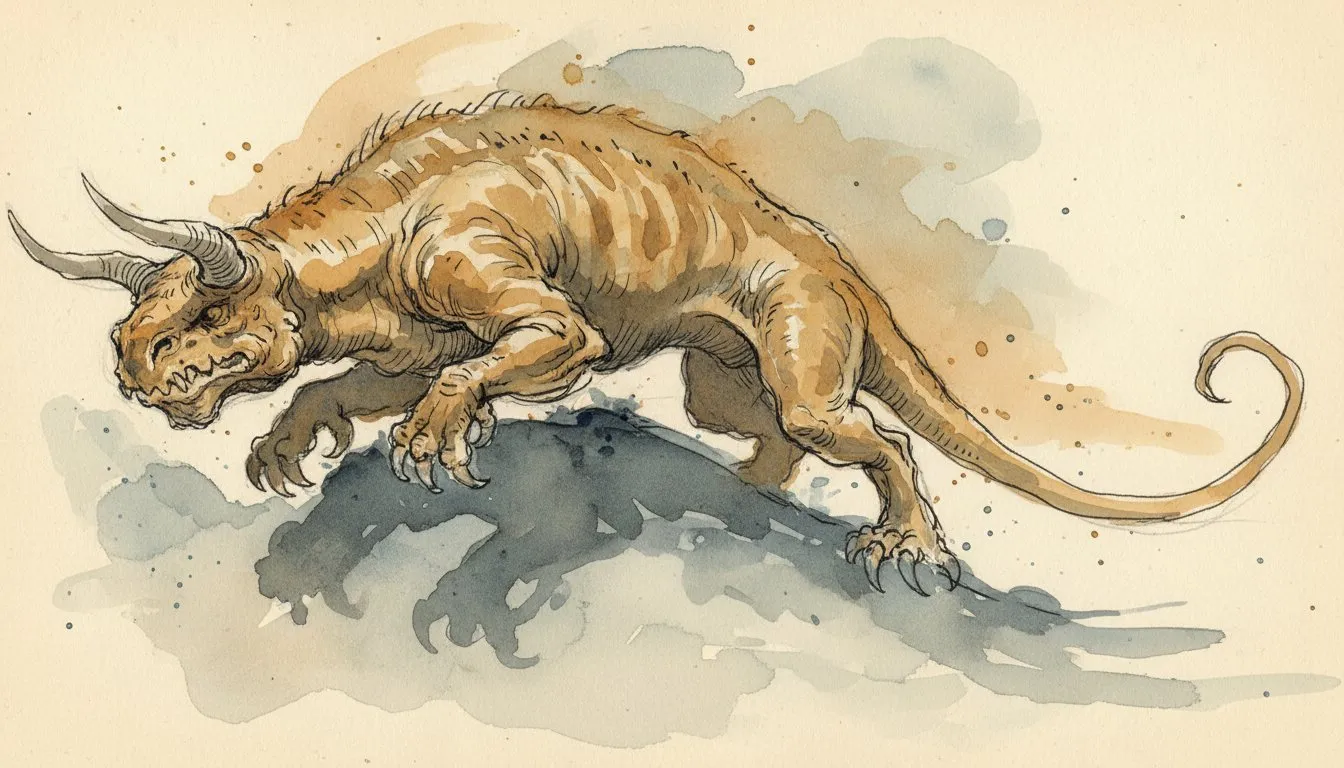
Slide-Rock Bolter
A whale-shaped mountain predator that slides down Colorado slopes to swallow hikers whole.
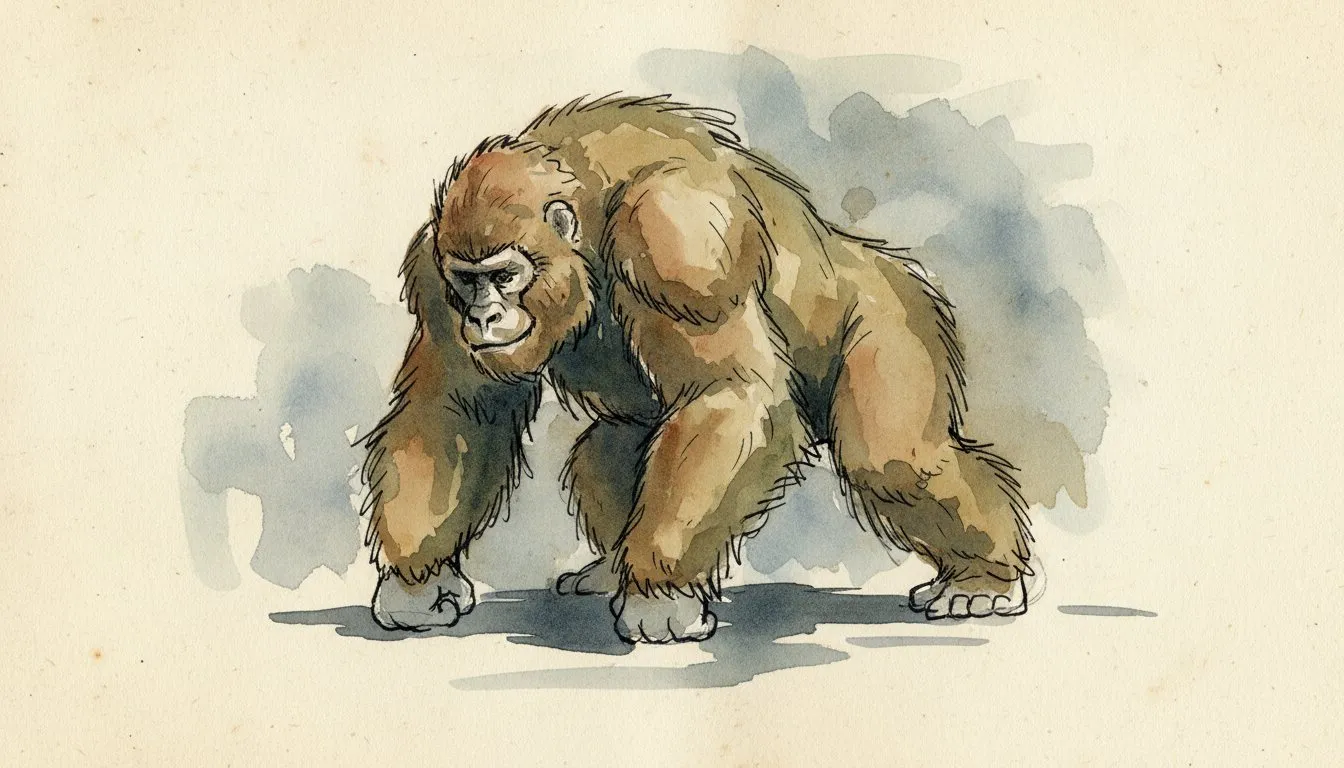
Hibagon
A foul-smelling ape-man stalking the misty slopes of Mount Hiba in rural Japan.
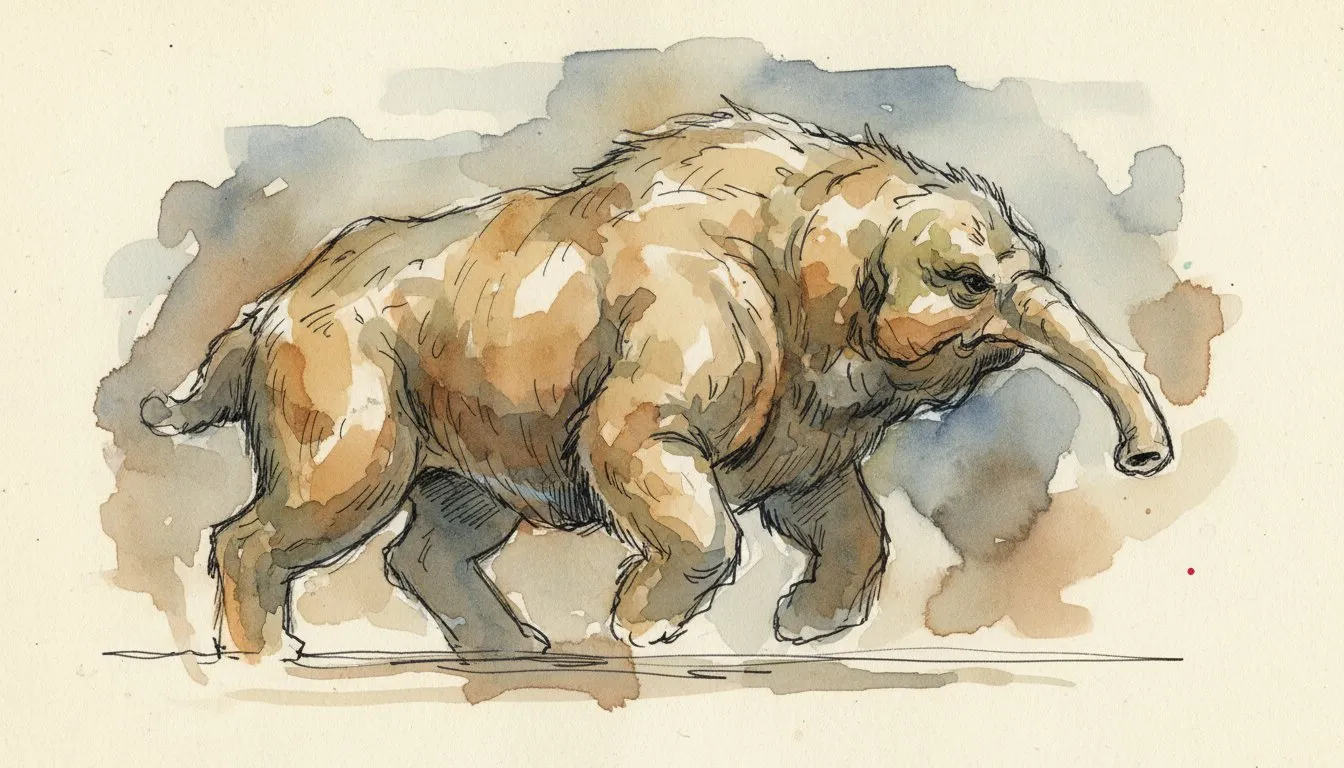
Trunko
A massive white carcass with an elephant-like trunk that washed ashore in South Africa.
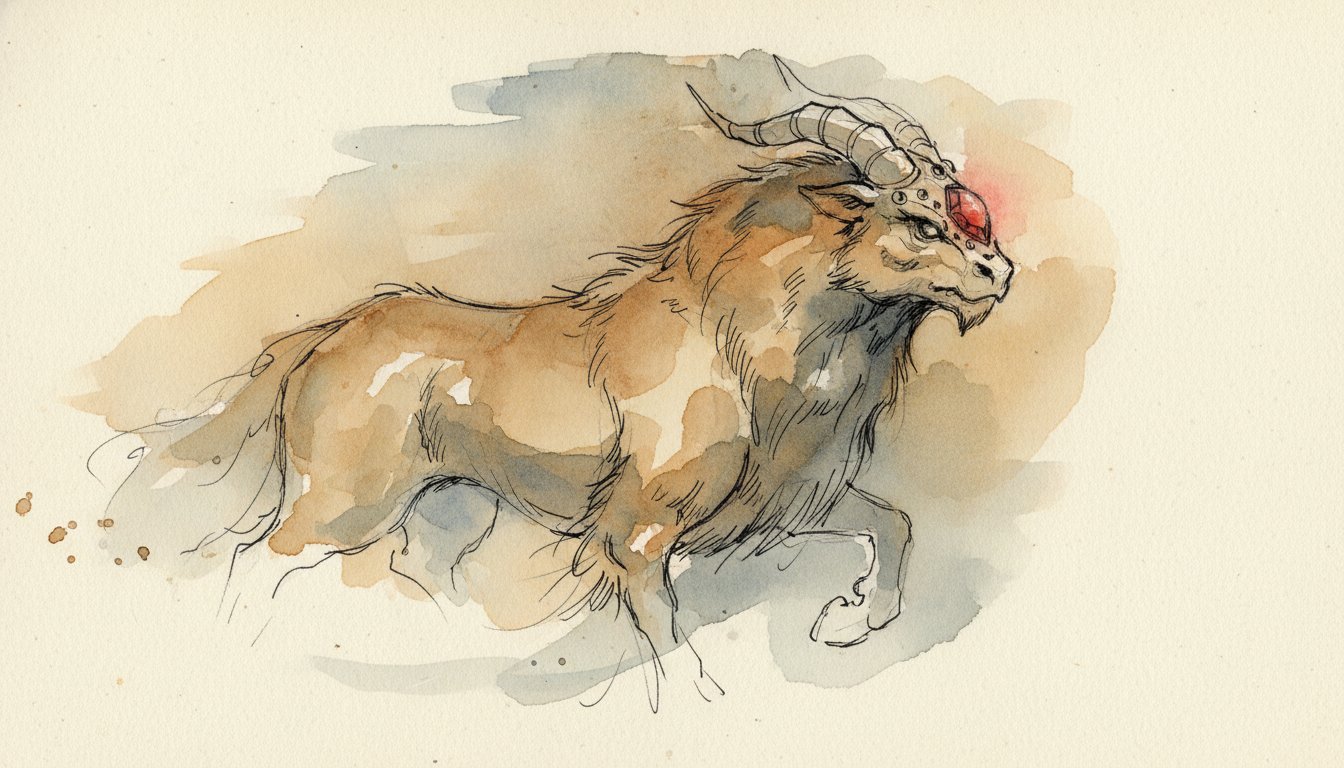
Carbunclo
A small, armored creature with a glowing gemstone embedded in its head, spotted in the Andes at twilight.